
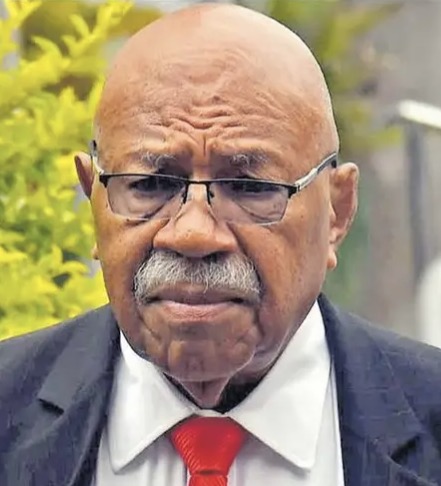
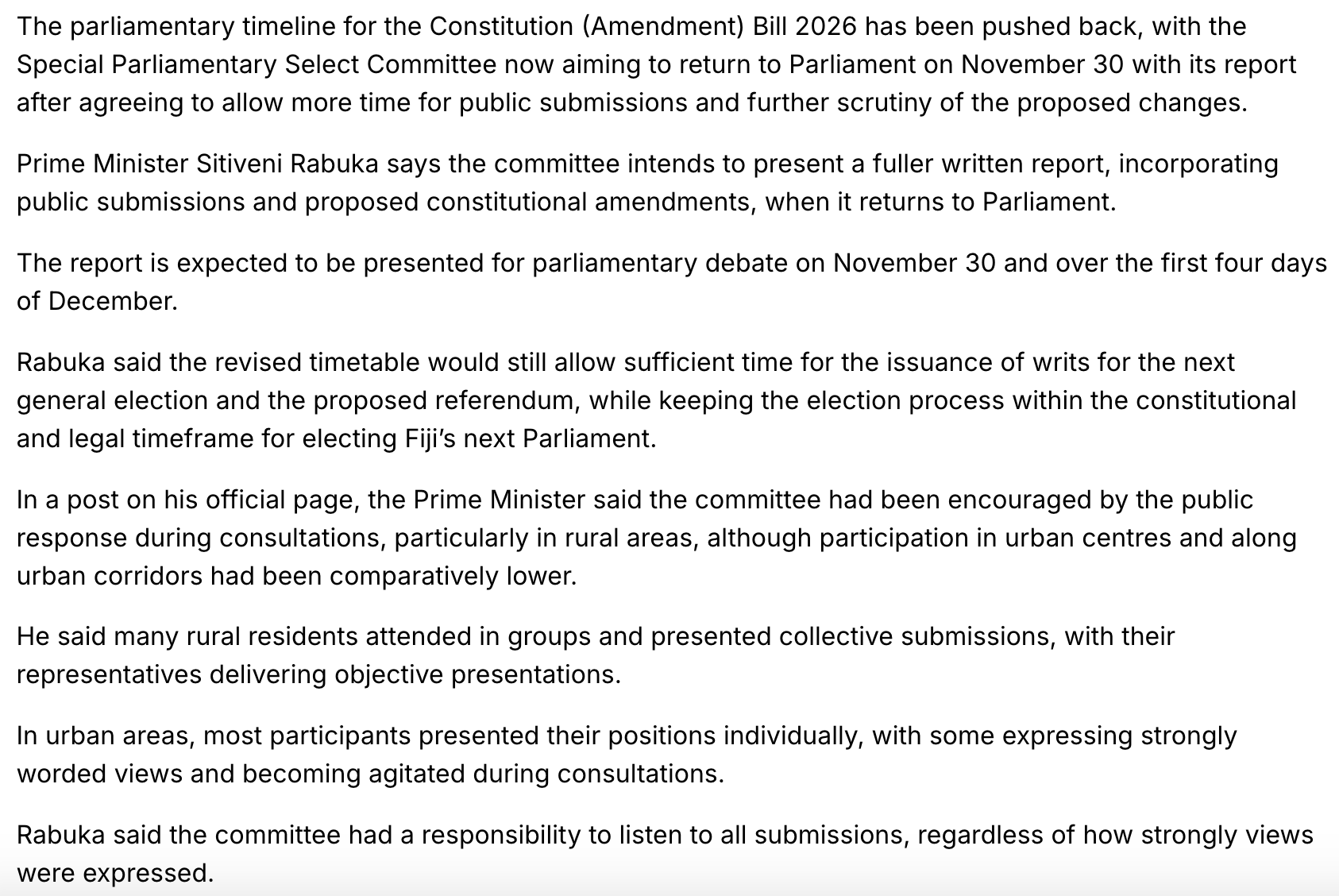
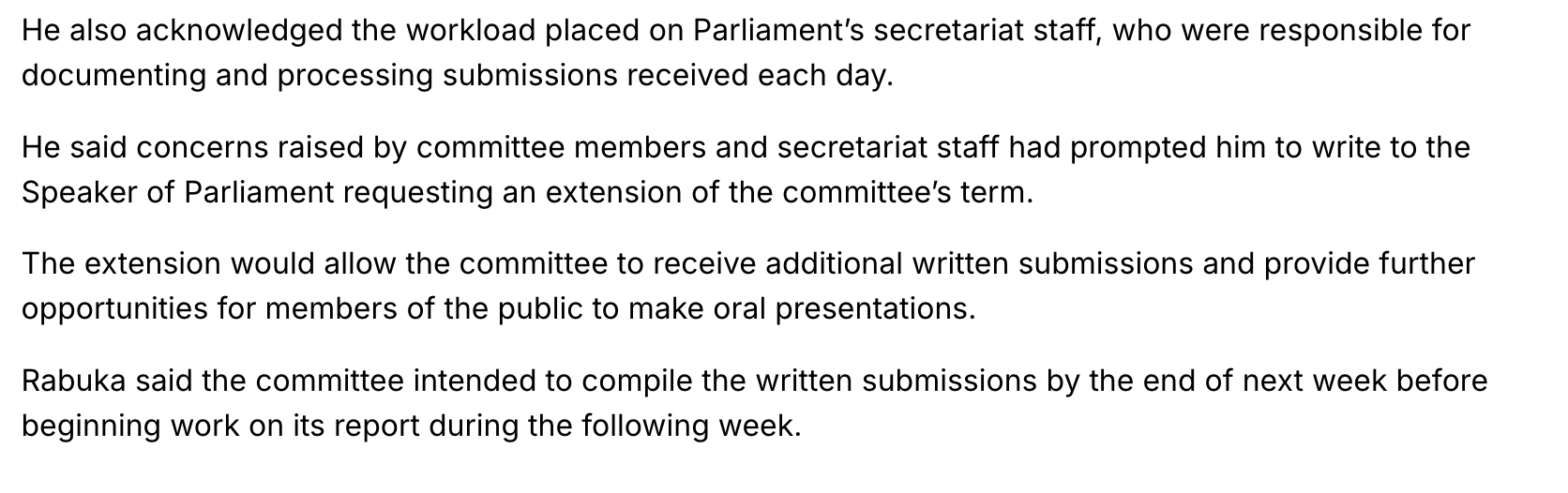
Make no mistake, Fiji. Sitiveni Rabuka‘s last-minute decision yesterday not to proceed with this week’s vote in the parliament on the new constitution isn’t for the reasons he gave – to provide more time for public consultations and take the pressure off parliamentary officials.
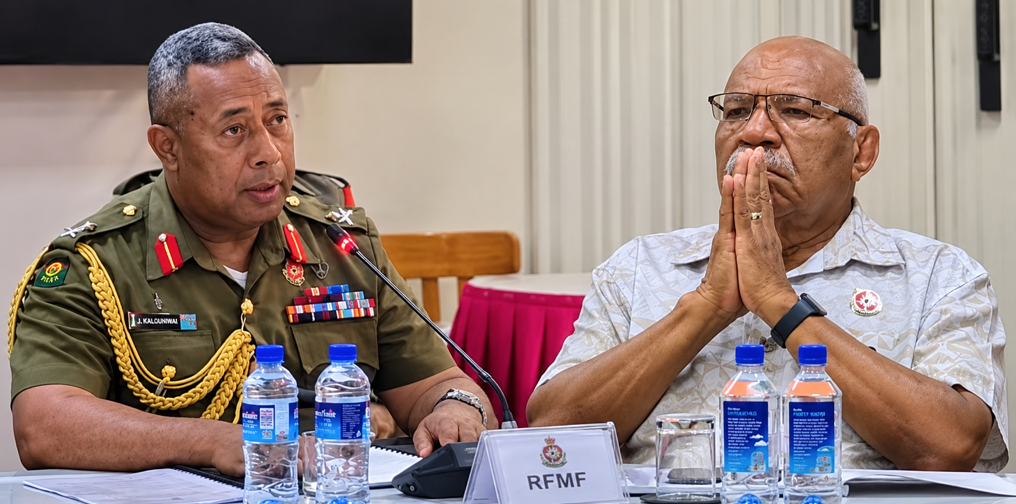
It is to work out how the hell he is going to deal with the demand by the RFMF Commander, Major General Ro Jone Kalouniwai, that the Prime Minister remove the immunity provisions of the draft that protect him from ever being prosecuted for his two coups in 1987.
You won’t see any of this in the Fijian mainstream media because they haven’t got the guts to report it. They have supinely published Rabuka’s risible official reasons for his back-flip when he was so adamant on the weekend that the vote would proceed. Yet here’s what’s really happening.
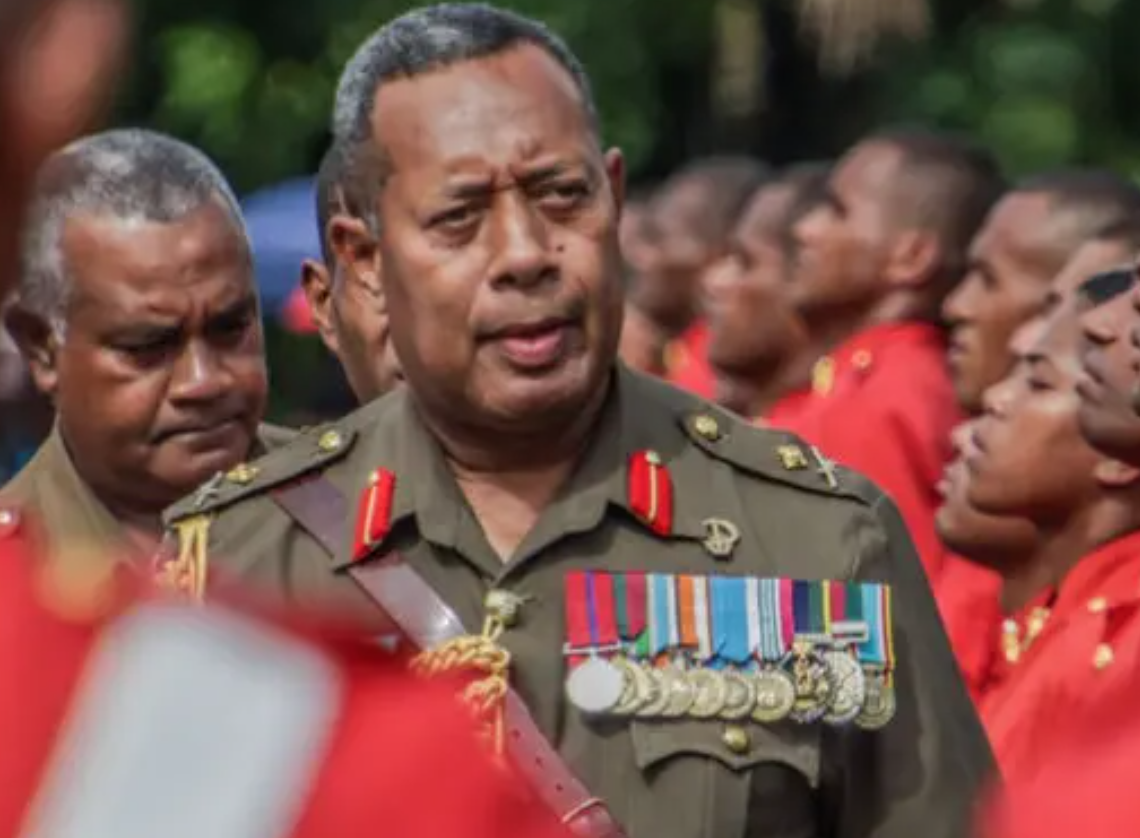
The RFMF Commander is reported to be adamant that he will not back off on his demand that the Chapter 14 immunity provisions in the draft constitution be removed. And yes, it is a demand, not a suggestion that can be fobbed off or ignored. And that demand is non-negotiable.
And there’s a further demand that is non-negotiable – the removal of the provision in the draft that provides for the abolition of FICAC. It isn’t going to happen as far as the RFMF is concerned. The corruption watchdog stays.
Faced with this, Sitiveni Rabuka had two choices. Ignore the RFMF Commander’s demands and take him on or buy himself some time to try to negotiate his way out of the impasse. He has chosen the latter, sugar-coating it for a gormless media by trying to cast his back-flip as an act of statesmanship rather than the act of a cornered rat.
Let’s also be clear. If the immunity provisions go, Sitiveni Rabuka will be the most vulnerable he has ever been in the 39 years since he staged his two coups in 1987. The immunity clauses in successive constitutions have provided him with protection from prosecution but that would be gone.
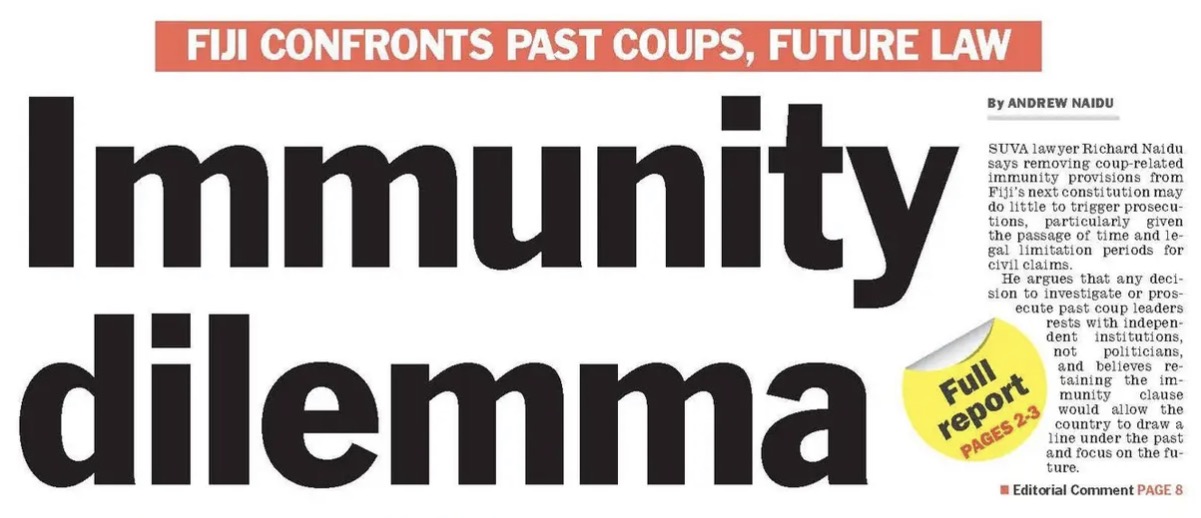
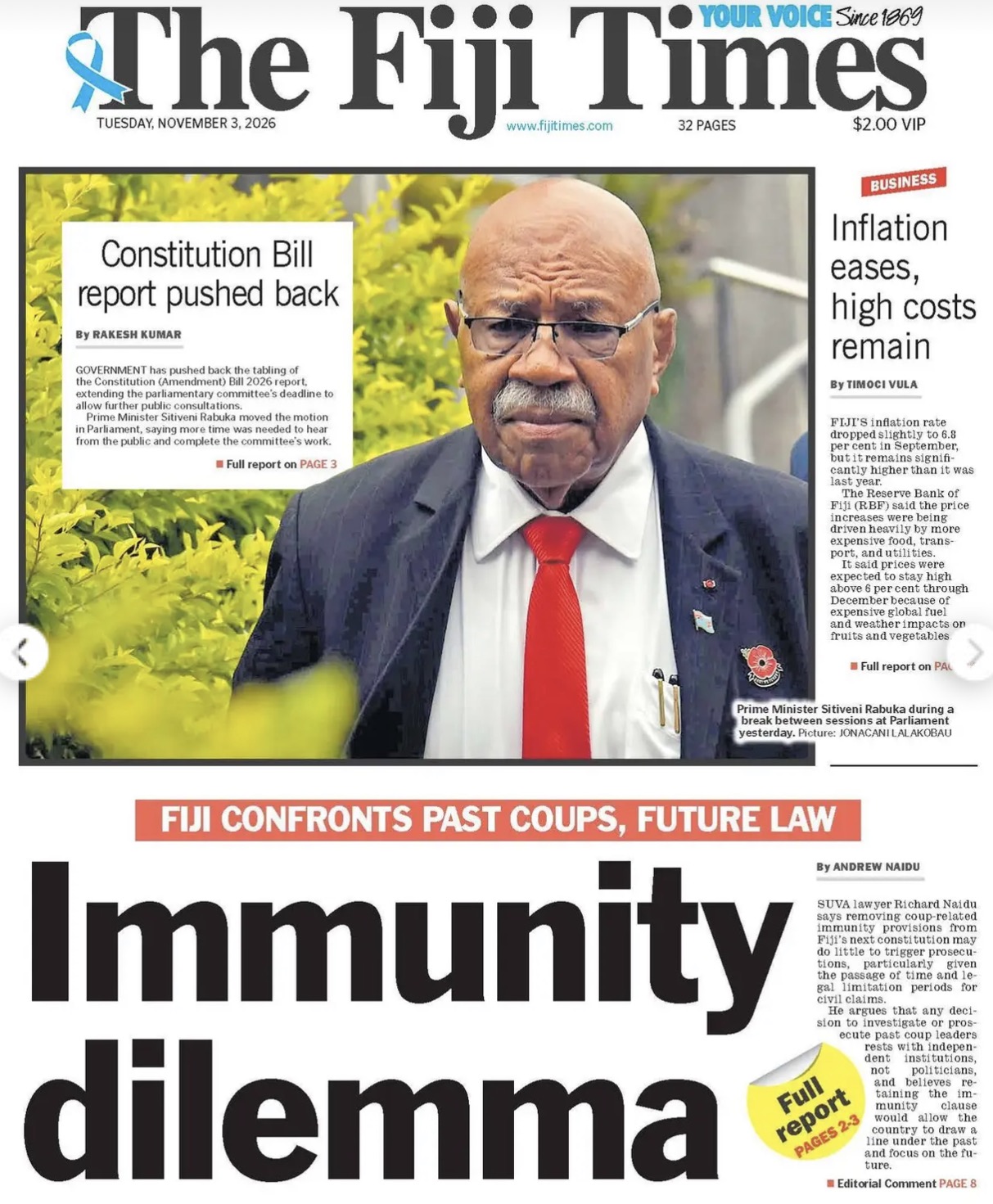
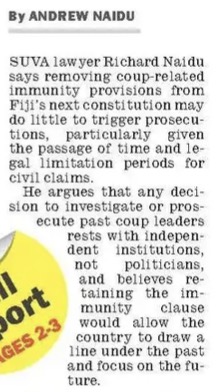
Today’s Fiji Times front page has their resident lawyer, Richard Naidu, saying it would be unlikely, given the passage of time, that Rabuka and Frank Bainimarama would be held to account for their actions in 1987 and 2006 respectively. Oh really? Then why do the immunity provisions exist? Why not just drop them altogether?
FACT: The passage of time doesn’t matter. Rabuka committed treason in 1987 by removing a democratically-elected government at gunpoint. And the thing about treason – according to a senior lawyer Grubsheet has consulted – is that it doesn’t go away.
With the immunity provision in the supreme law gone, Rabuka is liable to the charge for life. As is Bainimarama and those other ministers in the Rabuka government who assisted either of them, though it is less likely that those “merely following orders” would be prosecuted.
The point is that even if Sitiveni Rabuka wins the next election, and the next, removing the immunity provisions poses a clear and present danger to himself if a government were to ever come to power which happens to agree with Kalouniwai that coup-makers must face justice.
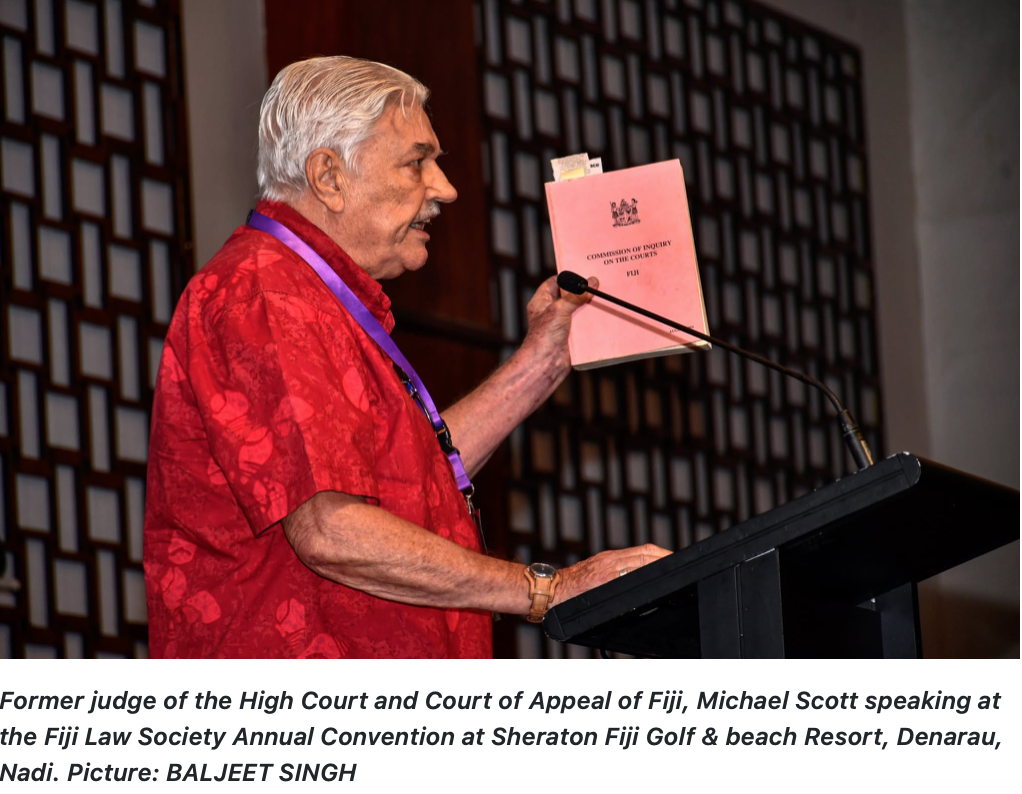
Just ask George Speight, who wasn’t covered by any immunity and was sentenced to death for treason by hanging for his role in the 2000 rebellion but had it subsequently commuted to life imprisonment. That sentence was passed by the former judge, Michael Scott, who is now in the headlines for exposing the “shameful national scandal” in the judiciary under the Chief Justice, Salesi Temo. (see article below)
So the Prime Minister is in a terrible bind. He has kicked the issue forward for a month and says he now intends to proceed to the third reading of the Constitution Amendment Bill on November 30. Yet unless Commander Kalouniwai backs down, nothing will have changed by then. And the word from the Commander is that he isn’t going to back down. On the removal of the immunity provisions or his insistence that FICAC stays.
All of which raises a delicious irony. That the 2013 Constitution, with its immunity provisions, is suddenly Sitiveni Rabuka’s best friend and he had better hope that it remains in place or he is hopelessly exposed.
Ergo. Don’t be in the least bit surprised if November 30 produces another delay and the whole immunity “dilemma” – as the Fiji Times terms it – is again kicked into touch. Yes, the distinct possibility that nothing happens until after the election, which Kalouniwai also won’t allow to be delayed – no third reading, no referendum and no new constitution until Sitiveni Rabuka can be sure that he can save his own butt.
That’s the real state of the nation right now, Fiji. Ain’t it grand? Yet anyone who genuinely cares about democracy ought to be grateful that Jone Kalouniwai has finally taken a stand. Why is he doing so now? Well that’s a story all in itself.
The Commander will be hearing the same rumours as Grubsheet as to why the immunity provisions of this constitution don’t just cover past events, they cover the actions of any public official until after the new constitution takes effect on March 31 2028. It is allegedly to cover the butts of Rabuka and the President, Ratu Naiqama Lalabalavu, for what they are said to be planning to thwart the coming election.
Incredibly, those actions are rumoured to be the following:
1/ That if any referendum is passed in December, the President plans to bring forward the start date of the new constitution to December 24, not the end of March 2028, and delay the election for two years.
2/ That if the referendum is lost, they will engineer a state of emergency to also delay the election. Yes, a naked lunge for power on the part of the PM and his chief to remain in power as long as possible.
Are those rumours true? Let’s all hope in the national interest that they aren’t. But the bottom line is this: Were the new constitution to come into force with the immunity clause still in it, the President and Prime Minister would be protected legally from any action they take all the way to the end of March 2028.
If Commander Kalouniwai has his way, it isn’t going to happen. And his stand deserves to be supported by any Fijian who genuinely cares about the national interest rather than the crude manipulation of the state by the duumvirate from Cakaudrove.
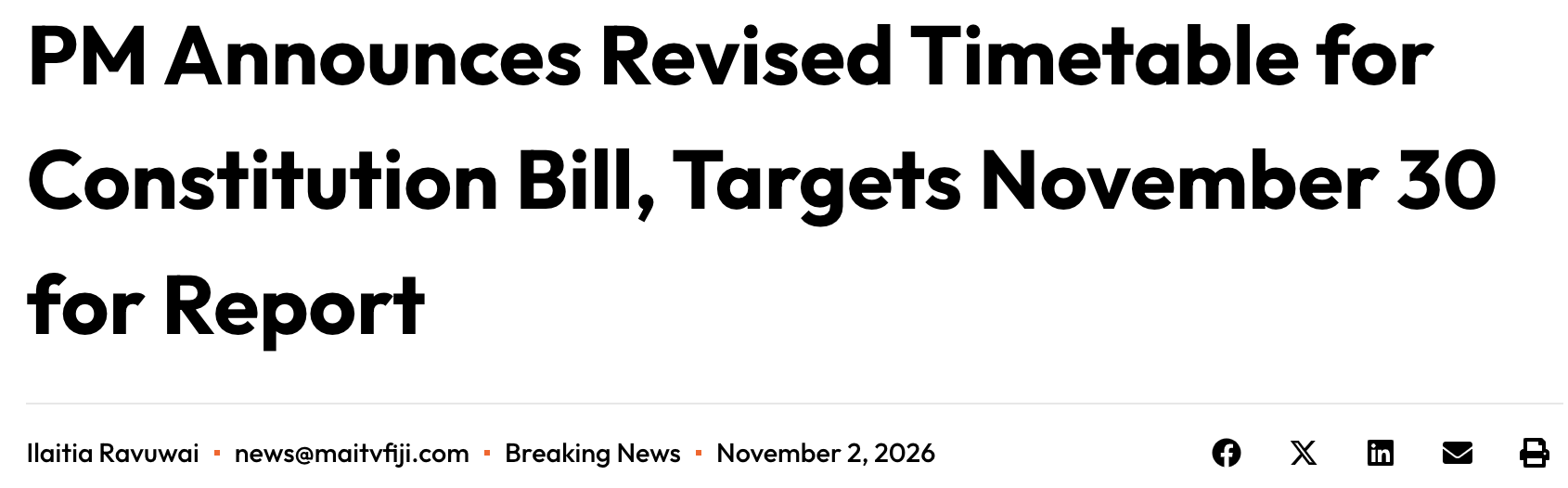
Pretending to be cooperative but desperate behind the scenes…




Who is Michael Scott? From the archives of the Guardian newspaper in February 2002.
Leave a Reply