
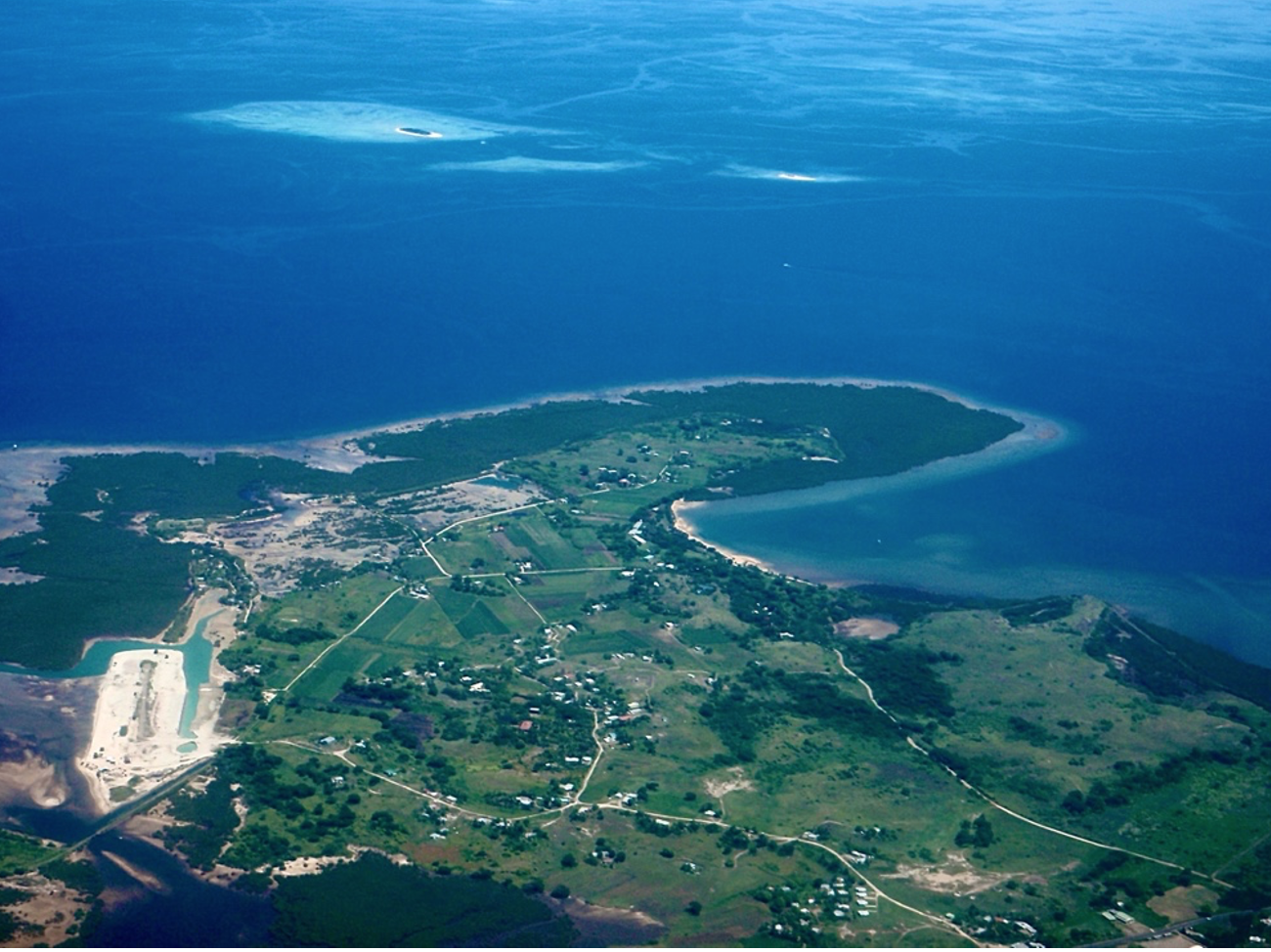
On April 1 The Australian newspaper * reported on a plan by two Australians to ship 700,000 tons a year of Sydney’s waste to Fiji, and along with 200,000 tonnes from Fiji and other Pacific Islands, to burn it for energy on a small peninsula in mangroves next to an iconic beach.
Hardly a good look, and implausible as it sounds – no it wasn’t an April Fool’s joke – the project has been sold to Fiji as long-term environment and health benefit, and, according to the owners, an estimated AUD $160-million annual saving on the country’s diesel bill.
At peak output, the furnace is designed to produce 80 megawatts of electricity via steam driven turbines. Once in operation, the AUD $900-million plant would be one of the world’s largest waste-to-energy (WtE) facilities. Go Fiji, one might say.
But the locals aren’t buying it. As they lift the lid on the proposal they’re complaining loudly it stinks – of waste colonialism and of an estimated 200,000 tonnes of bottom ash and 30,000 tonnes of highly toxic fly ash to deal with each year and which future generations will have to keep safe.
They’ve questioned the $160-million savings number as the actual is not yet known – seeing as it will be the difference between yet-to-be-revealed price paid for electricity from the facility and the variable cost to generate power with diesel.
They also expressed the view that this development had more to do with relieving Australia of its waste problem, where high tip fees for landfill had made shipping it to Fiji a viable business proposition.
In the Australian report, Sydney waste management operator Ian Malouf claimed his WtE plant was approved by Fiji’s Prime Minister Sitiveni Rabuka and his cabinet. Malouf’s local partner in the project holding company – The Next Generation Fiji (TNG Fiji) – is Rob Cromb of KOOKAÏ Australia fashion label fame.
Reacting to a rising tide of opposition to the project in Fiji, Prime Minister Rabuka and Minister for the Environment Lynda Tabuya quickly denied they had made a decision. They said the Government would first consider community feedback on an Environment Impact Assessment (EIA) prepared for the project joint venture by Sydney-based environmental consultants GHD Australia.
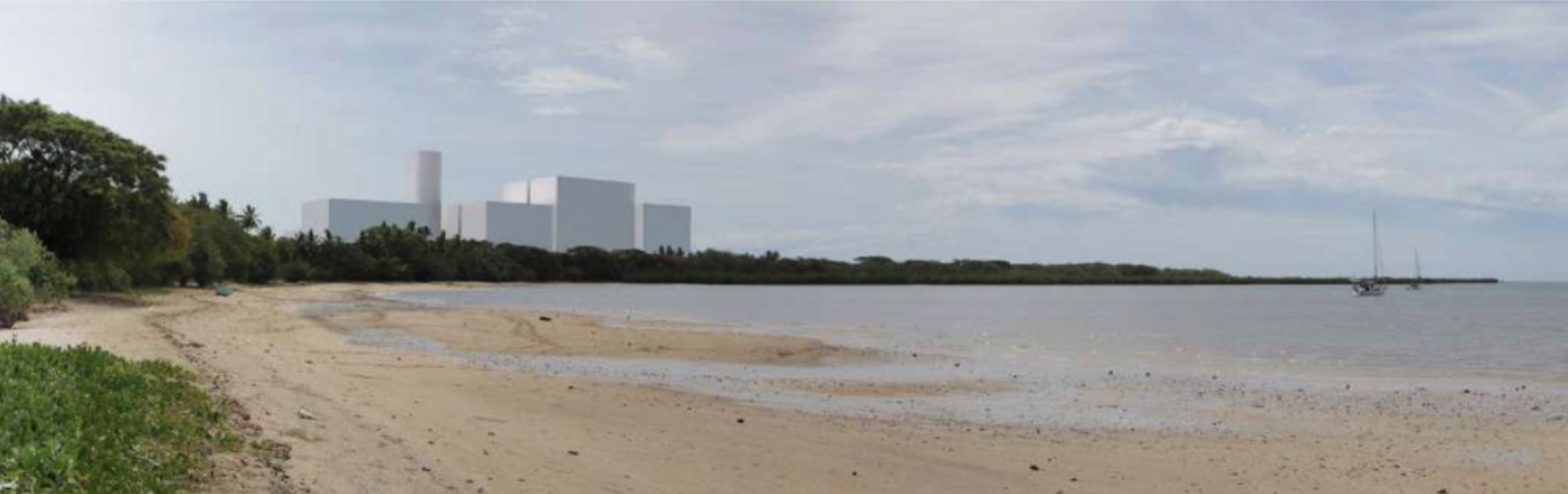
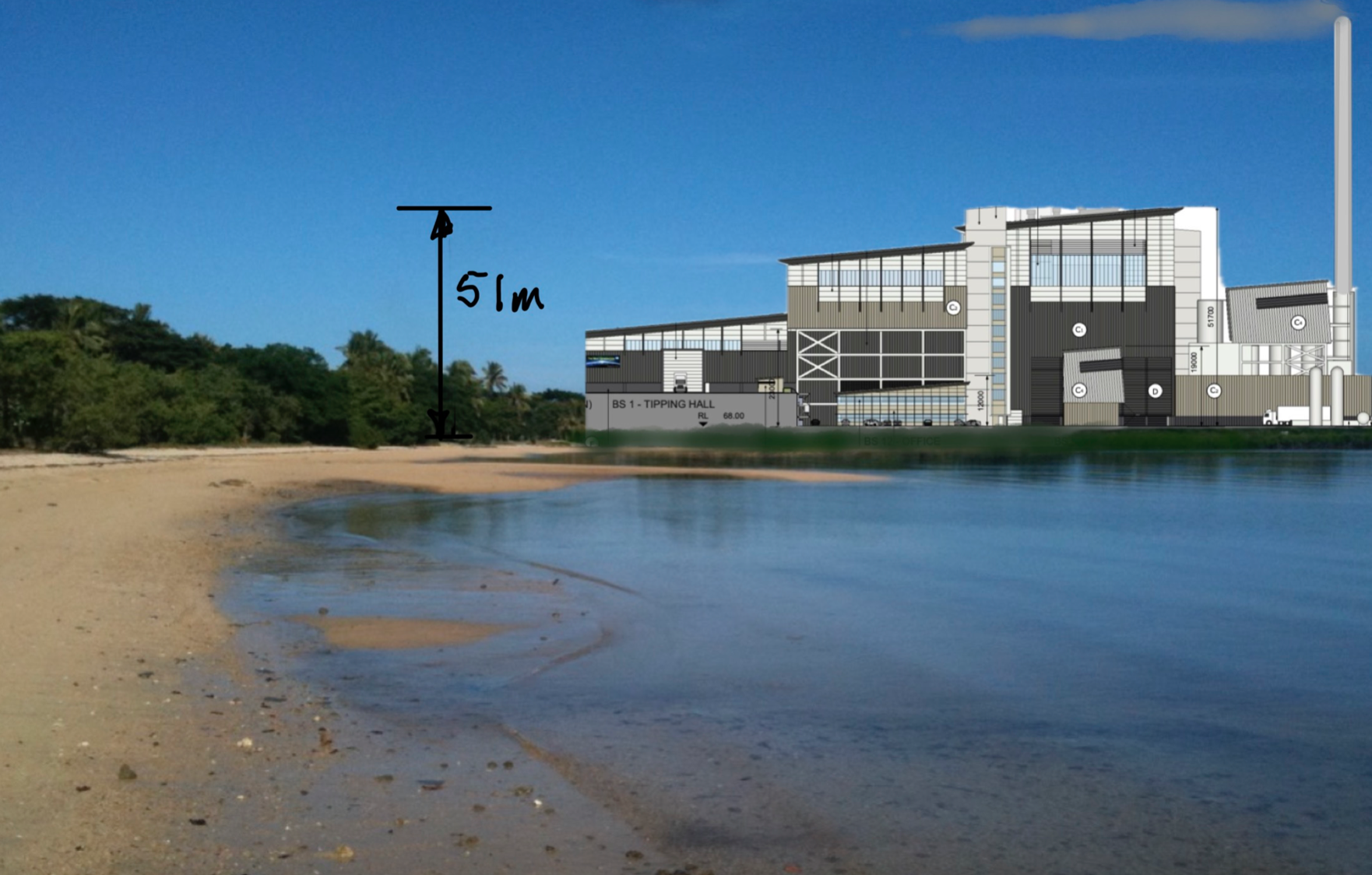
Given less than four weeks to read and understand the 1,700-page EIA, and respond by April 22, Fijians were scrambling to come to terms with the 65-metre-high furnace building with four 80-metre flue stacks (looks like an upside-down table) which would dominate a coastline in a tourism mecca that attracts around 450,000 Australians each year.
In the process, they’ve learnt Malouf’s attempts to build WtEs in Western Sydney and in Parkes, NSW, and more about waste management in Fiji and what happens in other countries. Scientists, engineers and environmentalists have alerted them to the large volumes of bottom ash and highly toxic fly ash the plant would produce.
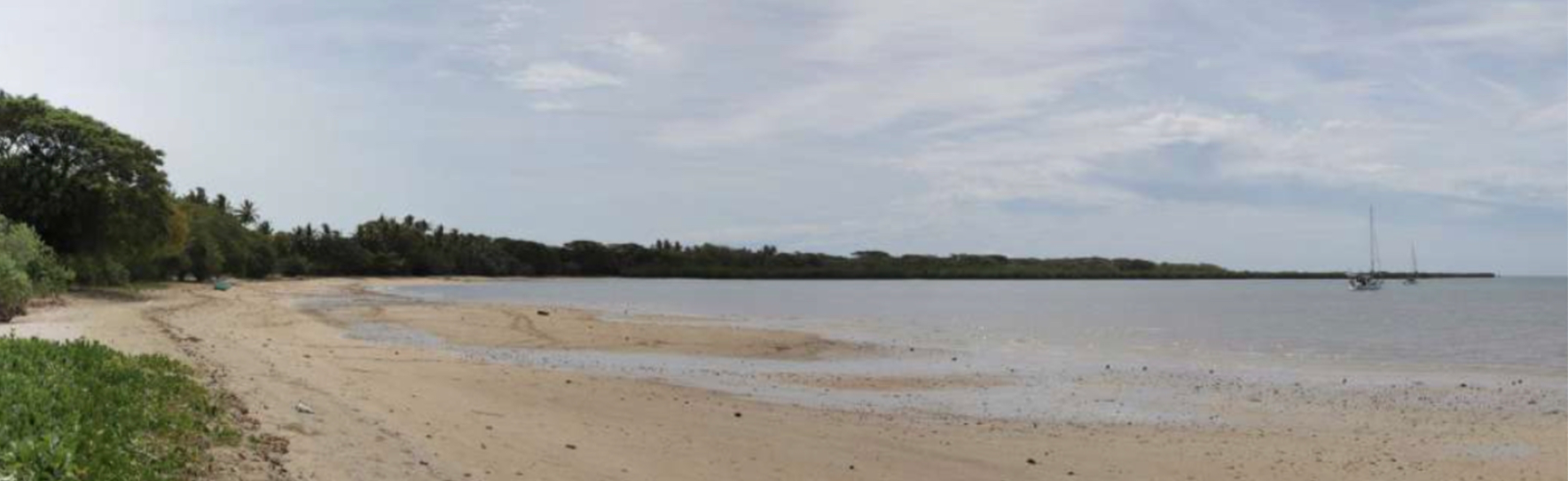
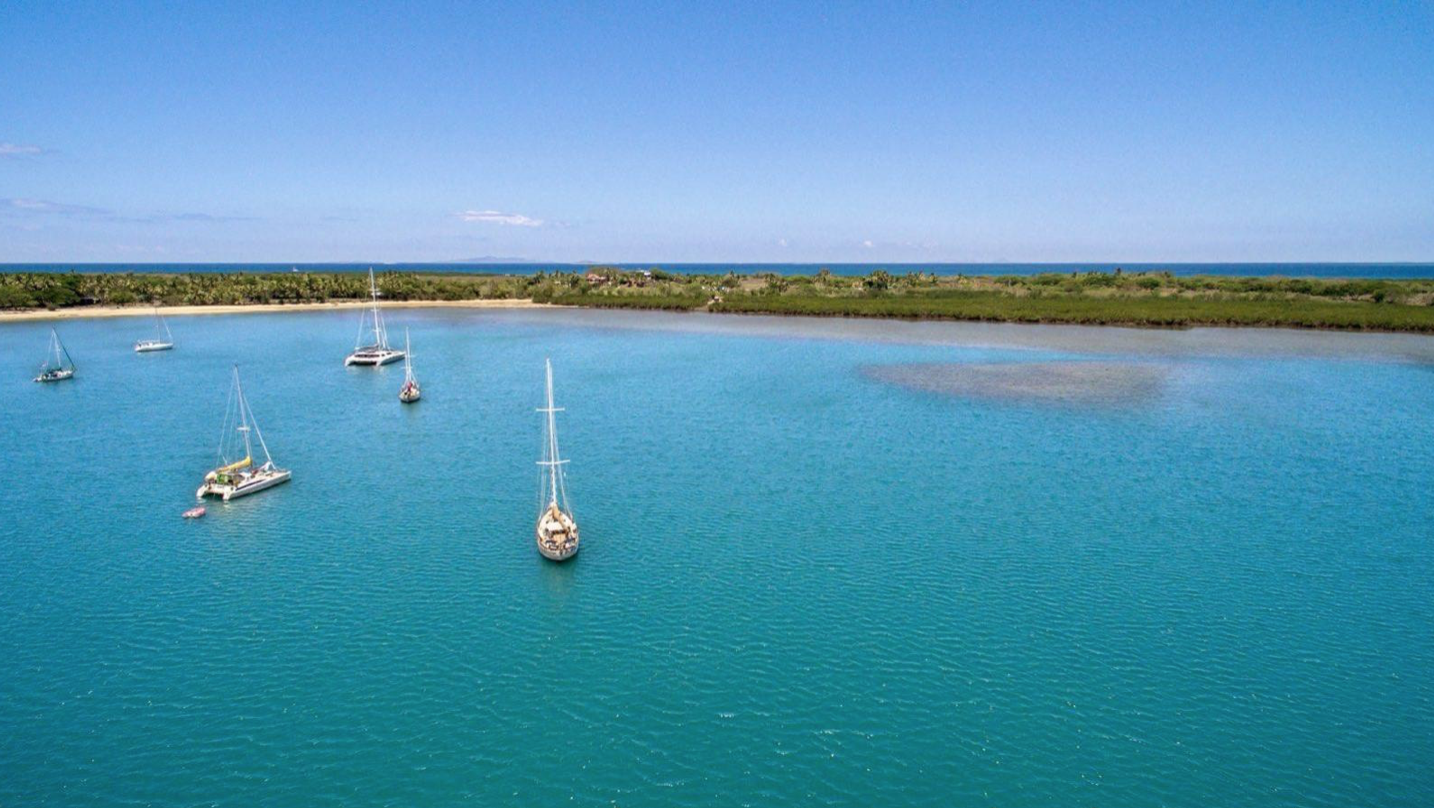
The proposed site is a small 400m wide peninsula, known as Naikorokoro Point, surrounded by mangroves next to Saweni Beach. Cromb holds a Crown lease on 25 hectares of the site zoned for tourism development with another 60-odd hectares required for the project from other lease holders and landowners.
At the southern end is a cremation cemetery for Fijians of Indian origin and farms. On the beach side is the Saweni motel and iconic Fiji Orchid hotel, formerly the home of Hollywood actor Raymond Burr of ‘Perry Mason’ and ‘Ironside’ fame.
Relying in Fiji on landfills and some recycling for waste, and realising they are not as advanced as Australia in separating waste, neither country are close to Sweden with its extensive use of WtE furnaces. In Sweden bottom ash is combined with cement to make low strength concrete products. Sweden also exports toxic fly ash residues to Norway where they are trapped in quarries. In Japan this material is superheated at greater cost (vitrification), capturing them more safely in glass form.
So there are technologies to deal with the ash, but the proposal as shown in the EIA does not commit to building this equipment, nor name companies that could take the ash to produce cement products. A flyer from a British company specialising in the carbonation process to capture toxic residues is added to the EIA.
However, in a letter to the Editor of the Fiji Times, Saweni resident Deepika Prasad – who holds a PhD in plant technology – wrote that while promoted as a modern solution, global evidence shows the WtE facilities carry serious and lasting risks.
Incinerators emit toxic pollutants, she said, including dioxins, heavy metals and fine particulate matter (PM2.5), all linked to cancer, respiratory illness and cardiovascular disease.
With the assistance of AI, Fijians are also discovering that a more suitable waste management solution for Fiji would be a combined approach, capturing the methane gas coming off existing landfills, introducing stricter separation, recycling hard plastics and possibly with a small scale WtE plant burning soft plastics, vitirifying toxic residues and then exporting it for safe storage.
That said, they appreciate any first world technology brought to Fiji will have maintenance issues and breakdowns. Although natural danger contingencies are covered in the EIA, locals remain respectful of the power of mother nature in the islands where climate change is delivering increasingly powerful cyclones and threats of inundation through sea level rise. Fiji also sits on one of the most active seismic regions in the world, frequently experiencing earthquakes and tsunami warnings.
Project owner Malouf claimed in the Australian report that ‘just a few selfish people’ were against the project. Co-owner Cromb said the plant will create jobs, greatly reduce Fiji’s reliance on landfills emitting methane and contaminated water, and produce energy to reduce the cost of imported diesel for electricity.
On the lower emissions claim reiterated in GHD consultant’s EIA, some have observed that while less diesel used means less emissions, against this there will be the not-yet-quantified emissions from shipping an estimated 40,000 container loads of waste each year from Australia to Fiji.
Raised at Nawaido, Bua on Fiji’s second largest island Vanua Levu and accorded the title Ratu Qativi, Rob Cromb was educated at Caulfield Grammar in Victoria. He established the Lyndhurst garment business in a tax-free zone at Nasinu near Suva which produces for his KOOKAÏ brand. In 2024 the Fiji National Provident Fund (FNPF) acquired the commercial property assets of the Lyndhurst Group for FJD $47.5-million.
Cromb’s Katalyst Foundation supports disadvantaged families on Vanua Levu through improved education, health and social infrastructure. He told TNG community consultation meetings last weekend he is only proposing the project to improve the lives of Fijians. The ‘only alternative’, he said, are open dump sites and casual burning emitting methane and toxins.
But Cromb now faces considerable opposition in Fiji to the WtE project at Saweni on social media, from other business leaders and even his own family. More than 9,500 signatures of those opposed were presented in documents to the Department of Environment office in Lautoka on Friday April 17. There’s speculation in Fiji that all political parties – including PM Rabuka’s coalition – see the 9,500 votes as potentially pivotal in the impending general election.
Social media posts and comments also reacted angrily to Malouf’s ‘selfish’ tag as a petition in opposition to the plan quickly gained momentum. Within a week or so more than 6,500 had signed an online petition against the proposal amid claims of ‘waste colonialism’ impacting on Australia’s image in the islands.
Fijians had planned to march in Lautoka on Friday April 17 to demonstrate their opposition, however application to march was not approved by Police. The refusal has been widely condemned as a denial of the basic right to peaceful assembly and freedom of expression.
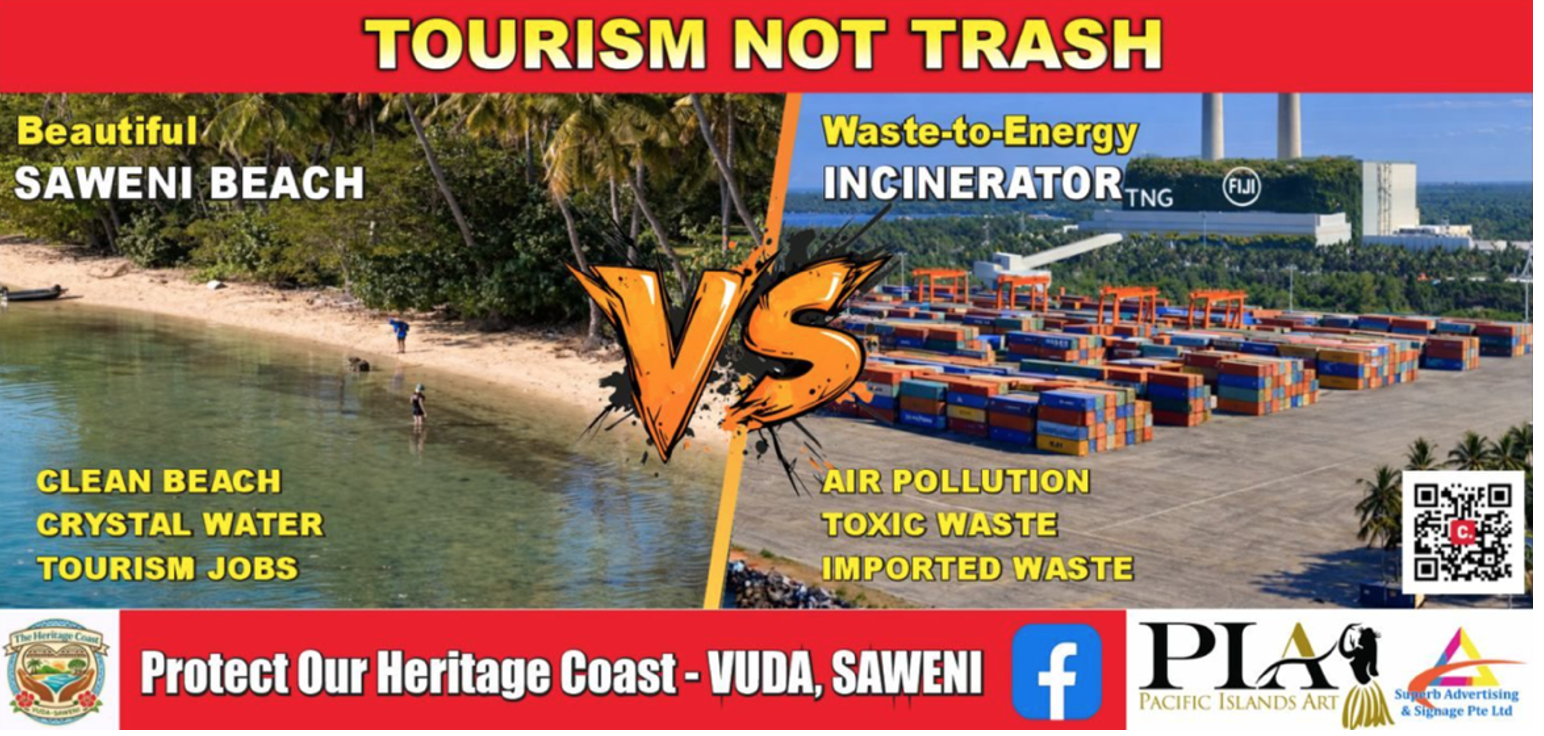
Many object strongly to it being placed in an area zoned for tourism. Also, Fiji shouldn’t be taking Australia’s waste, they say, let alone have to deal with the toxic fly ash and large quantities of bottom ash the incinerator would produce each year.
“Fiji must not become the Pacific’s ashtray,” Fiji’s Ambassador to the United Nations, Filipo Tarakinikini, posted on Facebook.
Stung by the waste colonialism charge and facing questions about the financing of the project, at final community meetings over the weekend TNG focussed on how the plant would reduce emissions and toxins from existing landfills and uncontrolled burning.
The neighbourhood
Vuda is the district and Saweni is around 7 kms down from Vuda Point at the northern end of what is known as the Heritage Coast after the first iTaukei Fijians by legend landed there and migrated inland.
In between Saweni and Vuda is the mangrove-rich Dreketi Inlet. In Fijian dreketi means to carry on your back. It may relate to a story of when those first boats arrived. Weakened by the long sea journey, their chief Lutunasobasoba had to be carried ashore by his children.
The beach was a popular spot for families of the Australian Colonial Sugar Refining Company which managed the sugar cane mills in Fiji up to the country’s Independence in 1970. In an earlier, darker chapter of Fiji’s history, when Spanish Flu took the lives of more than 5,000 people in 1919, the bodies of victims were transported on railway carts to be cremated at the Saweni cemetery.
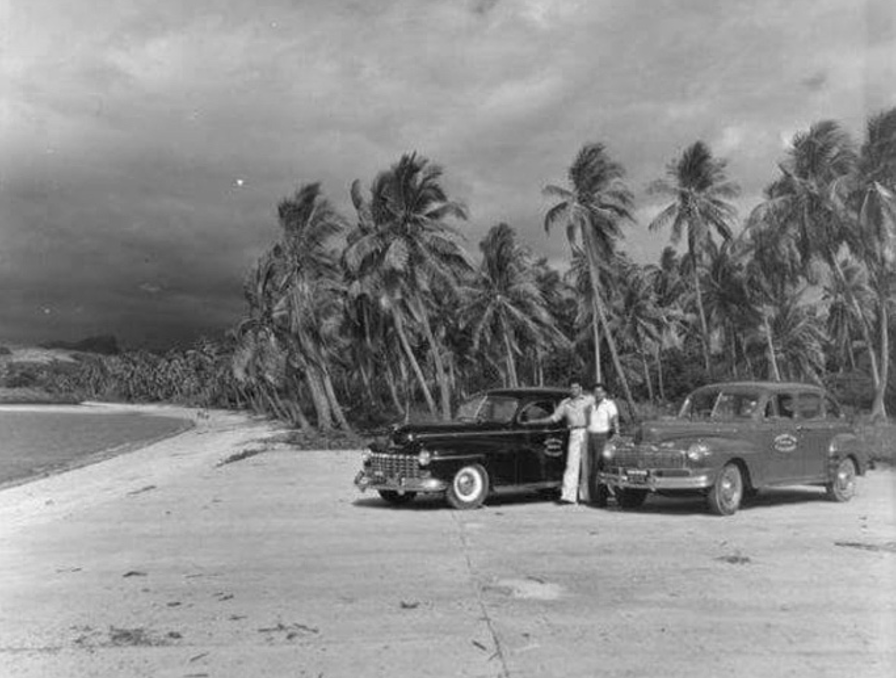
The Heritage Coast lies between the city of Lautoka and Nadi airport, around which Fiji’s tourism industry accelerated in the 1960s with resorts springing up on around 40 nearby atolls and islands offshore. Recognised as one of the most attractive destinations in the world, hotel and tour operators have been quick to object, joined by the Minister of Tourism, Bill Gavoka, who has come out firmly against.
Saweni’s surrounding communities have a rich mix of cultural heritages living together harmoniously. Nearby there are many homes, churches, temples, mosques, hotels, a marina and a university. The Saweni area is zoned for tourism and the beach provides an opportunity for signature recreation projects that benefit Lautoka City and the immediate community.
Locally, elders and traditional landowners in the village of Lauwaki at the other end of Saweni posted on social media that no one had consulted them. Villagers were shocked to hear that in addition to the eyesore and potential pollution, the facility would require the clearance of more than the equivalent of five football fields of pristine mangroves.
Lauwaki villagers gathered on the beach over the Easter weekend to protest with placards on the beach. On the Queens Highway nearby, drivers tooted their solidarity as volunteers mounted a large billboard appealing for tourism jobs, not waste incinerators.
Lauwaki’s Ratu Ilaisa Semu posted on Facebook that the people of Vuda do not support the project and thought it should be located in Bua near Nabouwalu or at Ellington Wharf on Viti Levu near Rakiraki. This area is another hub for tourism with hotels who would also oppose the project.
The Vuda Resources Development Committee which advises the Tui Vuda, paramount chief of the district and other traditional custodians of Vuda marine resources, posted on social media that nothing on the proposal had been finalised. The Tui Vuda signed the petition against presented to authorities in Lautoka on Friday, April 17.
“We are undertaking careful and thorough research to understand the full scope, risks and potential benefits of the development,” the committee posted on Facebook.
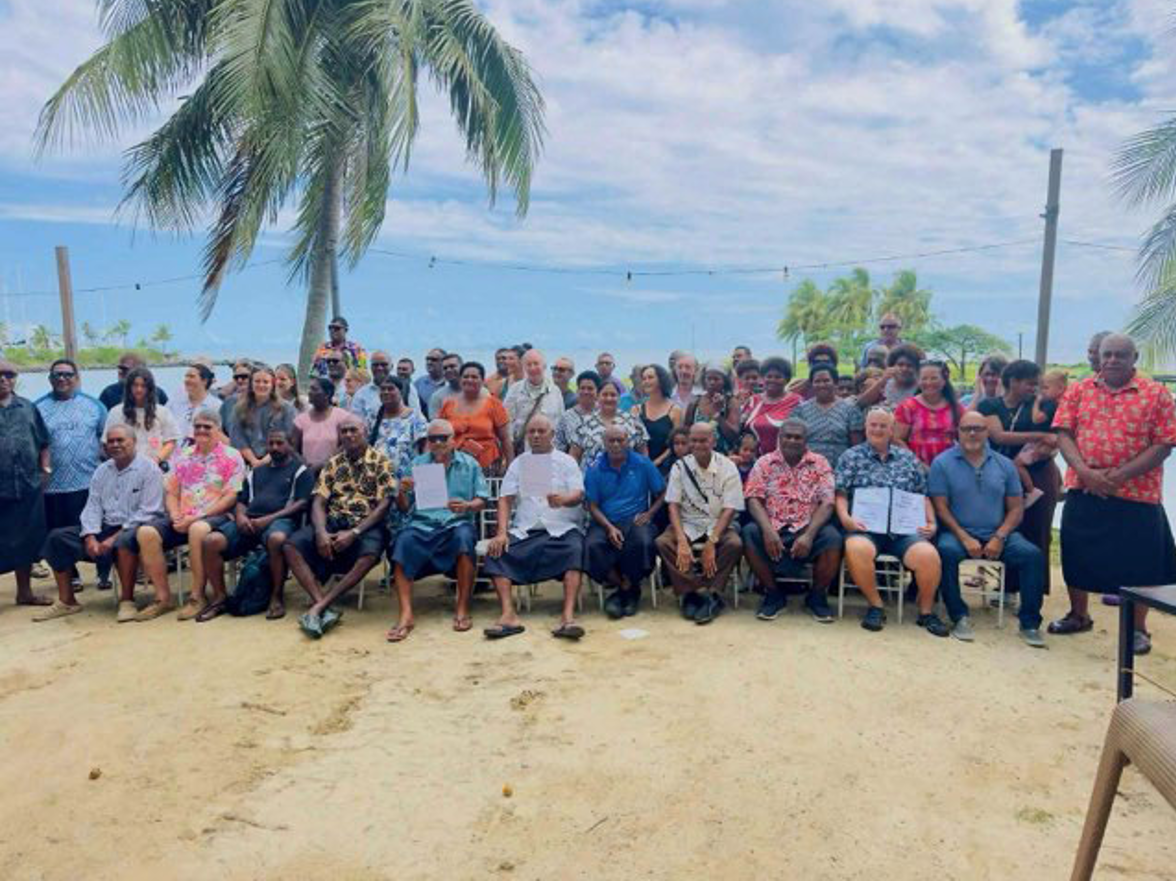
Regionally, district councils of social services representing seven provinces Nadroga, Navosa, Nadi, Lautoka, Ba, Tavua, and Ra have called on the Government to ‘not allow the project to go ahead’. And nationally, the Fiji Labour Party, new People First Party have voiced their opposition along with the influential Fiji Rugby Union who said they have plans for a stadium and rugby centre at Saweni.
Export restrictions
For their part, Australian officials have yet to comment on the proposal. Under the Waigani Convention which came into force in 2001 Australia and Pacific Islands countries banned the export to each other of hazardous mixed household waste.
Presumably this includes used disposable nappies which Southeast Asian countries started rejecting a decade ago. In Sweden there are strict rules around separating WtE plant feedstock and AI will tell us in an instant that all used disposable nappies there are burnt in the furnaces.
As it stands, under the Waigani Convention countries have the right to return anything they deem hazardous. Annex II 9.H13 of the convention bans anything that when rained upon produces contaminated water (known as leachate or ‘garbage soup’).
To comply with the treaty, it would appear the bales of waste mentioned in the EIA arriving by ship would therefore need to have all items already separated. It would possibly relieve Australia of its growing stockpiles unrecyclable soft plastics from supermarkets and fertiliser and seed bags off farms stored in bales. With the recycling industry in crisis, many of Australia’s councils’ collection points for hard plastic containers are overflowing.
By comparison, Fiji’s waste management infrastructure is rudimentary with high levels of unseparated household waste, lack of bins, collections and sorting services. Uncontrollable fires often ignite in the dumps and leachate levels are relatively high.
Introducing WtE into the waste management mix would entail additional costs for separation, transport, higher tipping fees and ongoing residue safety management, with clarity on input requirements and price paid for power.
In these respects the EIA is light on cost of separation of waste to maximise WtE performance, fees, the hazardous ash, negotiations with leaseholders and homeowners on 60 ha of the site, and on how they will connect with the local grid.
Finally, as other alternative energy projects in Fiji demonstrate, introducing first world technologies can be fraught with difficulty in Pacific Islands settings. For example, French windmills on Sigatoka’s hills not operating due to maintenance and repair issues.
Likewise, the FJD $100m Korean biomass green energy plant at Nabou between Nadi and Sigatoka which has been largely idle since it was opened in 2017. The operators Nabou Green Energy Pte Ltd were reported to be negotiating with Fiji Pine and Tropik Wood to develop a sustainable fuelwood plantation program.
So as Fiji recovers from Cyclone Vaianu which brought massive volumes of rain and floods, well might they wonder what would have happened if there were football field sized piles of WtE bottom ash at Saweni in the process of being processed, along with toxic fly ash.
The ships carrying bales of waste from Australia would have endeavoured to keep coming, as would the trucks rumbling down flooded roads from Suva, Nadi, Lautoka and Ba, carrying loads of somehow well-sorted waste. All to keep the big furnace burning.
———————————–
Richard Thomson is a freelance writer and editor based in Canberra. He was formerly a journalist at the Fiji Times, News Interactive and the Canberra Times. Richard was raised near Saweni and knows the community well.
GD and Richard have known each other since childhood in the early 1960s, when we both attended Drasa Avenue School in Lautoka and spent a great deal of our leisure time at Saweni Beach.
What’s proposed – at least judging from some of the illustrations that are circulating – is startling, even shocking, to anyone who grew up in the West and values this beautiful part of Fiji.
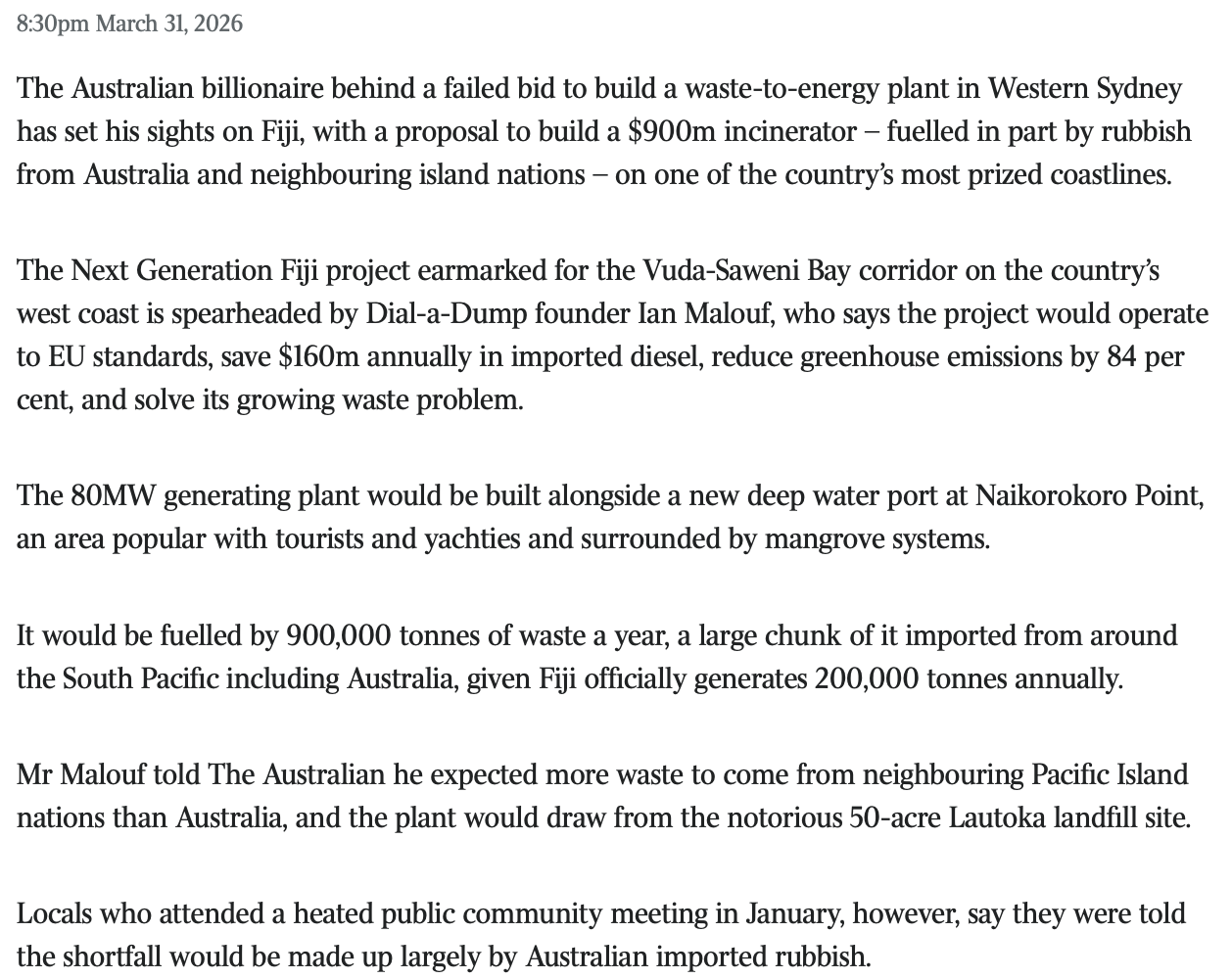
*The article from The Australian referred to above:
This is mere speculation but the push to get this project through before the next election is glaring, the connection to the former employee of Lyndhurst in Govt now an MP, the sale of Lyndhurst assets to FNPF and back door deals based on reciprocity. If this project failed in Australia, it should also be given a magnificent fail too in Fiji.
An insult to Fiji proposing such a horrible project when other huge countries used as dumping grounds are now rejecting waste from other countries due to pollution and all its associated environmental impacts, despite ‘smart’ wte projects…
The last remaining pristine coastline and outer island environment (And tourism mecca) would be forever ruined.
In this instance, thank the good Lord for AI so the locals can speedily educate themselves before the stupid deadline….
Elections can’t come soon enough!!!.
Don’t pollute Fiji with foreign waste. We already have our fair share everywhere.
The objectors who don’t want the project in their backyard, Saweni, due to adverse environmental impacts, are suggesting alternative locations of Bua or Rakiraki. If it’s not good for Sydney or Saweni it is not good for anywhere in Fiji.
It defies environmental toxic pollution logic to say not here but take it somewhere else.
Lynda Tabuya is the most deceitful and duplicitous MP of all. She was the one behind the parliamentary salary increase bill, and she is also the strongest backer of this project.
A woman who says one thing but works behind the scenes to do the opposite.
She quite likely hoodwinked the PM and cabinet. She is using her position for her financial benefit—not to benefit Fiji but to harm Fiji.
Look at the political damage she is doing to the party.
She is totally unfit as information minister and should have never been given the vital portfolio of environment minister as this position requires honesty and integrity and she has neither.
She loves galavanting around the world, collecting hefty per diems and making empty speeches while her actual actions are undermining Fiji’s interests.
If Rabuka doesn’t sack this charlatan, voters should sack both of them, as well as this government.
Australia has millions of hectares of desert in the centre of its country. Thousands of kilometres away from cities and populated areas on which to place an installation like this, it has a vast areas that would allow for surrounding the plant with companies that can process the waste products into safe materials that could be used or disposed of, safely.
It would be nowhere near any hotels, motels, resorts or tourist destinations with no danger to people living in communities nearby. It would be land that is safe from earthquakes and tsunamis and cyclones to mitigate against damage resulting from natural disasters.
It has huge open cast mining operations that leave huge holes in the ground that could take the small amounts of materials that might be produced that can’t be turned into safe by-products and buried.
Yes, it would take trucks or trains to move the thousands of containers to the facility, but compared to the costs involved with shipping them from Australia to Fiji, this must be a more viable option.
Any development such as this must be as far away from any human beings as possible. Those working there can be accommodated in safe housing and provided with full protective safety equipment so they are not in any danger.
Not so for a facility placed in the middle of villages and towns and a city nearby. This must never be allowed to be built in Fiji, no matter how much ‘so called’ good it will do this country.
I couldn’t agree more with @sack Lynda Tabuya. She is clearly the master mover of this project on the government side. This woman can smell money from 10,000 miles. While she has no conflict of interest to declare right now, one can rest assured that once the project gets approved and further down the line, there will be some benefit in some way for her husband’s company, Pacific Building Solutions. In fact the auditor general and FICAC should already be looking into the activities of PBS because of the insane number of government contracts they are receiving since gifting Rabuka that infamous Rolex Watch.
Your “artist’s impressions” of the proposed facility are deceptive by an error – they omit the 24/7 deadly plume of smoke above the working facility.
It is a sad predicament that our so called leaders, modern day charlatans and jezebels, are greedy and will prioritize money over ethics. Greedy bastards, the sooner we put them out to pasture the better.
All these dishonourable crooks with forked tongues entrusted with the providential care of their people would rather sell their people and future generations for thirty pieces of silver, recall Judas Iscariot and the Potter’s field!
If they thought these public consultations were to be performative to create a sense of legitimacy they are sadly mistaken.
Lets right wrong, let’s not trade our souls for blood money!
Lynduh duh Tabooyah is the big mouth, small brain, bushy weedy bonking HYPOCRITE. She wants to pollute Fiji after taking a bribe to support this dirty project. She needs to go back and continue eating Fiji Airways planes as breakfast.
I was at the first consultation in Saweni and upon entry there is a screen telling us that this will save $200 million in fuel costs for diesel generation.. That looked good until they said they would barge all the waste from around Fiji to the site.. Only 36 trucks per day wound be on the road…. The obvious question is “How much would that cost in diesel alone?) Let alone the infrastructure setup to have dedicated waste collection facilities at every current port….
Then the next question would have to be” If we are going to barge 300tons per day (100,000 tons per year) What do we do when a cyclone or weather severe enough to stop shipping, occurs and the barge can’t go?
What is the risk of sinking or running aground? What if the barge breaks down?
What also happens to waste that can’t be burnt? You still need a landfill for that…
One point that TNG keeps raising is the problems with the Landfills in Fiji? There is only one engineered Sanitary Landfill (Google Naboro) the rest are open dumps and do need serious attention. But not by creating another potentially serious problem…
All of us in Fiji know that major infrastructure needs maintenance but even that breaks down so what would they do with waste that is stockpiling every day that it’s not operational?
The current dumps need to be sorted properly, that’s a well known fact but NOT this way….
Hello people, this blurry foul smell rubbish project should be stopped as it aint gonna be good for our environment. Foul smell will be everywhere. Looks like the rubbish ministers ( the one looking after the environment) has failed miserably and was blinded by kickbacks to support this rubbish project.
The role of the self-centred, PS Sivendra Michael, who thinks he is the greatest gift to Fiji, should be scrutinised.
During the consultations, he was standing alongside the ‘developers’, and hiding behind the technical details in the voluminous EIA. Ironically he was not able to provide a truthful answer to a reporter’s question on whether the EIA was undertaken by the Department of Environment’.
His response was that it was done by GHD consultants embedded in the Ministry of Environment & Climate Change, and the final decision will be made by the Director of Environment? Who paid for this EIA?
Seriously? Since when was GHD embedded in the Department and Isn’t the Director reporting to him as PS? Talk about passing the buck.
Does that mean the the Ministry does not have the expertise to do an EIA? The least they could have done was to summarise the findings of the technical EIA report for the benefit of the communities and the people who will be impacted by the project.
It was also reported that Sivendra apparently thought it right to lean upon UN Fiji’s Ambassador Tarakinikini to withdraw his well analysed and critical analysis of the project which was circulating on social media.
Let’s take Earth’s waste to the moon. Preferably dumped on the side that never faces earth. Out of side out of mind and nobody will find out. (Vis a vis Illegal dumping)
Whilst we still throw bottles , wrappers, tin cans out the window and into the streets, waterways, beaches, jungle..and think that as long as it’s not in my backyard and don’t get seen it’s fine. (Some even don’t worry about being seen littering. )
Sounds like a white elephant project is under consideration.
What a good article .
Far more comprehensive than anything I have read previously.
Onshore infrastructure does not support it and geography and environmental realities are against it .
Tell ‘em they’re dreaming’ .
Fire Sivendra Michael now along with Lynda. These two are hoodwinking Fijians. Sivendra is over-rated and it appears he doesn’t know environment well.
Lynda only knows how to wear fancy dresses (and sometimes no dress) at the expense of taxpayers.
Don’t forget that old saying. A bird in the hand is worth two in the bush. And in the case of these two, birds of a feather flock together.
Both of them are being watched very carefully on this issue.
It would be great if efforts were made to keep Fiji’s beautiful beaches clean. That’s where the focus should be, instead of trying to provide space for Australia’s garbage.
It’s truly criminal how badly littered and polluted some of our most iconic beaches are (see Cuvu Beach, Naqorai Beach – right next door to a rubbish tip)
I know of no government initiative in place to keep these treasures looking beautiful. If there are, what are they?
As usual, money is the focus and the enticing carrot being dangled by TNG is affecting people’s ability to see beyond the money into how this will impact present & future generations.
We have enough of our own pollution issues without having to worry about keeping someone else’s backyard clean.
https://matanataki.com/solving-fijis-urgent-waste-problem/
There is an alternative that has been presented to the last Government and this one…..Just no political will……….