
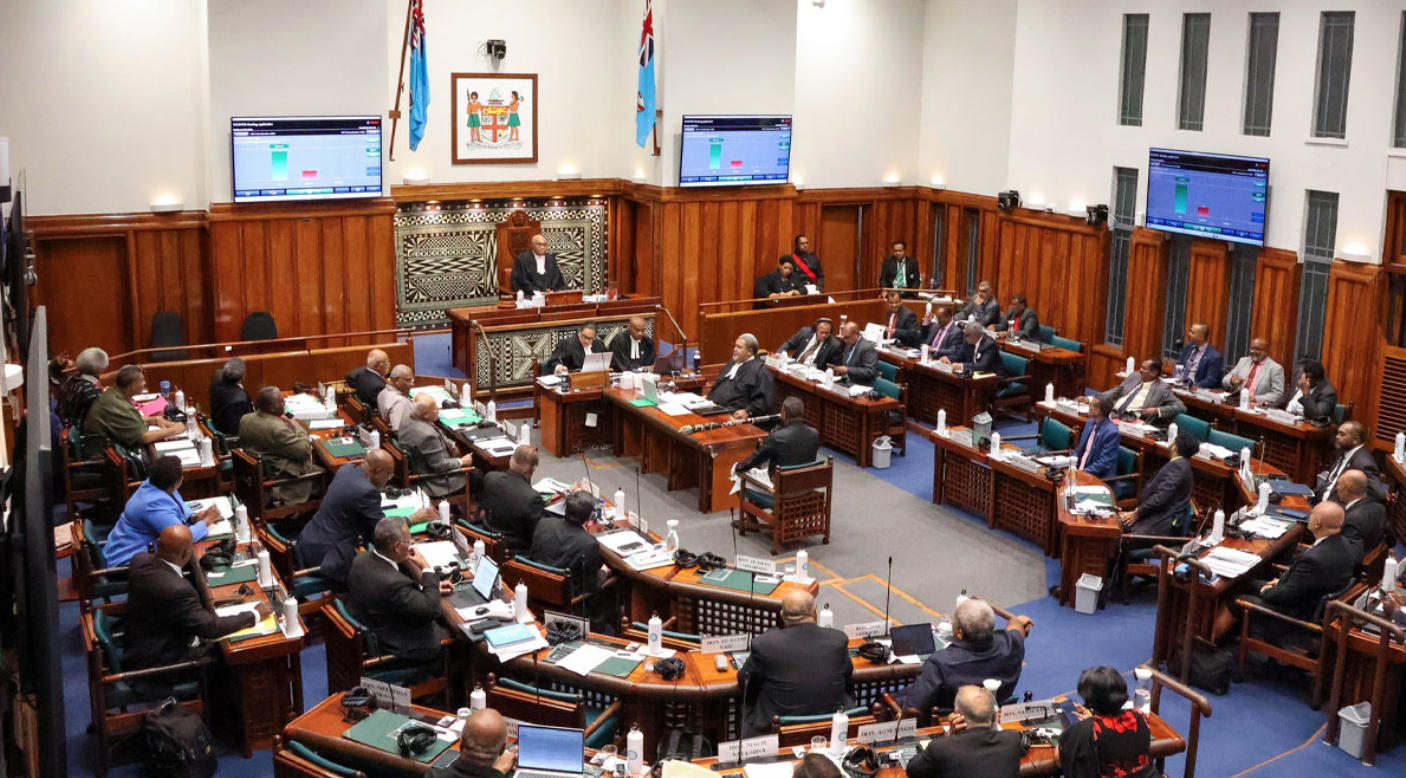
Grubsheet predicted that the new draft constitution would clear the parliament by 37 votes and in the end, Sitiveni Rabuka got an extra one to give him victory.
He needed 35 votes – according to the Speaker, Filimone Jitoko, or 36 votes according to Nilesh Lal at the Centre for Democracy and Dialogue (see below) – and in the end, got 38, which means that the Bill now goes through a process of review in the parliament for the next 30 days until its third reading and the final vote.
Here’s how the story has broken on CFL-Fiji Village.
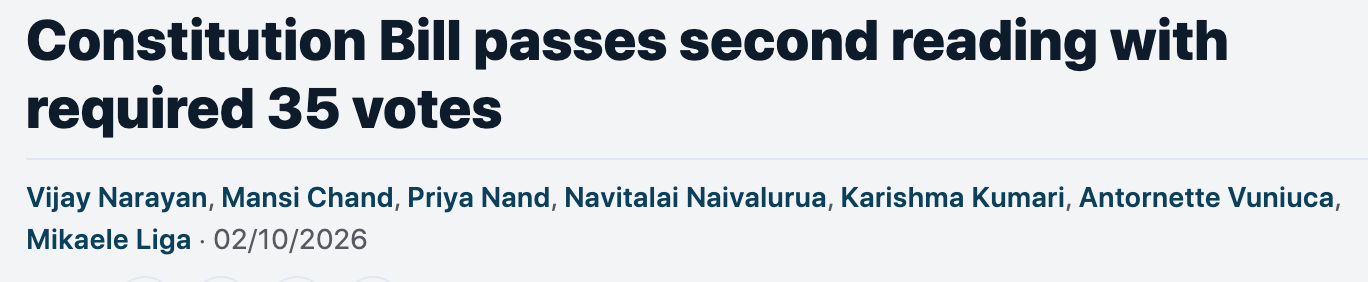
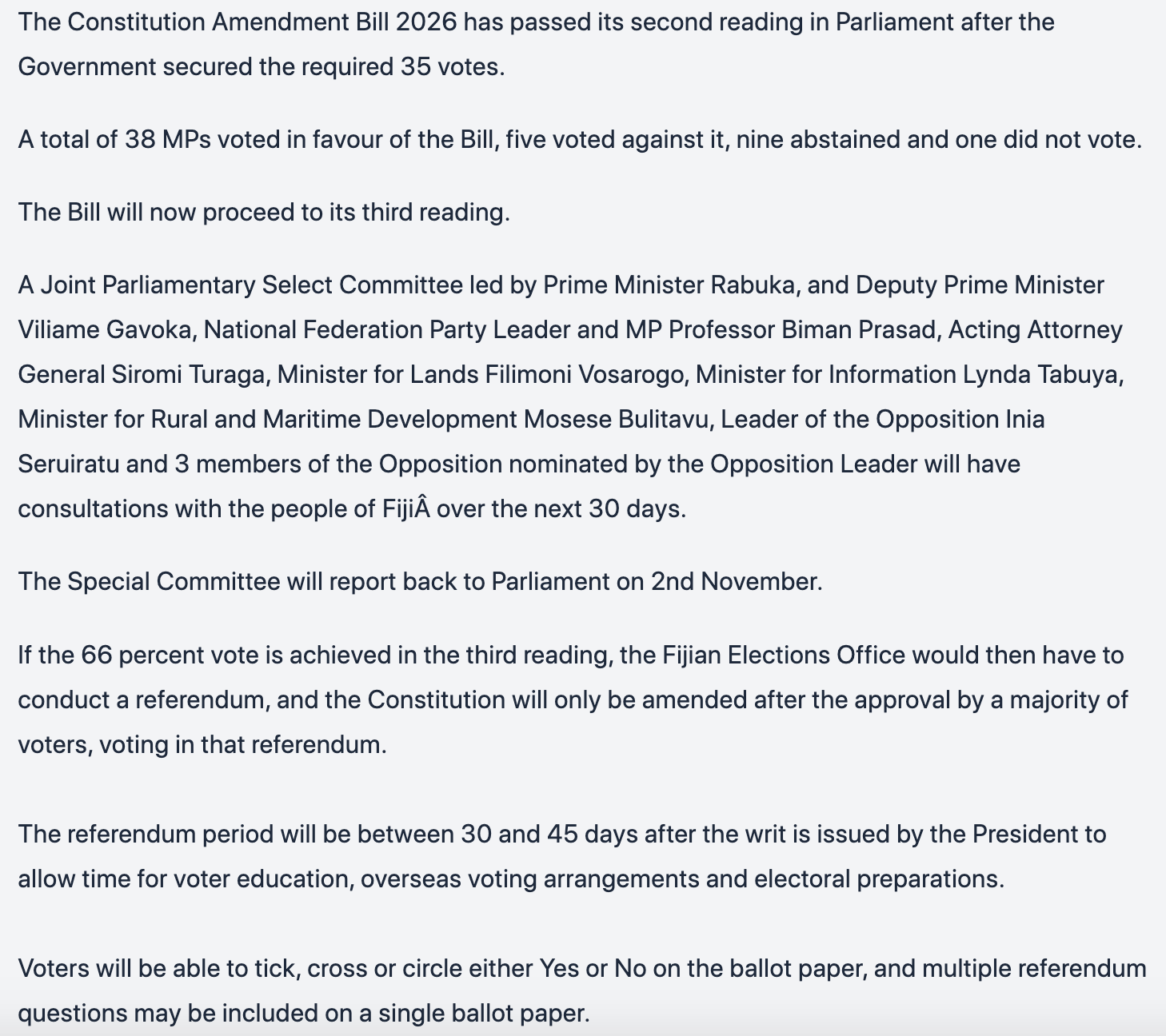
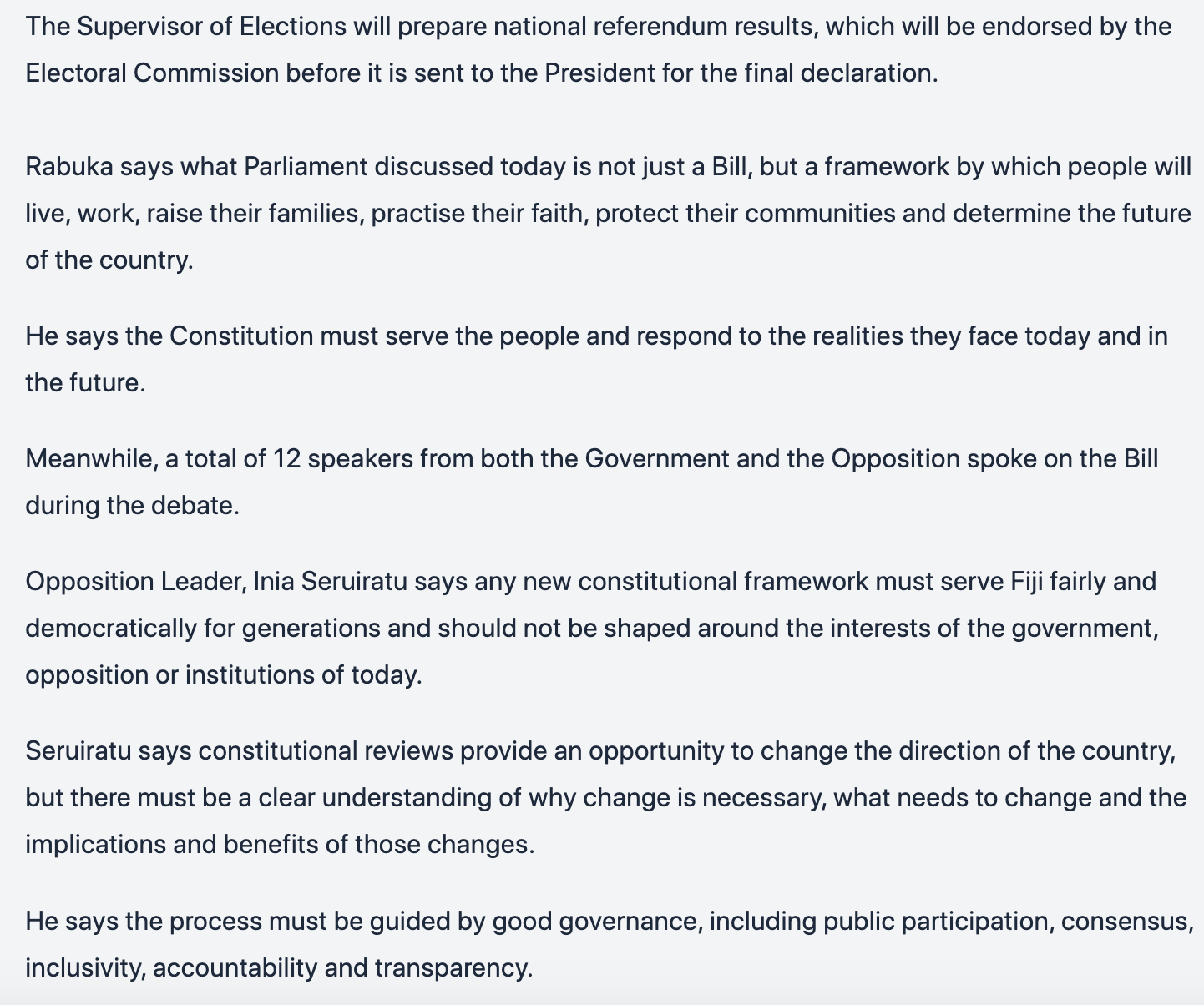
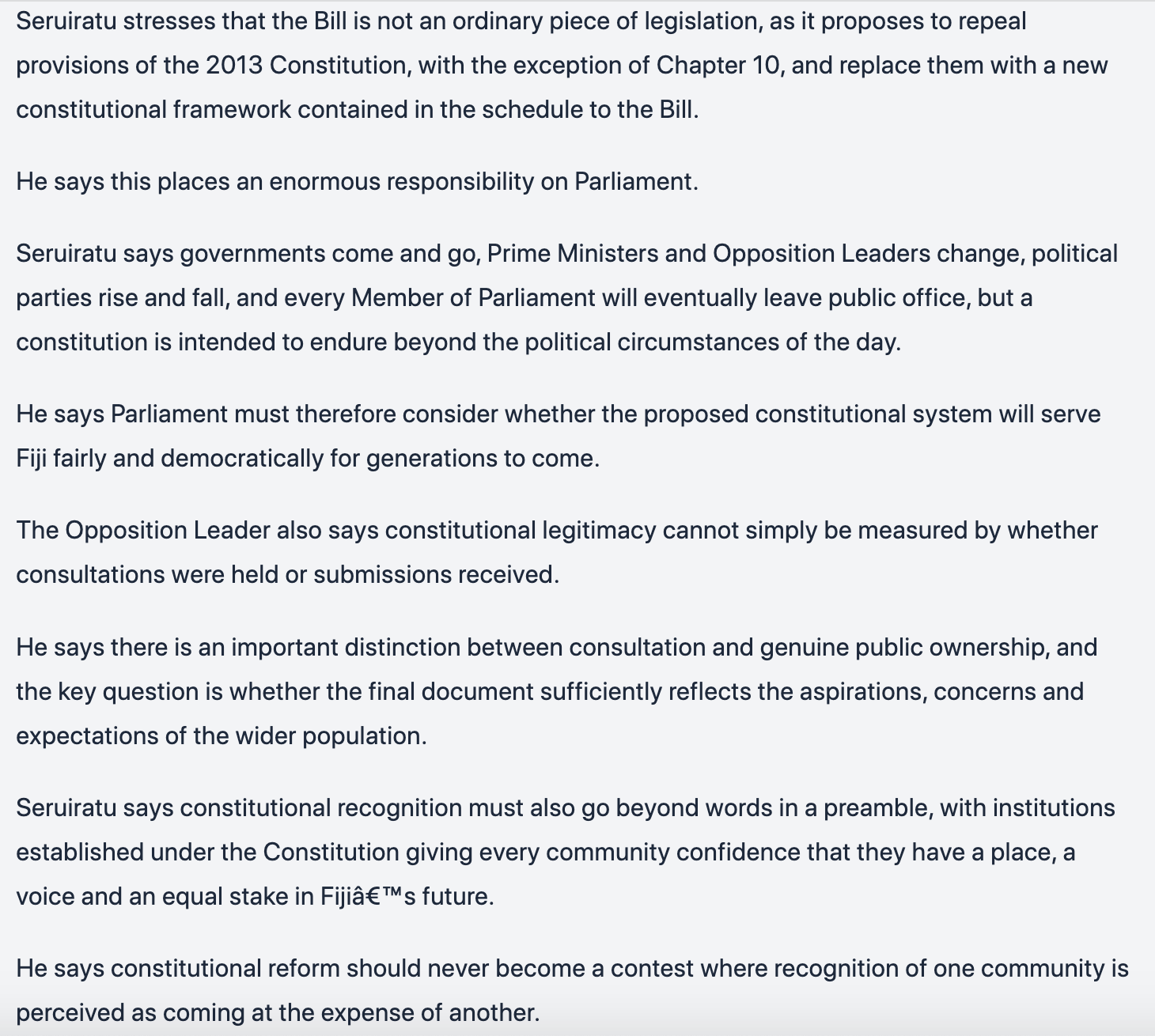
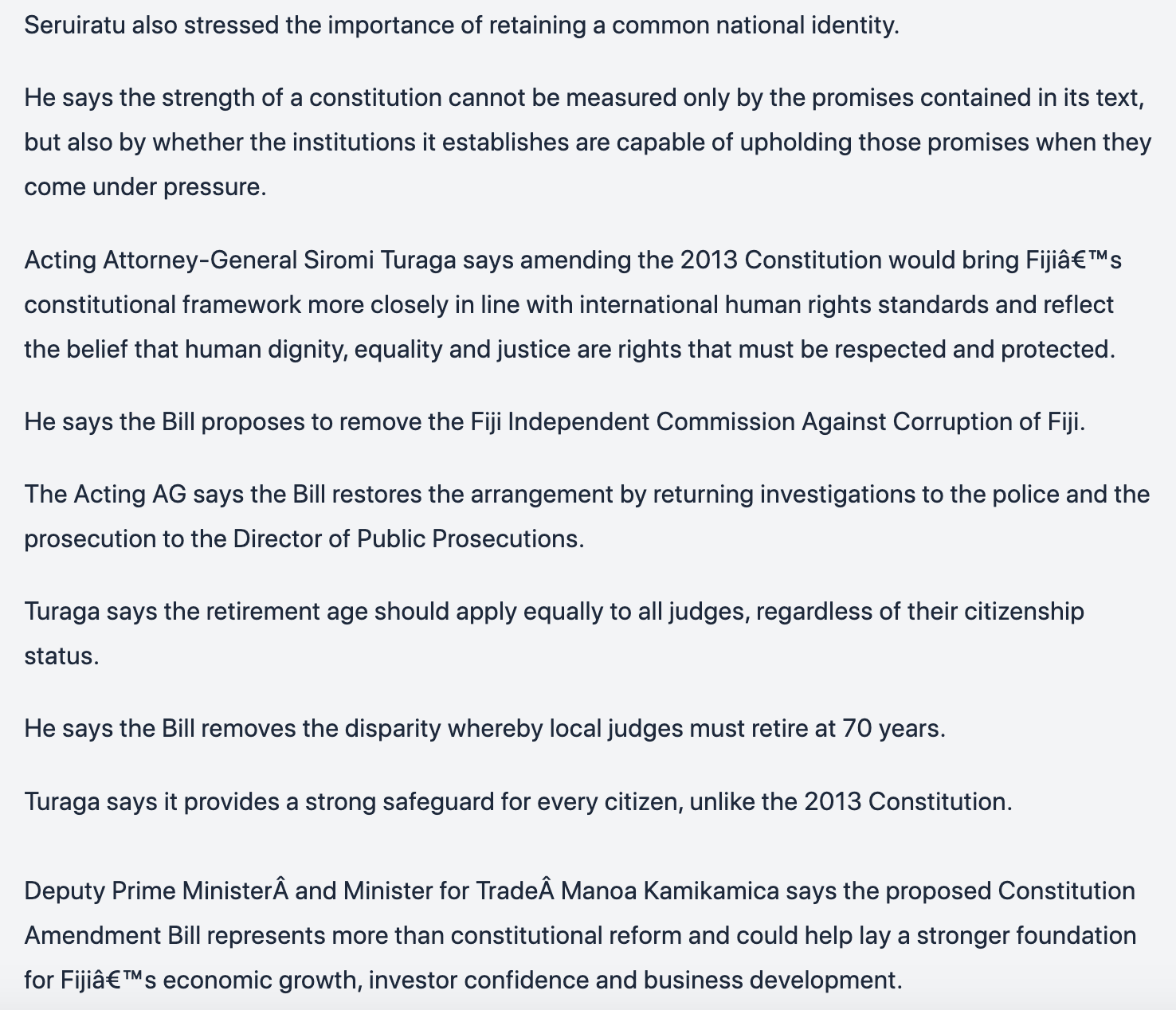
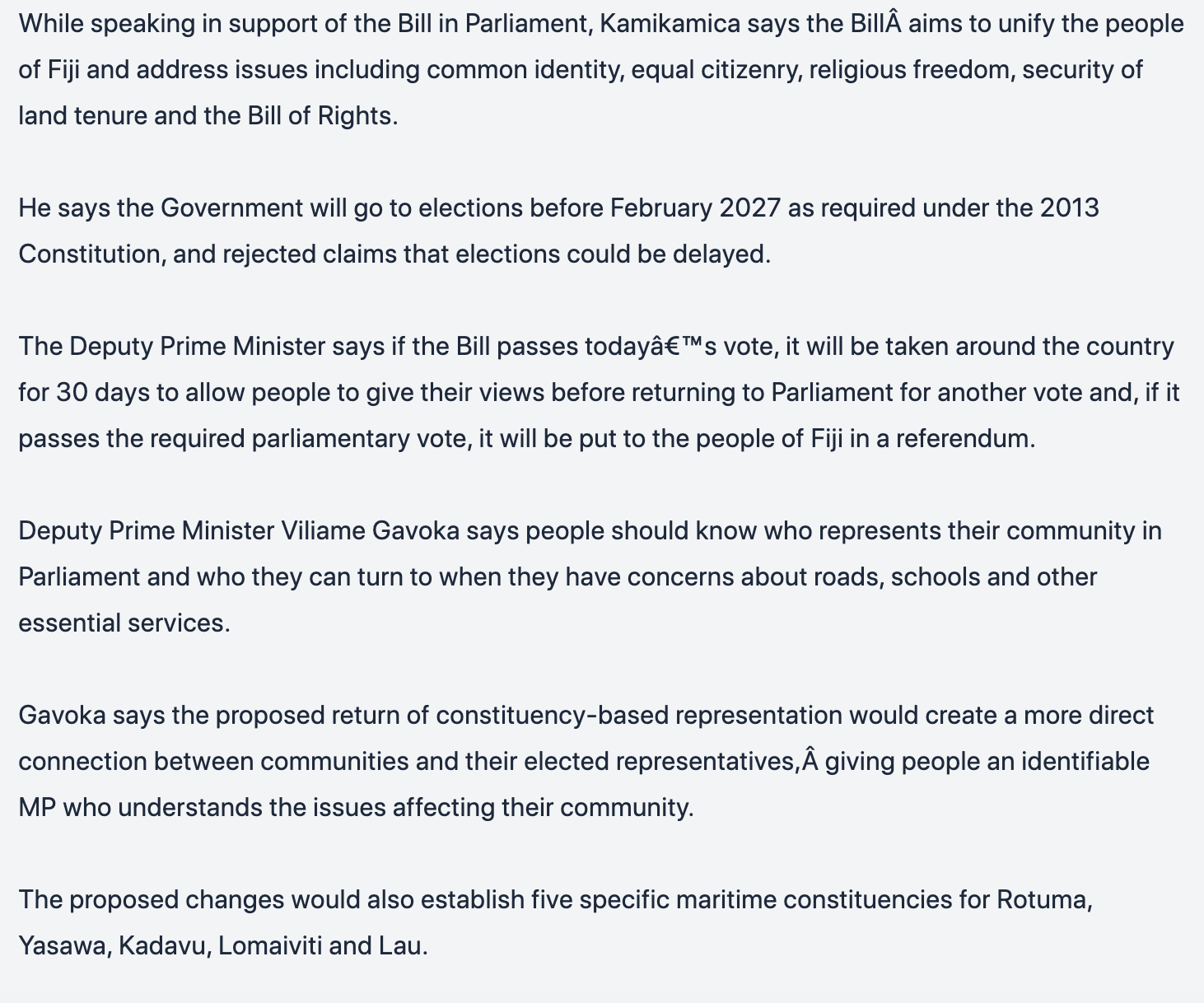
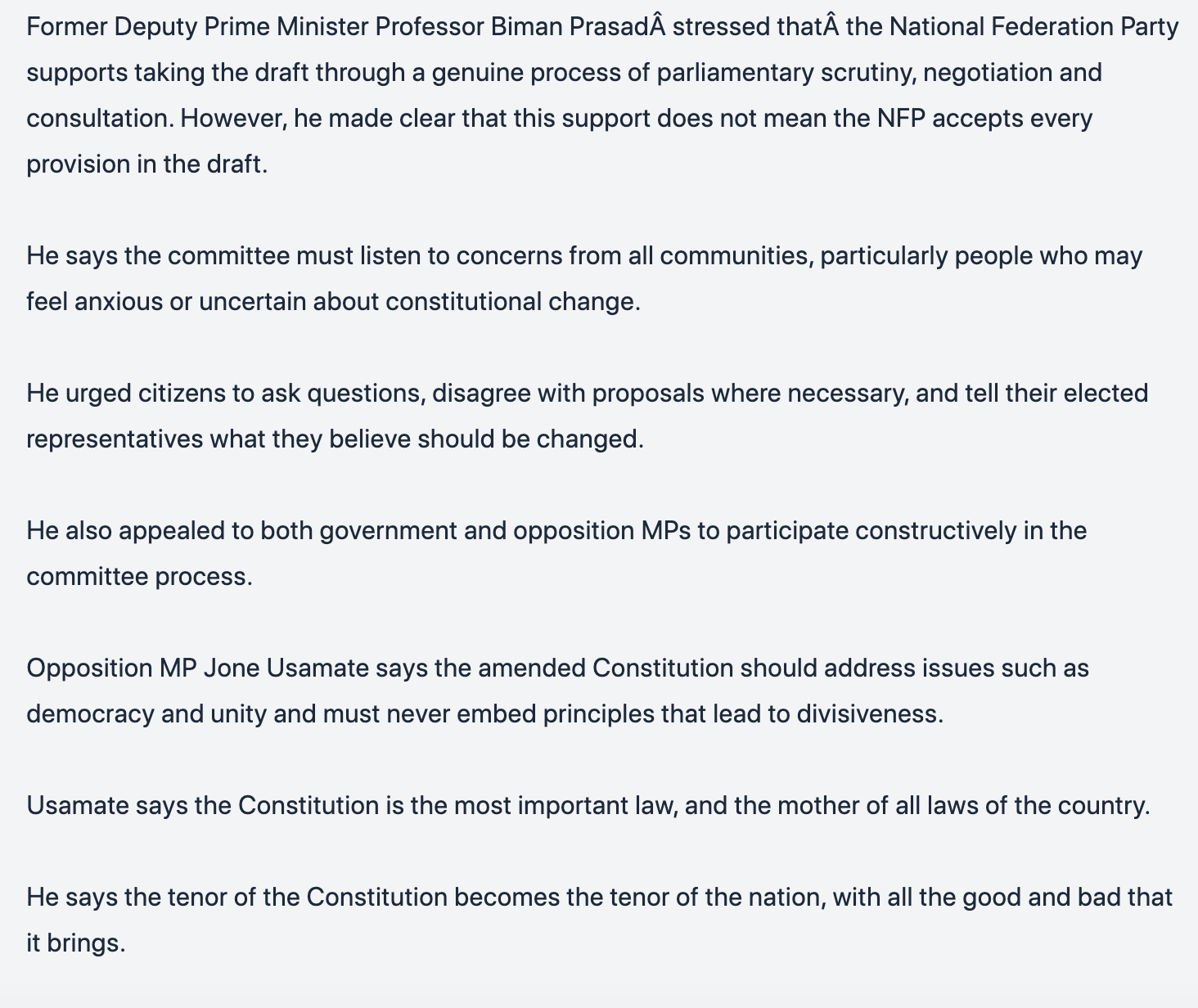
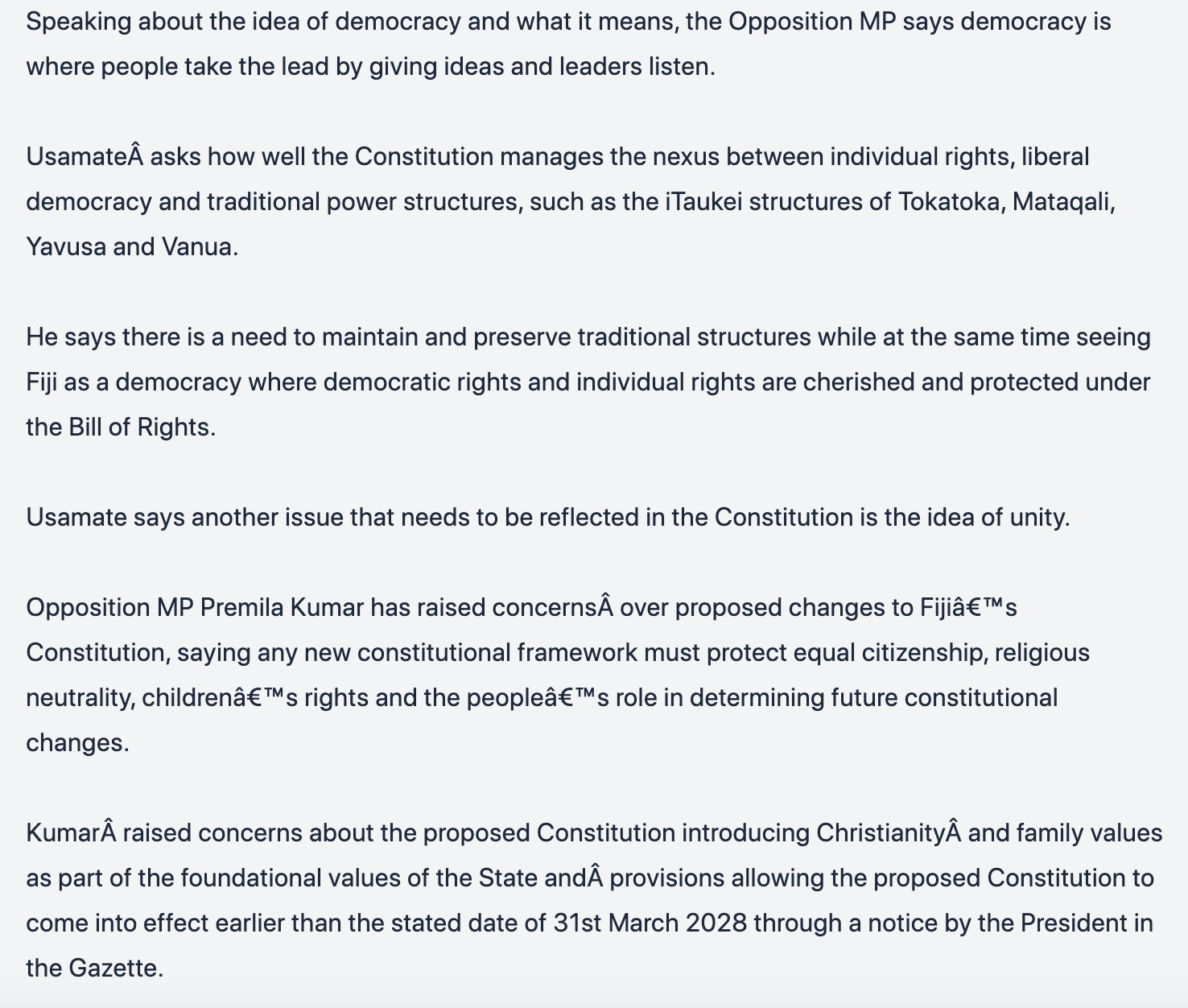
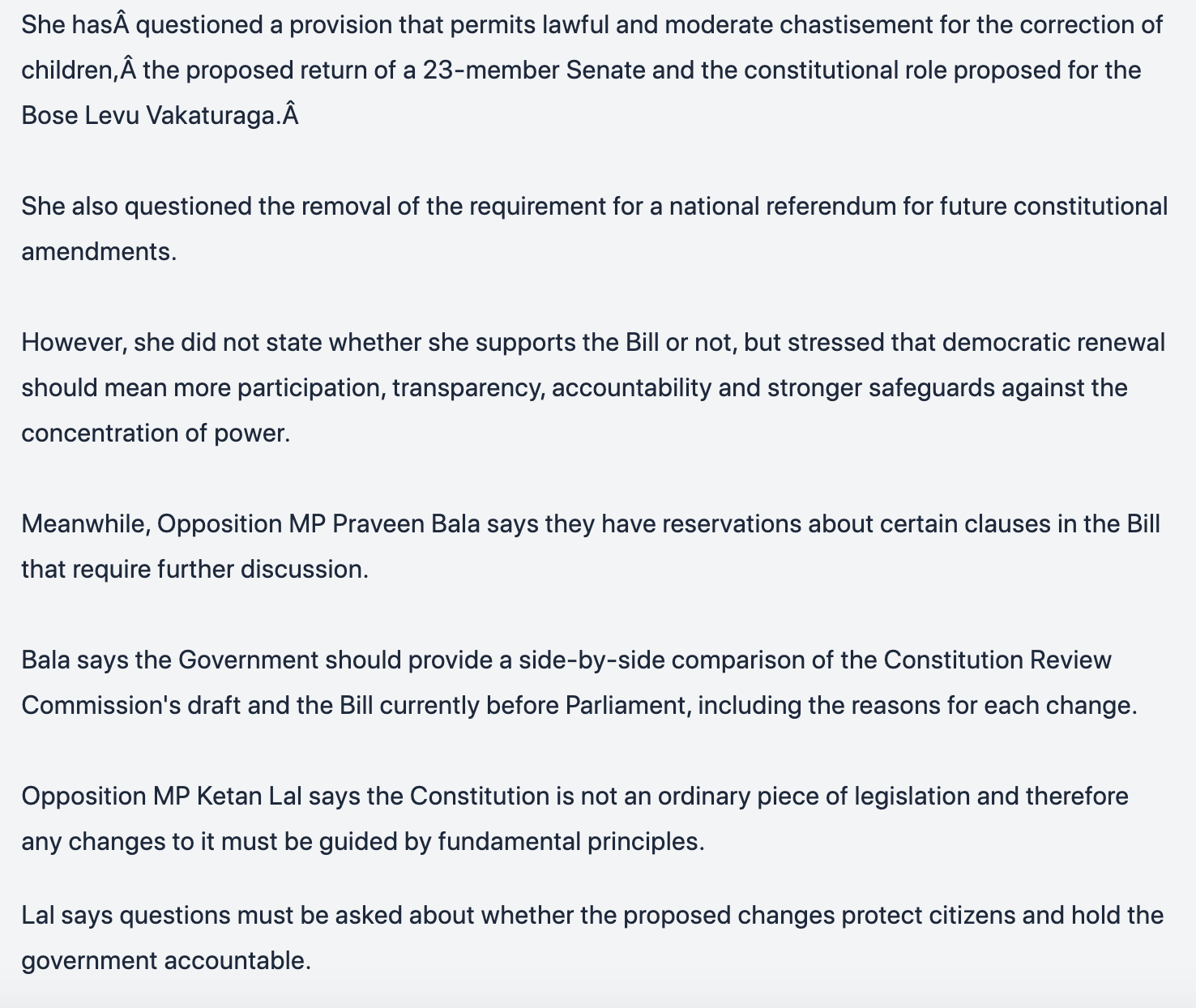
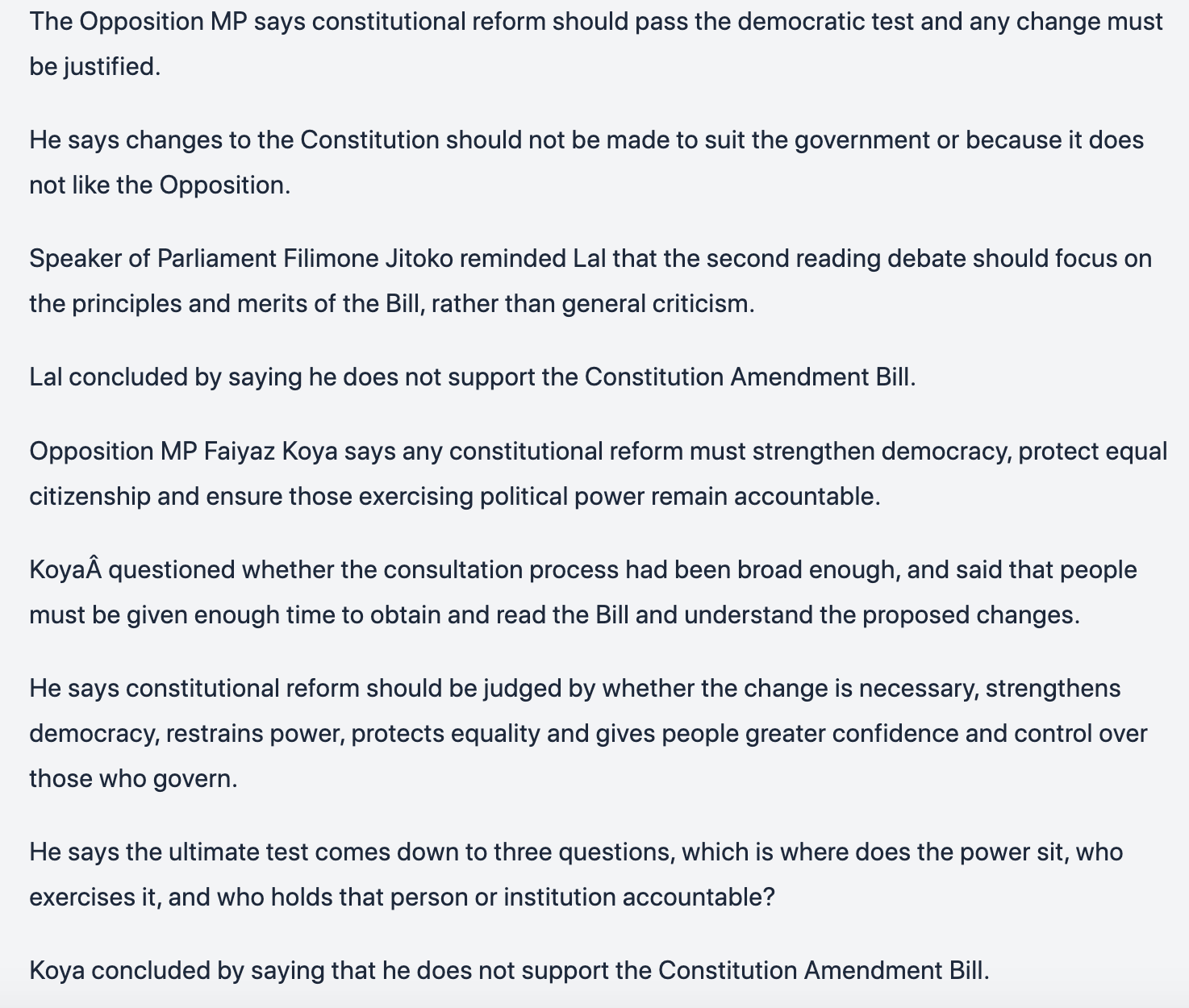
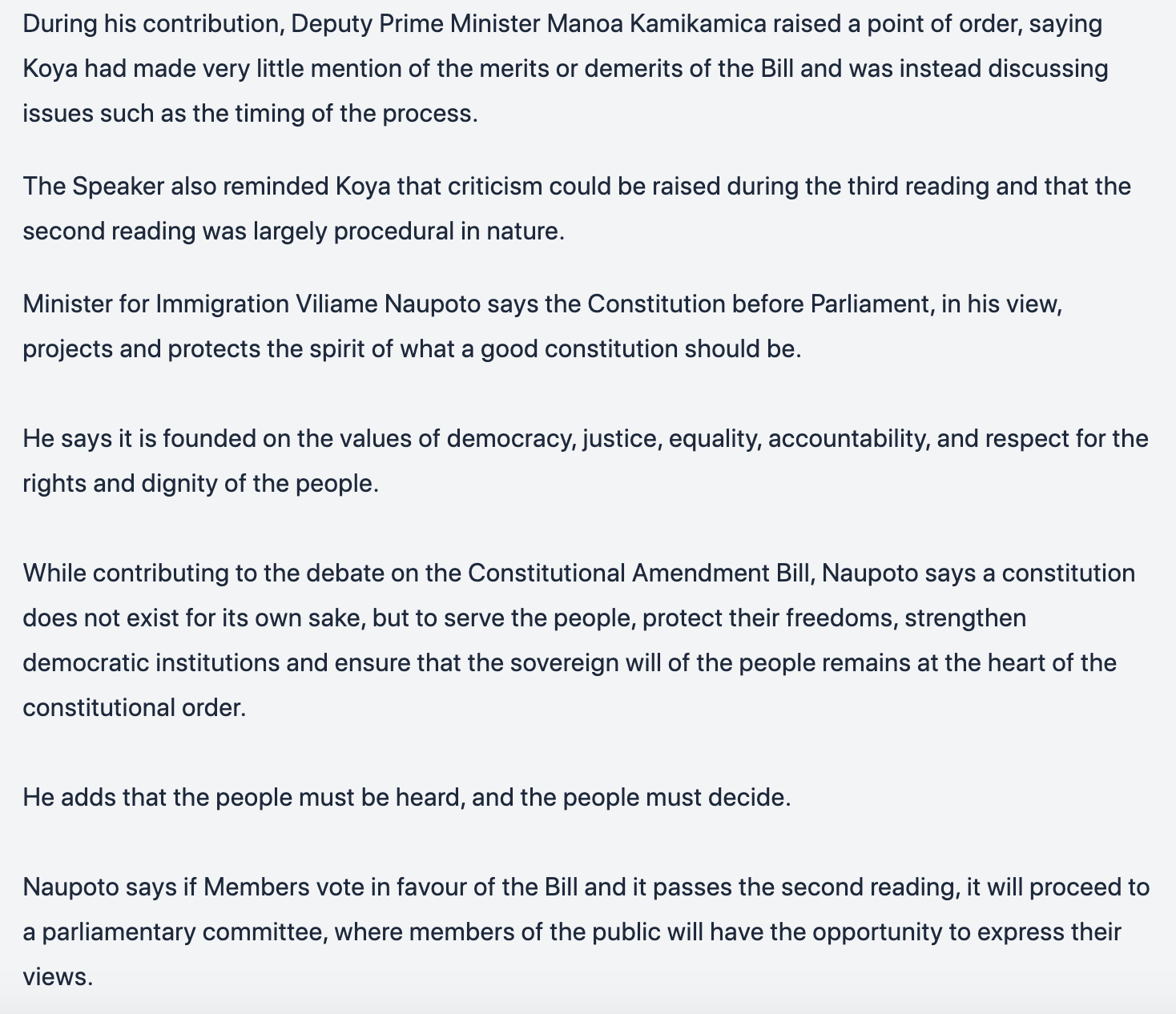
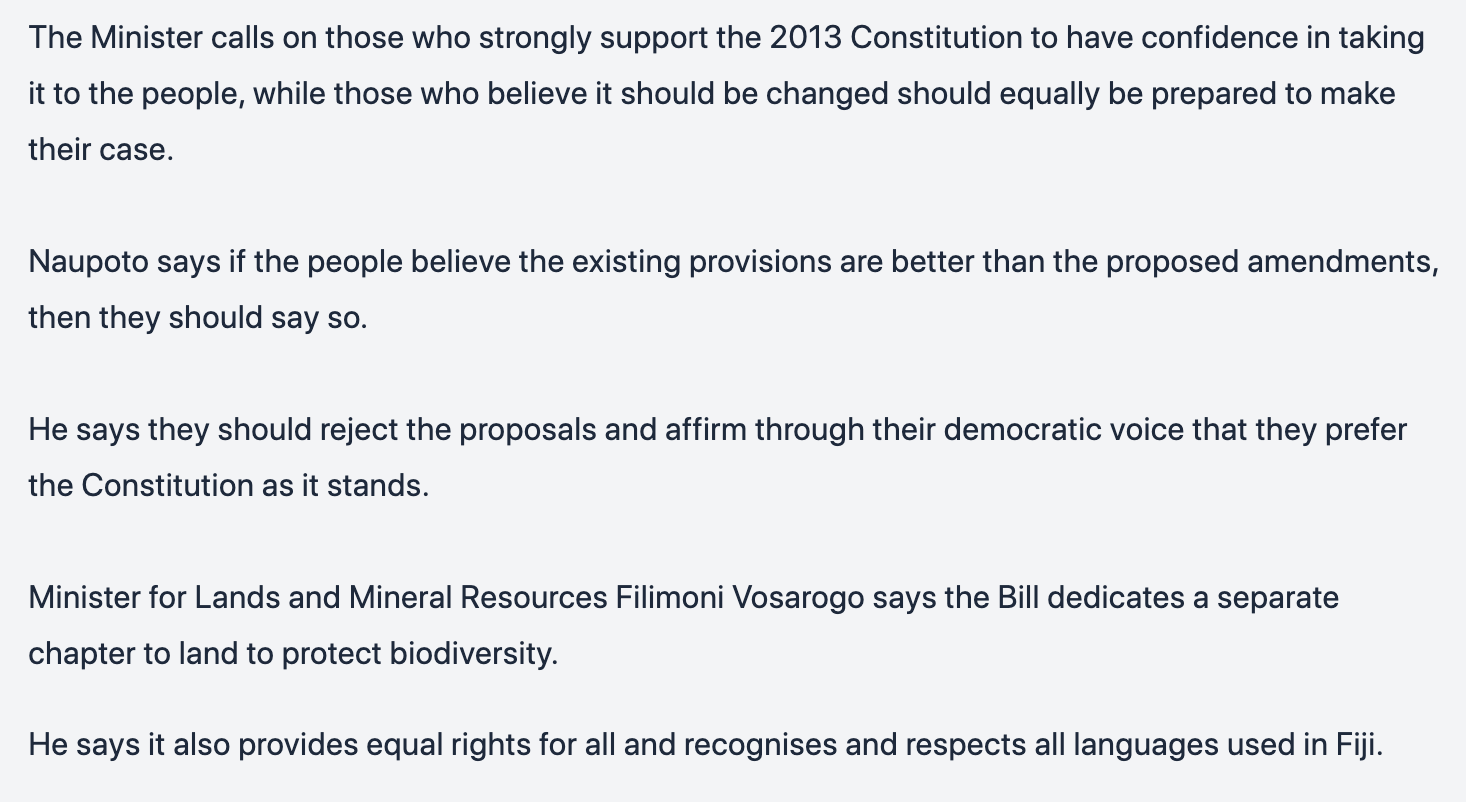
Comprehensive analysis to come. Yet already there’s disagreement about how many votes the Prime Minister needed to win.
The Speaker, Filimone Jitoko, says it was 35. But he’s been challenged on this by Nilesh Lal – the head of the Centre for Democracy and Dialogue – in a comment to Grubsheet.
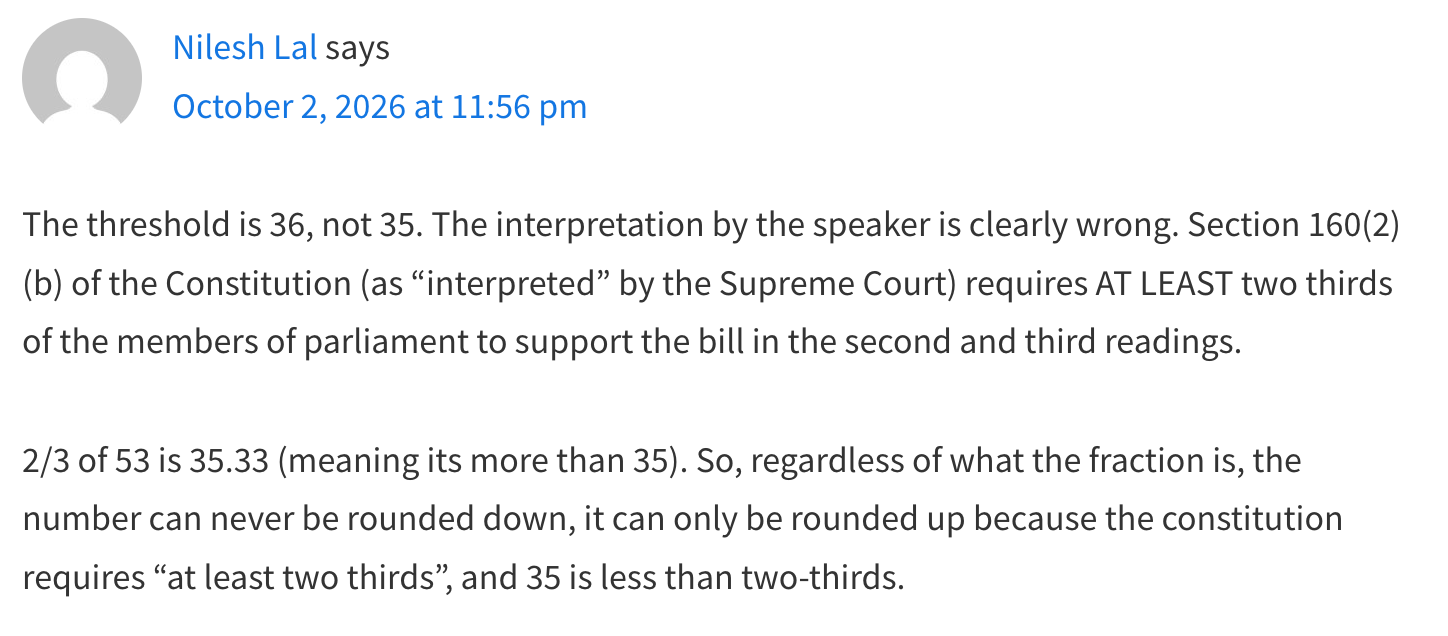
Yet as they say, a win is a win. Now the real battle for hearts and minds begins in the parliament, with a final vote in 30 days.
If it passes again then, it will be for the people to decide.
If the DPM of Fiji does not know that roads are either the remit of local councils (yes those entities whose democratic lungs continue to be compressed by yet another government), or the Fijian government which via its state entity, the FRA effectively nullifies provincial or community lobbying, then it shows where the rot is in Fiji – at the highest level!
The threshold is 36, not 35. The interpretation by the speaker is clearly wrong. Section 160(2)(b) of the Constitution (as “interpreted” by the Supreme Court) requires AT LEAST two thirds of the members of parliament to support the bill in the second and third readings.
2/3 of 53 is 35.33 (meaning its more than 35). So, regardless of what the fraction is, the number can never be rounded down, it can only be rounded up because the constitution requires “at least two thirds”, and 35 is less than two-thirds.
I think at least means 35 or more.
Why in the comments and press is there not more focus on the new senate which will be dominated by the chiefs in an undemocratic way and presumably have the power to’kill’ any legislation coming up from the‘people’s house’? This is surely de facto iTaukei rule?
They can’t actually “kill any legislation” as in a right of veto but they will have a disproportionate influence in national affairs, more seats in the senate than anyone else and the exclusive right to choose the president and vice president. And that is simply unacceptable when it clearly should be the right of parliament to do so.
The move everywhere else in the world is for the erosion of hereditary privilege based on an accident of birth in favour of democratically elected representatives of the people. But not in Fiji, which is clearly hell-bent on returning to the past.
Let’s see what ordinary i’Taukei think about that when the time comes and whether they vote for hereditary privilege at a referendum, assuming this passes the third reading next month.
Bunch of un-elected and self entitled people will sit in Senate at an unaccountable cost. Totally unnecessary. Democracy works equally well in jurisdictions with a single house. Get local councils going and forget about the senate.
This is an extravagance a place like Fiji can ill afford. Instead, allocate the funds to attract expatriate judicial officers and bureaucrats. This will get rid of the current circus of targeting local opponents by relying on local,incompetent and biased judges and administrators.