
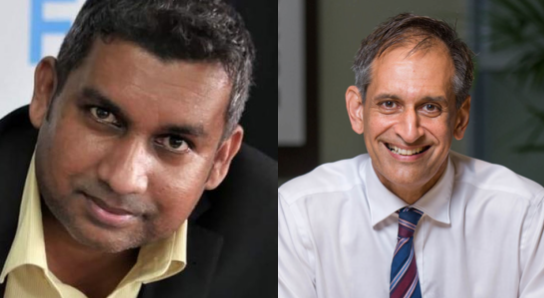
There is a lot of nonsense being spread about the failings of Fiji’s electoral system, just as there is a lot of nonsense being spread about the failings of the 2013 Constitution. And by people who should know better, such as the lawyer and NFP stalwart, Richard Naidu.
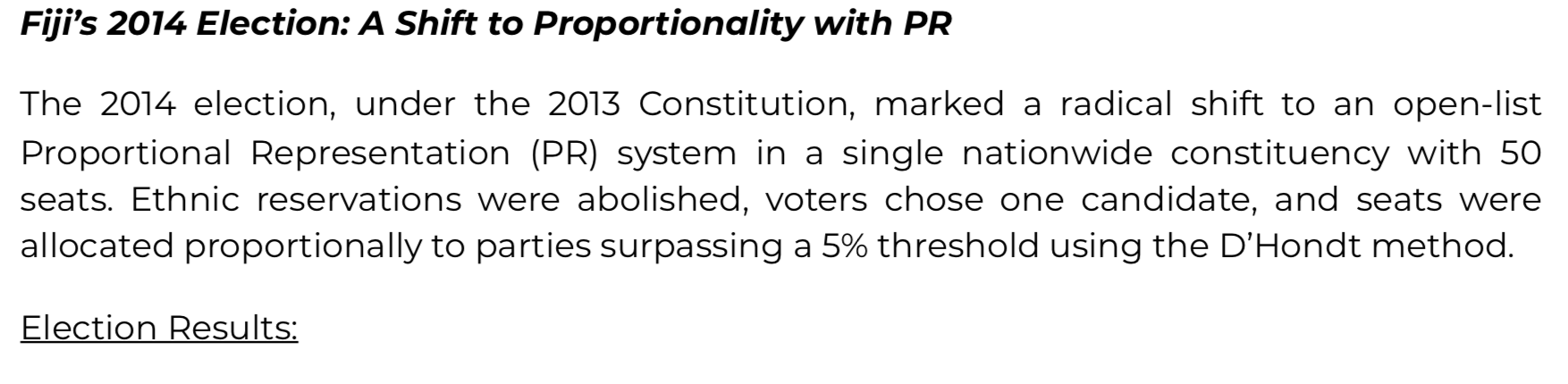
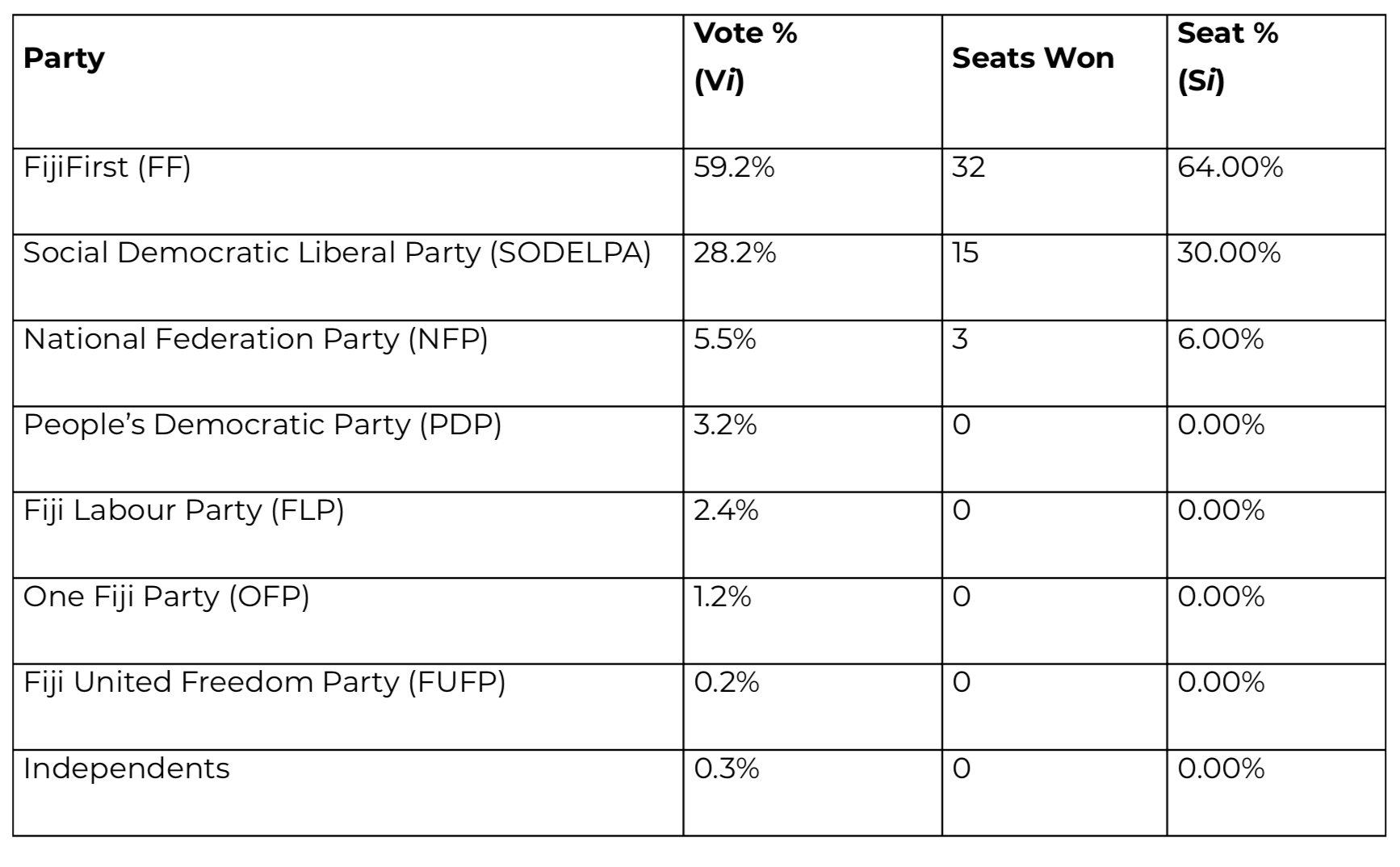
The (now very) occasional Fiji Times columnist has attracted the ire of Dialogue Fiji’s Nilesh Lal for describing Fiji’s current Open List Proportional Representation system as “strange and unrepresentative” and suggesting that it undermines democracy.
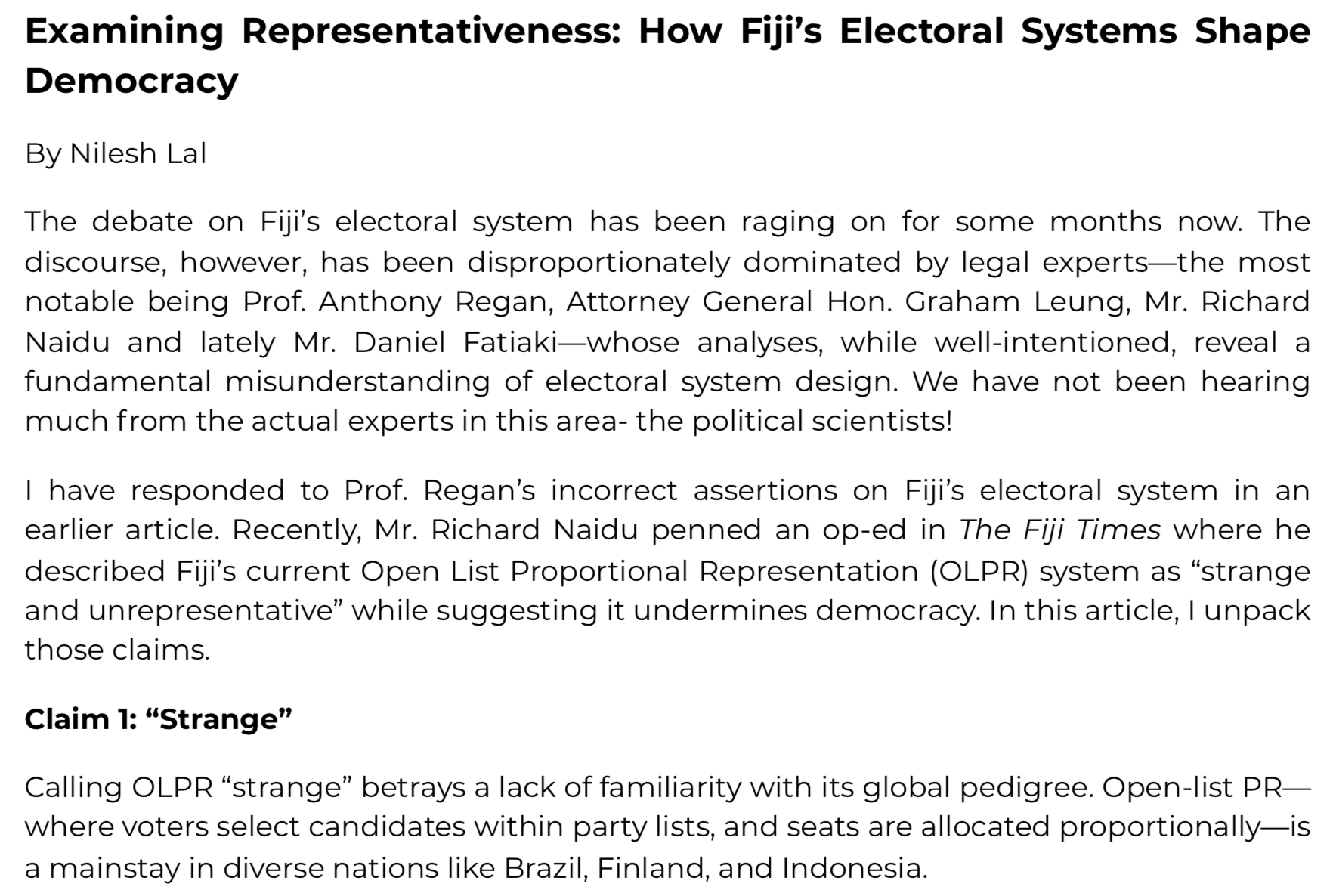
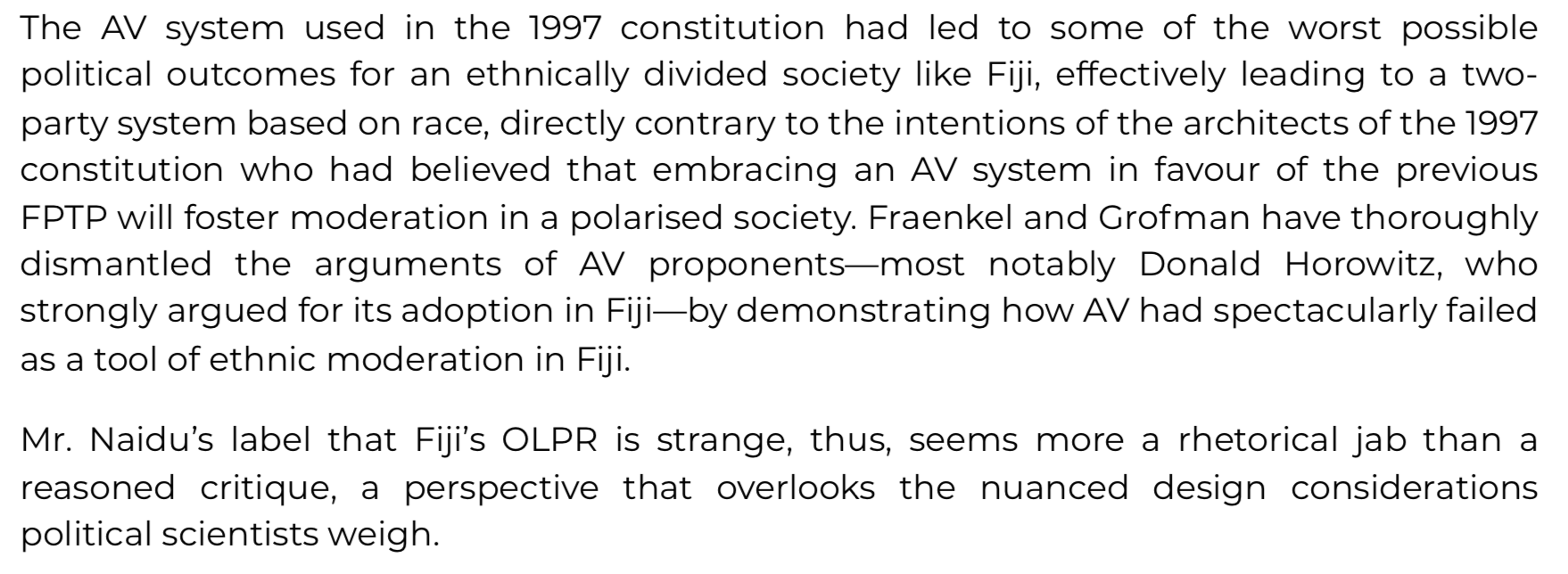
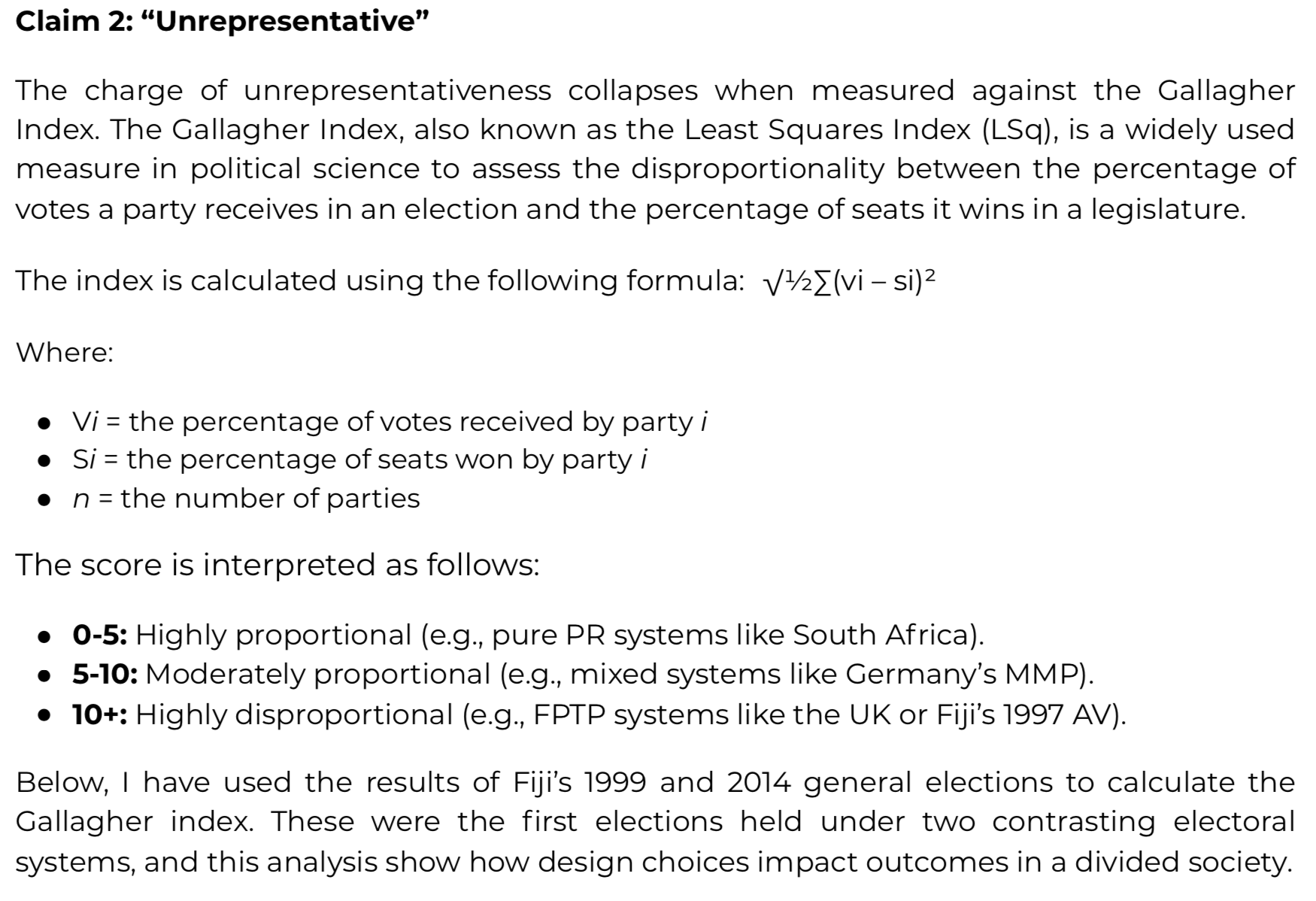
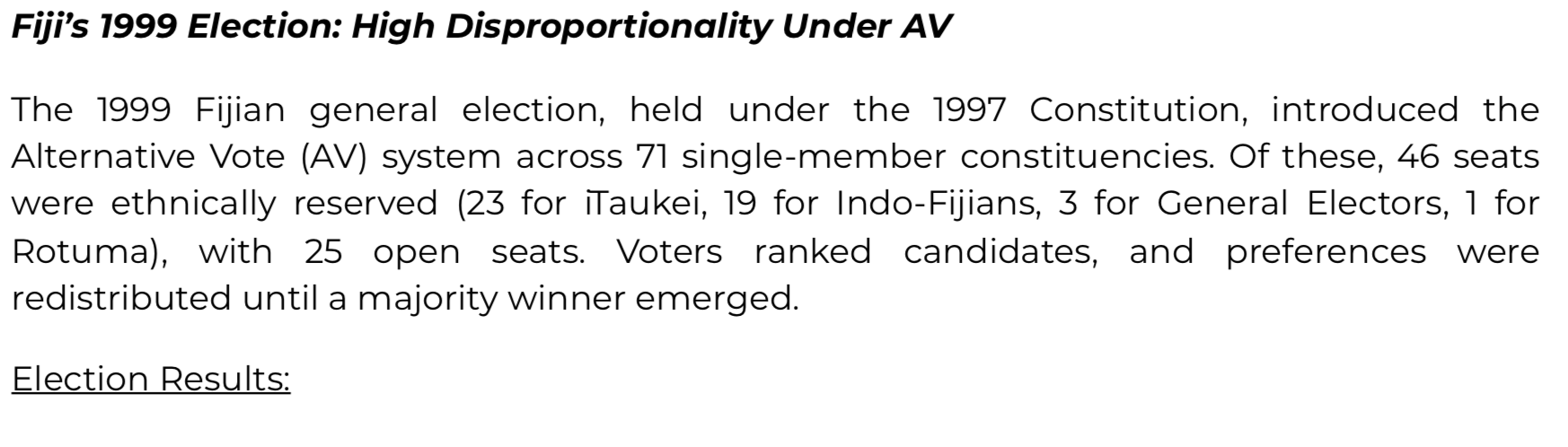
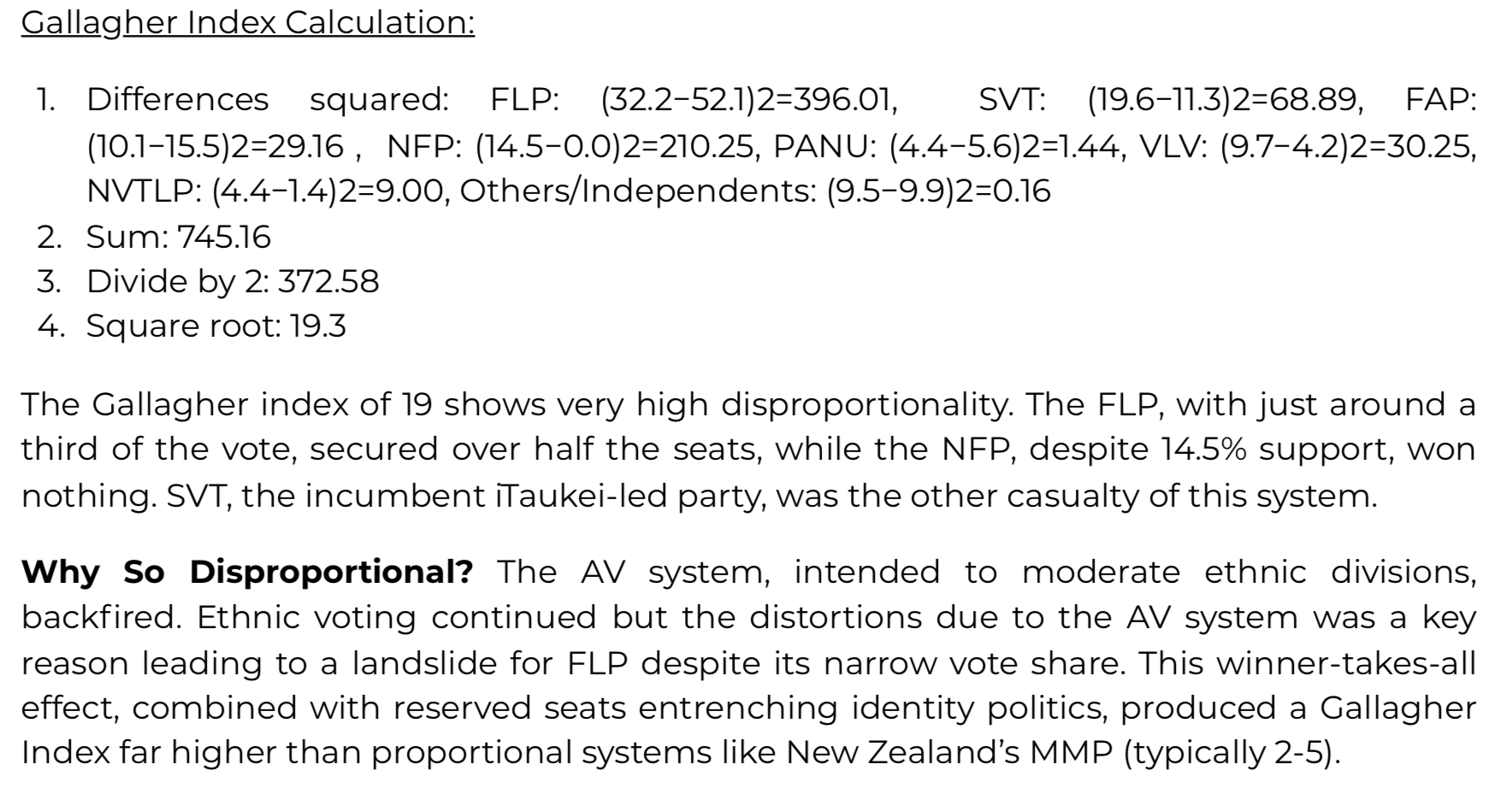
Not so, says Nilesh Lal. And it is well worth reading the following critique of Richard Naidu’s comments to understand why.
Naidu sits on a pedestal in Fiji as something of a local sage. He has taken a battering in recent months for using his position as Chair of the government’s Fiscal Review Committee to recommend a tax holiday for Fiji Water when it is one of his law firm’s clients. Yet he still commands considerable influence mainly because he is rarely, if ever, challenged.
It reinforces the kind of arrogance common to those with weak opinions strongly held. And his mere intervention in any public debate can cower those who are less confident of their own opinions into silence for fear of a withering glance or putdown from the chronically supercilious “Great Man”.
It’s to Nilesh Lal’s credit that he is willing to tackle Richie Rich head on. Why? Because with the electoral system as with the 2013 Constitution, we are being railroaded into accepting that they are fundamentally flawed when that is not necessarily the case at all.
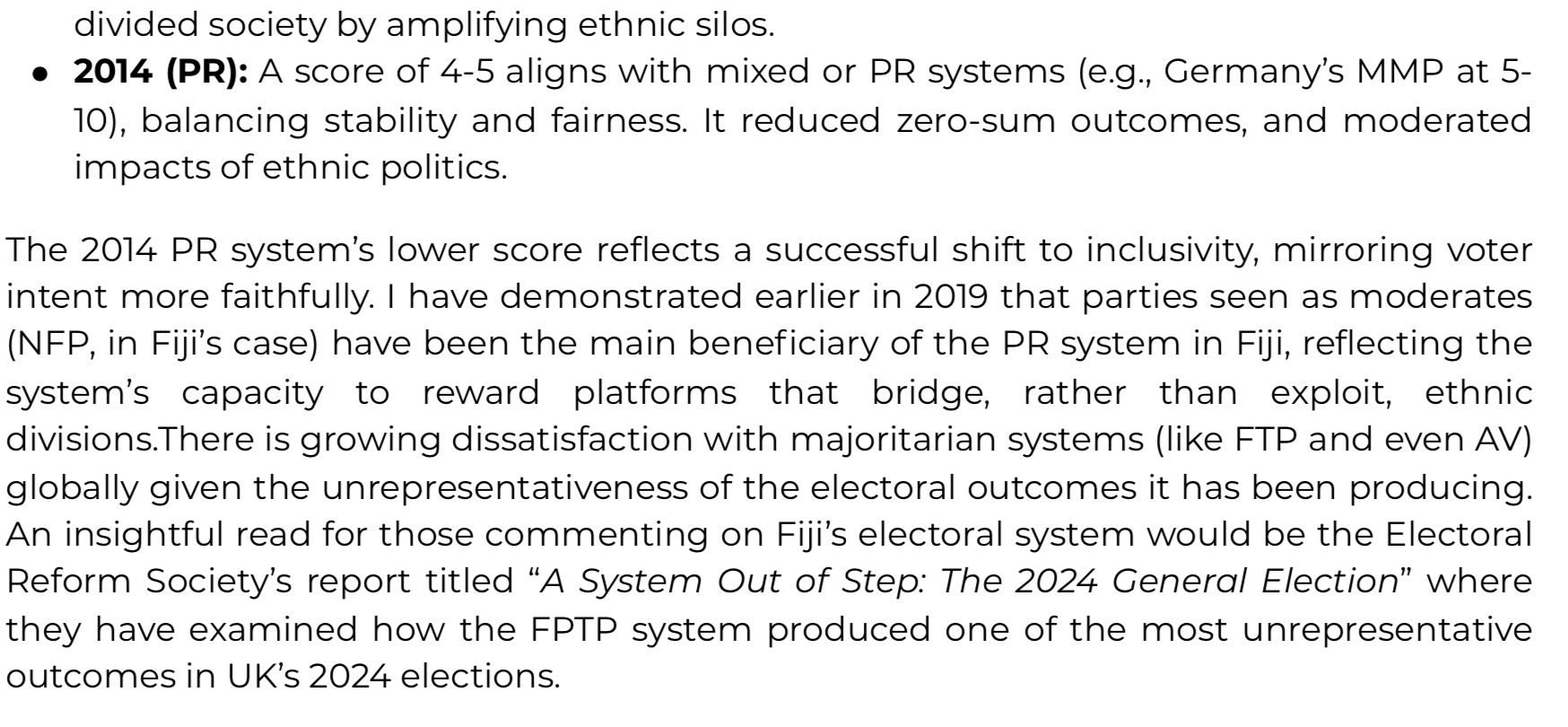
In the case of the electoral system, Nilesh Lal sets out to bust the cosy consensus of the prevailing political elite that something is terribly wrong with a forensic examination of the facts. And he concludes that the electoral system introduced by FijiFirst may not be perfect but is a damn sight better than the system it replaced.
QUOTE: “Dismissing it as “strange” or “undemocratic” is not only inaccurate but risks undermining one of Fiji’s most promising institutional reforms in decades”. UNQUOTE.
Read on to actually learn something rooted in fact rather than bluster. And beware of self-appointed pundits peddling piffle, even if they have the right connections. Er, make that especially if they have the right connections.



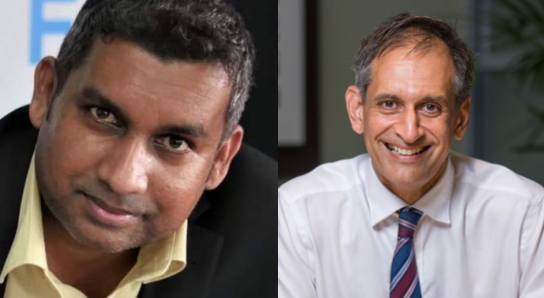
The right connections. And that withering glance.
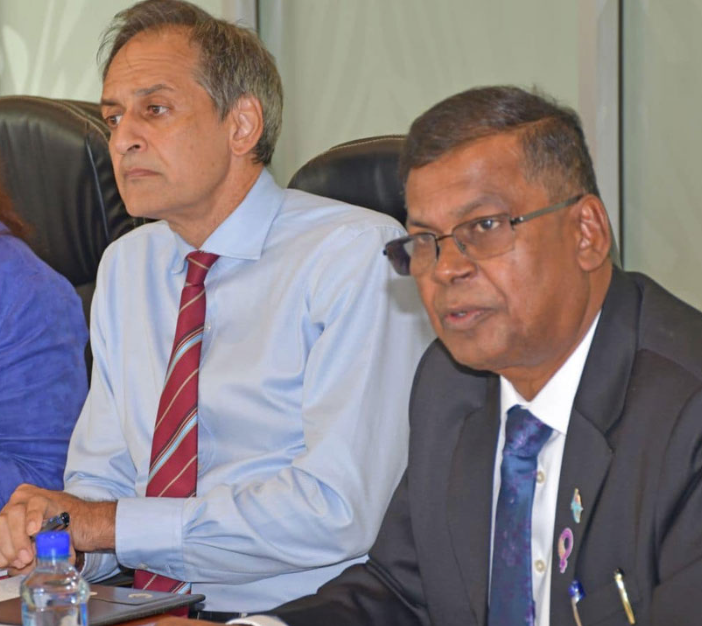
Baiman, an economics, professor, listened to the advice of a lawyer, and a mediocre one at that, Richard ‘I have the means’ Naidu, to increase VAT to 15%, penalising the poorest in society. We now know the real motive for the increase, which was to offset the seven year tax holiday given to Richard Naidu’s client Fiji Water, and the huge pay increases to parliamentarians. This is how Biman and Richard Naidu are screwing Fiji and ordinary Fijians.
I agree with Nilesh Lal proportional representation isn’t inherently “strange” or “unrepresentative.” But I’m not sure Richard Naidu is criticising the philosophy itself, or rather the way it’s applied in Fiji: electing by numbers not names, the convoluted party formation and funding rules, and MPs with no geographic constituencies. More unusually this form of democracy is overlaid with no local government representation but a council of Chiefs. Are there better proportional alternatives? Perhaps that is the question to answer.
More critically does the current system actually best serve ordinary Fijians, or just the political elite ? How many countries run a system like Fiji’s? I would guess zero. New Zealand uses MMP, which was at least considered I think by the Reeves review? So why did we end up with D’Hondt? Was it chosen to suit Fiji’s “big man” politics and the interests of the last coup leader? Was this ever explained and why it was superior to Prof Ghai’s proposed mixture?
We also have dozens of MPs on $100K+ salaries with no assigned constituencies. In mature democracies like Australia, the UK, or the US, MPs are tied to an area and held accountable to varying degrees. Here in Fiji, how do voters remove underperforming MPs between elections? Waiting four years with no clear mechanism feels like a system built for insulation, not representation. Of course and maybe Fiji is unique but perhaps the unique features ought to be properly explained and understood before the design features incorporated.
Exactly. MPs can’t be held accountable or punished by voters for their performance throughout their term under the nationwide constituency voting system. Reintroducing constituencies and keeping open list common roll is the best solution to promote capable and competent people to parliament and to remove underperforming MPs.
Don’t know whether Dick Naidu and the leader of his party realises, that if it was not for the 2013 Constitution, NFP would not have won any seats in the 2014, 2018 or 2022 elections. They would not have been able to form the coalition in 2022 or become DPM, have ministers and enjoy all the perks for all the losers and failed candidates from NFP. I do not think it would be unreasonable to conclude these people are first class idiots. Someone has to tell them.
If the same 2013 Constitution as it currently is, had L Tabuya or G Speight or SL Rabuka as the writer(s) of the document – I suspect it would be accepted blindly by most of the people who want it revoked completely or changed. Same with the electoral process. Or any other contentious legislation.
Hi Graham, have you picked up the story about nepotism and corruption at FNU? https://www.facebook.com/share/1EC9KLQ42y/
Vinaka for this. I am banned from Facebook thanks to the Queen of Tarts so no, I hadn’t seen it.
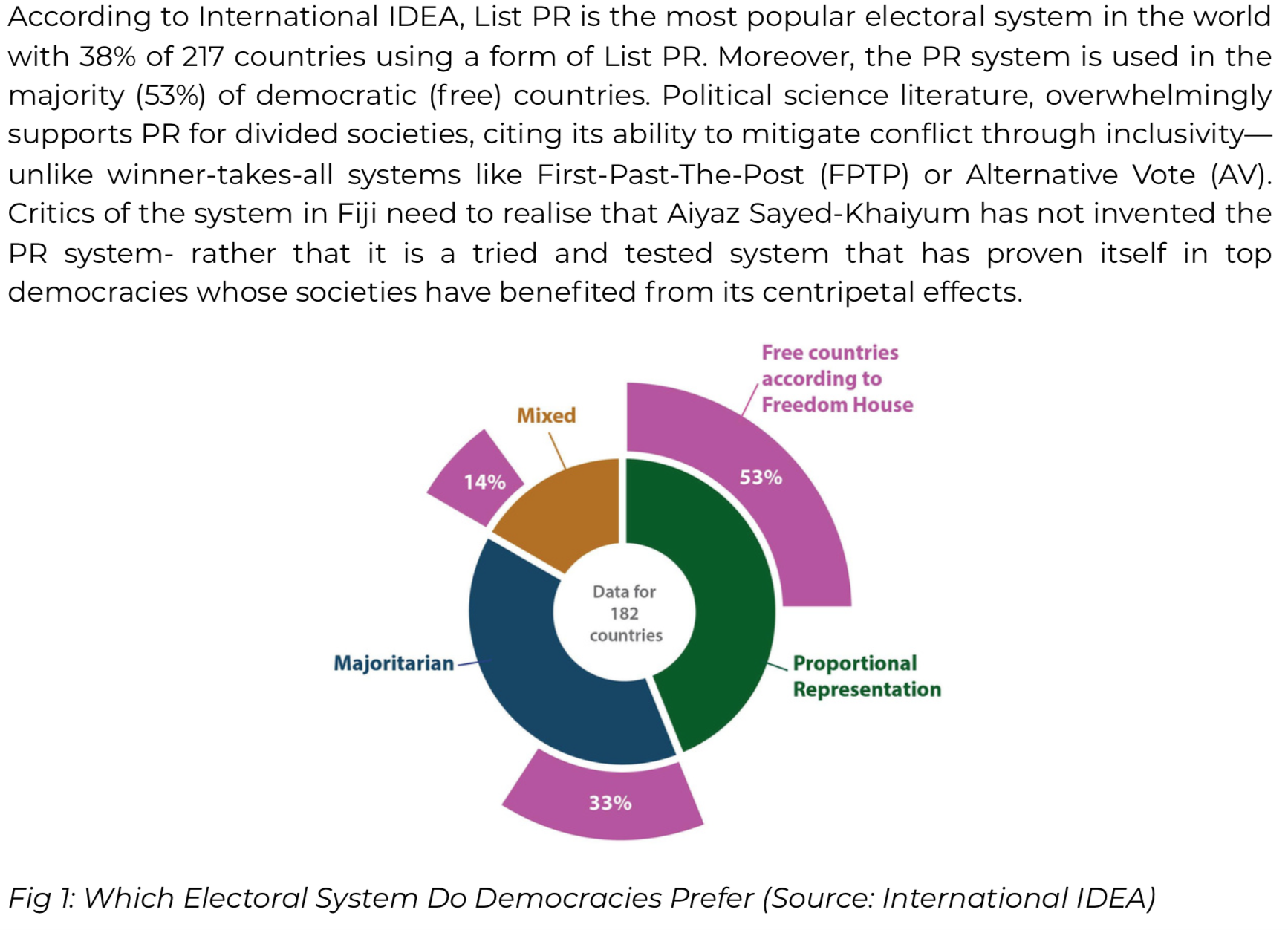
Nilesh’s analysis, supported by facts and figures, is a refreshing change from the usual hand-waving and pontification by the Pundits who want to give the impression they are so knowledgeable about constitution making.
It is a timely piece for the benefit of the Review Committee and a reminder that whatever recommendations they come up with, has to be underpinned by thorough analysis and data. The country will not just be a rubber stamp and a great deal of effort needs to be put into raising awareness and the understanding of any new suggestions on the reform.
The fact is, and everyone is in denial or pretending, the calls for the change in the Constitution has nothing to do with improving the electoral process. It has all the characteristics of hate and getting back at the previous mob. All those who are calling for the Constitution to be changed are haters, just look at all of them. This has nothing to do with changing the Constitution, it is an exercise in perpetrating hate and nothing will be achieved in the end. The politicians and the people of Fiji will remain idiots after the exercise.
Them are the facts.
The article is evidenced based, factual and it clearly debunks all the false narratives.