

Many older Fijians will remember my late father, the Reverend Peter Davis, who led the Methodist Church in Fiji as its president at a time when more than 80 per cent of iTaukei were Methodists and before Christians splintered into a multitude of smaller churches and religious groups.
It made him a national figure in the years leading up to Independence and beyond and he was known universally as “PK Davis” (his middle name was Keith) – PK happening to be the chewing gum of choice of many locals at the time and an acronym that rolled easily off the tongue.
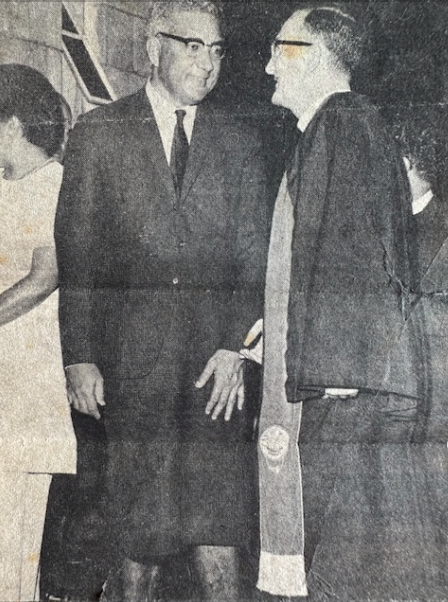
My father was unconcerned about honours and accolades and adopted the Fijian practice of modestly bowing his head whenever someone was talking about him in public. Yet he had a distinguished career in the church, rising to president of the Methodists in Fiji between 1969 and 1971 and when he returned to Australia, moderator of the Uniting Church in New South Wales and the ACT – an achievement unrivaled to this day.

Peter Keith Davis was born in rural Australia – Young, New South Wales – a century ago today on March 14, 1926.
He was the elder son of my grandfather, Keith Alexander Davis, a chartered accountant who worked in the family retail business in the “Cherry Capital of Australia” and later managed the Mates department store in Albury – the largest in southern NSW – which became part of the Burns Philp empire that had stores in Fiji and throughout the Pacific.

When my father came to Fiji as a missionary in 1952 after war service in the RAAF and theological training – first with the Anglicans and then the Methodists – he fell deeply in love with the country, or colony as it was then known, and especially its people. And while he never became a Fiji citizen, he was as local as any Kaivalagi *can be.

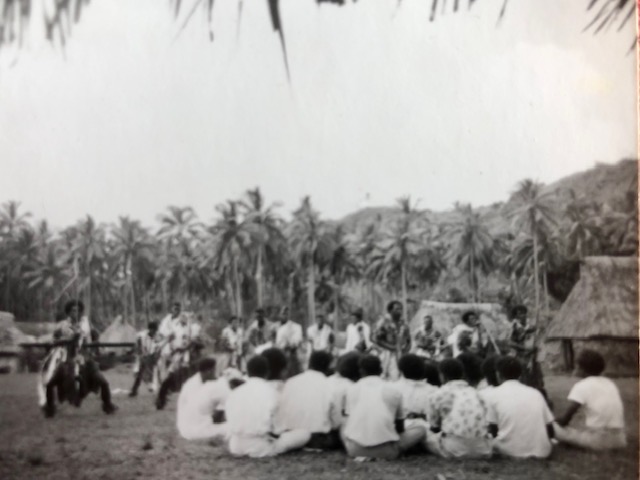
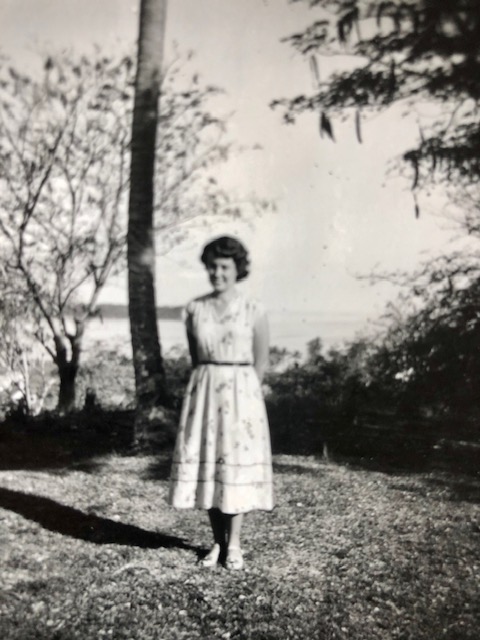
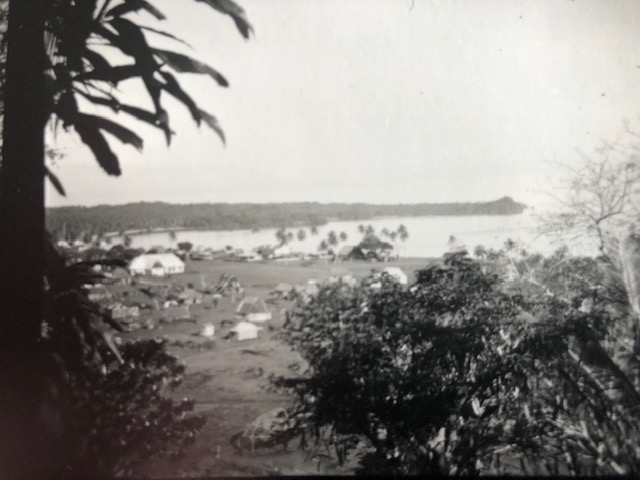
My father’s first missionary posting – with my mother, Betty Davis – was to Lakeba in Lau and our first years were spent in the sprawling old Methodist house high on the hill above Tubou Village. We were the only “Europeans” in hundreds of kilometers of ocean (the nearest others were in Vanua Balavu), there was no airport then and a supply ship came once every five weeks.

Our lifeline was our short-wave “wireless” (no TV or videos either “back in the day”) and letters in the snail mail that also came on the boat every five weeks. Apart from the odd visiting British “district officer” and once even the governor, the only company my parents had were iTaukei, which meant their friends were iTaukei and they mastered the local language and customs in the shortest possible time.
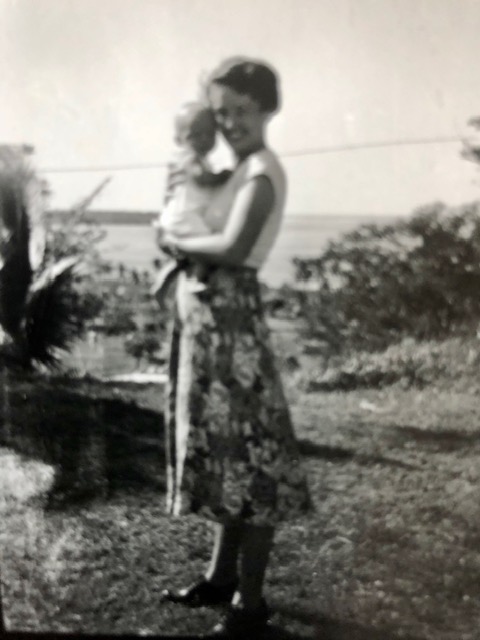
My father became so fluent in Fijian that it used to be said in later years that when he preached over Radio Fiji from Centenary Church in Suva, many believed they were listening to an iTaukei talatala. And even towards the end of his life in the early 2000s, he still broadcast in Fijian in a weekly segment on community radio in Sydney.
One of the last of those broadcasts was my father urging his iTaukei audience not to indulge in too much yaqona, echoing the exhortations of Ratu Sir Lala Sukuna and many others over the years.
“PK” drank grog himself only on ceremonial occasions and never touched a drop of alcohol in his entire life – a virtue he didn’t pass on to his eldest son. But he was right, of course, about the dangers of excess. And he would have been just as disapproving of the extent of modern day consumption of kava and booze and genuinely appalled by the drugs crisis that is destroying so many Fijian lives.
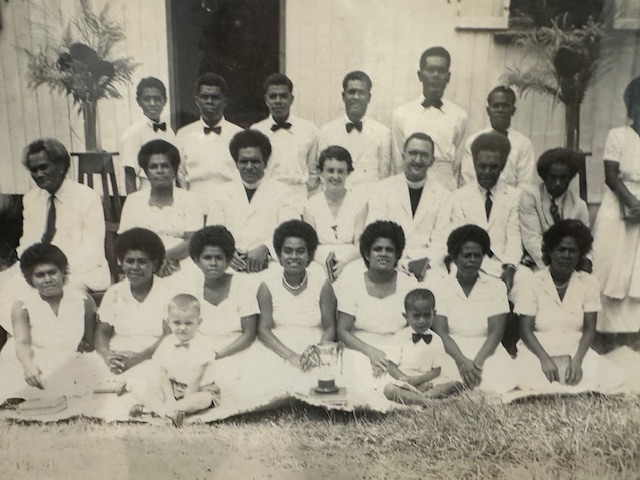
Few Kaivalagi became so immersed in iTaukei culture or were so close to the grassroots. My father had the highest regard for the Fijian people and devoted much of his life to their advancement, both spiritual and social. He spent much more time on the social outreach work of the Church than he did in the pulpit (he once headed the Methodist Department of Social Services) and many older Fijians will remember instances in which he personally came to their assistance.
Apart from him being frequently absent from the dinner table visiting the sick in hospital, one of my enduring childhood memories is of my father behind the wheel of our early model Holden constantly stopping along the road to offer lifts to people on foot. Of having hefty men and women and their yaya squeezing into the back seat with my brothers and I. And of course, the longer the journey, the longer the talanoa as my father quizzed them about their lives and family connections starting with “Ivei na nomu koro?“
Those who knew him will also remember that he had an uncanny ability to remember people’s names, sometimes years after he met them. That personal connection won him many friends and admirers. And some today carry the name of “Pita Davis” in one form or other. While others were baptised into the church by my father, including Lenora Qereqeretabua, or had their weddings performed by him, including Imrana Jalal.
Amid the national upheavals of later years, I remember him saying: “Never underestimate the capacity of the Fijian people to forgive”. His respect for the iTaukei tradition of matanigasau coincided with his own belief in the teachings of Jesus about the importance of forgiveness. Though I doubt whether he would have approved of the modern-day use of matanigasau as an excuse for everyday transgressions. It had to be totally sincere and an act of genuine contrition or it was worthless.
My father also believed that Fiji could only prosper if people of all ethnicities and religions worked together as one nation – an article of faith which I inherited. He worked in the “Fijian Division” of the church catering for iTaukei but had close friends in the “Indian Division” such as Daniel Mustapha – later the Methodist’s first and only Indo-Fijian president – Ramsey Deoki and Edward Caleb. And I was surrounded as a child not only by “Europeans”, kailoma and iTaukei but “Indian” playmates, which continues six decades on.
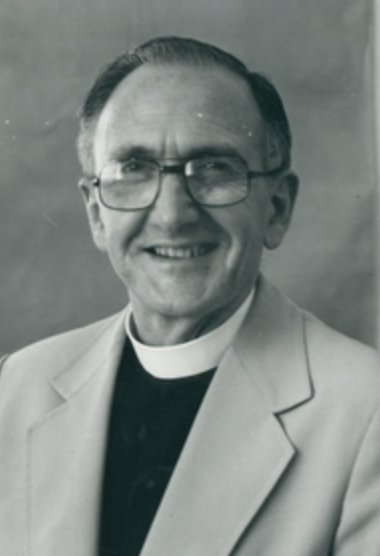
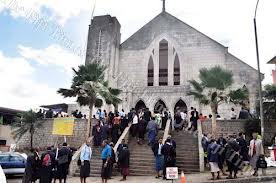
Peter Davis had two periods working in Fiji – from 1952 with missionary postings in Lakeba, Savusavu, Lautoka and finally at “head office” in Suva until he returned to Australia with my mother in 1972. And then a second period after his subsequent career in the Uniting Church in Australia when he returned to Suva in the late 1980’s as the talatala at the Butt Street Methodist Church into the 1990s.
One of Butt Street’s parishioners, of course, was Sitiveni Rabuka, who had staged the 1987 coup. And my father worked hard behind the scenes to try to reconcile the divisions that had torn the national fabric apart.
He presided over a service of reconciliation at Butt Street that made news and when I was once in Suva on assignment for Channel Nine, I was startled to walk into the living room of his house in Service Street to see him in earnest conversation with Ratu Meli Vesikula, one of the major figures behind the coup. It was all about finding common ground between competing interests and my father did this under the radar both in Fiji and Australia over many years.
What would he think about my own, much more public effort, to peddle the notion of one nation? Doubtless he would have been disapproving, even embarrassed, by some of the more pungent things I write. But then we live in different, less gentle times compared with the Fiji he knew and in which I grew up. In the Internet age, “cutting through” has come to be regarded as more important than speaking softly behind the scenes away from the public gaze. Whereas he was a proponent of quiet diplomacy – a peacemaker of the old school.
My father was certainly as keenly interested in politics as I am and once stood for Fiji’s Legislative Council – the precursor to parliament – in the elections of 1966, the last before Independence in 1970. It was as an independent candidate in the West and he did so with the permission of the Methodist Church hierarchy. But, of course, he was beaten by the Alliance Party candidate, Loma Livingston, who had the benefit of the Alliance juggernaut behind her under the Chief Minister, KKT Mara, as he was known before the future prime minister was knighted by the Queen and became “Ratu Sir Kamisese” in 1969.
Peter Davis was also obliged to stand in the voting category of “general elector” in the racially weighted system of the time and his relations with general electors – “Europeans” and “others” – weren’t as close as they were with the iTaukei. As a teetotaler, he was also regarded as less than clubbable or convivial in the heavy drinking milieu of many white people in Fiji at the time, which put him at a decided disadvantage politically. So his one tilt at politics was a distinct case of tilting at windmills – a trait I have certainly inherited.
Yet the one thing he taught me is that being high-minded and standing up for principle is important, including taking a stand for a multiracial Fiji. When I attended “Lautoka European School” – later Drasa Avenue – I had white friends who invited me to the swimming pool at the Northern Club, which was highly prized because Saweni Beach was a considerable distance away. But my father prohibited me from ever setting foot in the Club because it was a white bastion that prohibited iTaukei, “Indians” and Chinese from being admitted there. My father was a keen swimmer all his life so it was as much of a sacrifice for principle for him as it was for me.
That manifestation of racism was eventually busted but sadly others linger. The notion of one nation – of one Fiji for all – is nothing new and was an article of faith among many people of all backgrounds in the lead-up to Independence. It was to my father’s lasting regret that the promise of a thriving multiracial Fiji making its way forward as an example of “the way the world should be” wasn’t achieved in his own lifetime. Sadly it doesn’t look as if it is going to happen in mine either, though that is no reason to stop trying.
The centenary of his birth today naturally brings back a flood of memories. We are fortunate as a family that his younger brother, Philip Adrian Davis, (the smallest boy in the photo below) is still with us and we will be celebrating his 90th birthday at the beginning of May.
His father – my grandfather, Keith – had three sons, my father had three sons and I have had three sons. Though not in the business of communicating with the departed, I certainly would have liked Peter and my mother, Betty, to know that the cycle is about to be broken – that one of my sons and his partner are expecting a girl.
They say that the more things change, the more they stay the same. But happily there are exceptions. And wherever he is 100 years after his birth (and like every Christian, my father believed in the afterlife) I hope he’d at least be happy about having a great-granddaughter, even if he isn’t happy about all the trouble his wayward son is causing in the land he loved so much.
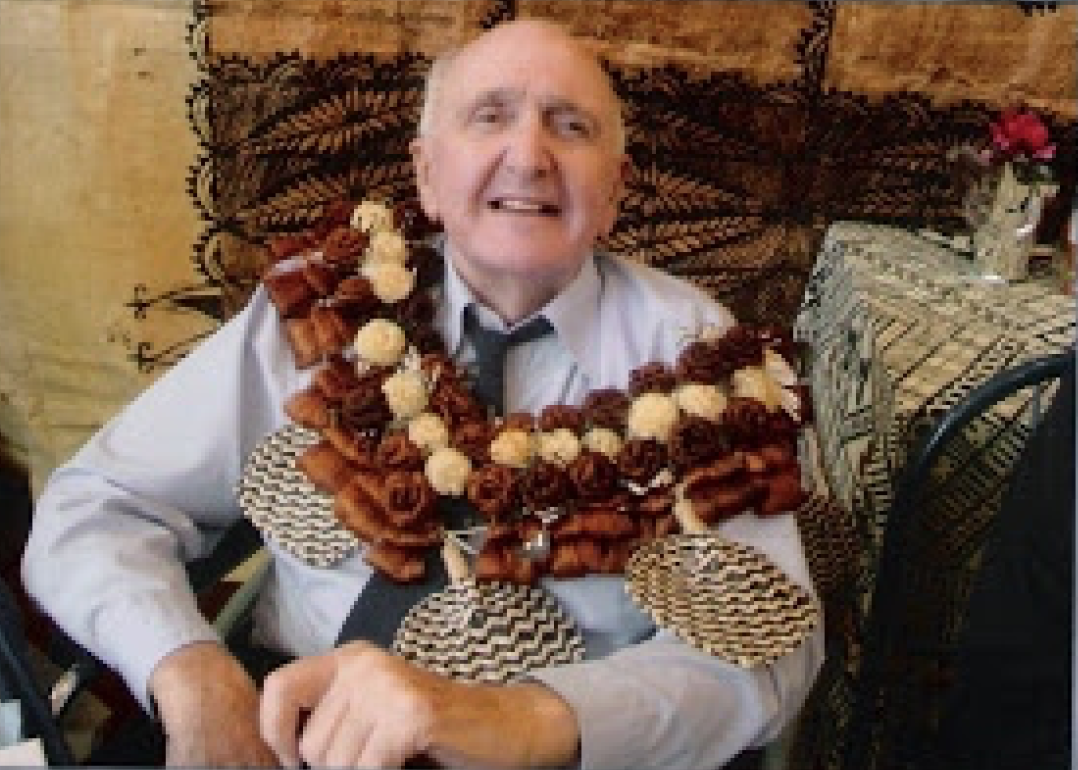

More images from Viti Makawa of life in Tubou, Lakeba, in the early 1950s.

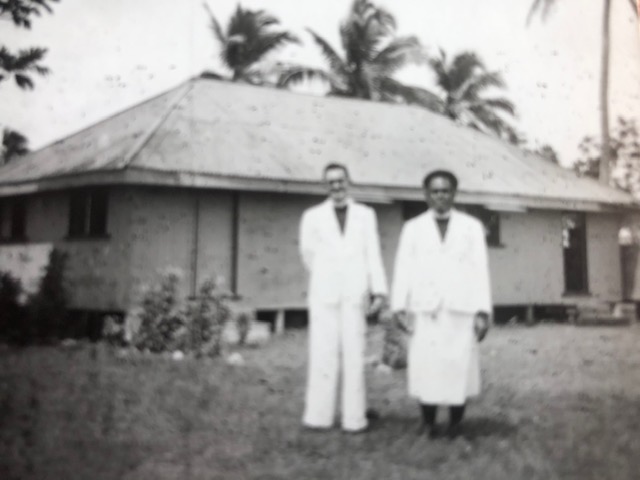




More Davis family-related Grubsheet postings over the years.
What a remarkable legacy to reflect on, and such an inspiring story. It is one thing to preach values, but quite another to live them so consistently that your family embraces the same standard and carries it forward. That kind of integrity—where belief and action align—is both admirable and deeply inspiring.
In many ways, it reminds us of the standard we should aspire to as a society. Too often in the Fiji we see today, there seems to be a widening gap between what is preached and what is practiced. Kindness, forgiveness, and virtue can sometimes appear selective or performative—switched on and off for public approval or social media applause—rather than grounded in genuine care, humility, and grace during difficult moments. When values become more about appearance than conviction, it can slowly erode the social, cultural, and political fabric of a nation.
Thank you for sharing the story of a man who clearly lived his faith through service, consistency, and example. It is a powerful reminder that true influence is not in what we say, but in the lives we live—and in the legacy we leave behind. You were fortunate and blessed to call such a servant of God your father, and through stories like this, his example continues to inspire others.
On the anniversary of his birth today, it is fitting that his life and example continue to be remembered and celebrated.
Thank you Graham for that wonderful insight into your family’s history, it truly adds meaning and context to the great work that you do for this country and the passion that you do it with, despite the constant hurdles you come across. I can honestly say after reading about your father and the work he did, that I believe he would be immensely proud of you and the effort you put in to keeping people informed about what actually goes on behind the scenes in Fiji.
I know that there are a number of us that really appreciate the unpaid time and effort you constantly put into keeping us up to date with the happenings that we would never know about without you doing what you do.
Eternally grateful, thank you. Your father sounds like a fine gentleman and someone you can be very proud of.
A very soulful tribute to your dad Graham – thank you for sharing.
It really is sad that those with a stranglehold on Fiji have lost the capacity to be grateful to those from abroad who gave of themselves to shape a multicultural Fiji that had the potential to stay connected to its roots, and evolve with the world for the betterment of the people.
Xenophobia is holding Fiji back from it’s potential more than ever now and the longer this goes on, the more impossible the task of turning it around becomes.
Kaivalagi like your father, and the honourable ones that have been exiled from Fiji, ought to be celebrated and embraced on Fiji’s development journey. Instead with the current Government, Fiji is acting like a 12 year old who thinks she’s all grown up and can rule the world.
Great man and equally great talatala. Had the privilege of meeting him a few times a long time ago when he was the president of the Methodist church and I was in high school !
Remarkable GD – must’ve been a great man!
Would have been a pleasure to have known him.
If men of the cloth like him were still around then the church would not be as racially divisive as it is today.
Sadly, the dreams of your late father and most of us right thinking Fijians for a Fiji where everyone will live happily together is never going to happen.
The obsession of getting rid of the Constitution, introducing the CUMA BIll, Mining Act review, proposed GCC powers in governance, Christian state, superior rights for ethnic Fijians, removal of TLTB etc etc is all leading the country in the wrong direction.
These are being well used by certain politicians to remain in power and peddled daily on social media by the likes of academic Rokolekutu and Ro Naulu Mataitini.
Somehow most native Fijians think that achieving all these will be beneficial to them. With the above two people’s constant barrage, reinforces this belief into many Fijians.
This will only exacerbate the self entitled mentality that most of us already have. In the end the only people that will be better off are the elite Fijians. The majority of us will be worse off then what we are today.
Without the current world fuel crisis, Fiji’s economy was already heading south full speed. Now, we will achieve terminal velocity in no time. Bankruptcy beckons.
Achieving the proposed changes will effectively kill any new investments into the economy. Forget about any prospect of economic growth. The only thing growing will be inflation exponentially and crime.
When are we going to learn that success and prosperity come only from hard work? Not from being spoon-fed.
The recent stance by Namosi and Nakelo landowners openly defying legal authority I believe is just the beginning. We are heading towards land grabs and hello Zimbabwe!
By then there will be no more indians or vulagi to blame.
It will be just native Fijians fighting other native Fijians. Tribalism and provincialism is already in full force. Just need to read social media comments to understand how vile we have become in a short period of time.
Welcome to our future Fiji. The way the world should be.
The late Rev Peter Davis and Mrs Davis are fondly remembered by my family members as they were at Qelekula Bible School, where our late father was a Bible scholar, and our later mother was a primary school teacher at Yaroi District School. Rev Davis not only officiated at their wedding in 1958 but was also instrumental in the match (I heard).
I came to know him more closely at Wesley Church, Butt Street in the late 80s-early 90s. A truly, caring shepherd who had a knack for remembering names and puts most of us Indigenous Fijians to shame with his knowledge of the standard Fijian dialect.
I was hosted by your late parents for a night in Sydney on my way to Malaysia in 1994 as a university student and also upon my return. That was an eye-opener for me because Mrs Davis taught me to be assertive while awaiting confirmation of my airline booking.
The last time I visited Rev Davis was in 2006 in Sydney with my late mother, a sibling and her children. It was to say goodbye to a great teacher, ‘vakavuvuli’ and friend of my parents.
He will always be regarded with great respect by everyone who knew him here in Fiji.
Ni moce toka mada Qase Levu Vakacegu. Sota tale ena mataka vou.
Thank you all for your responses. They mean a great deal to me and I am sitting here with my head bowed feeling deeply touched at the generous sentiments you have expressed.
I worried that this posting might be self indulgent and justified it in my own mind by the 100th anniversary of my father’s birth. I’m glad it has struck a chord with some of you.
Vinaka vakalevu!
It’s a brilliant tribute. Each one of us has natural gifts or talents. Some of us discover it early and find their vocation, some later in life and it is unfortunate for those who don’t.GD has the obvious talent in writing, recording events and communicating history and the present.
Well done but also a big thank you…lest we forget. The immense positive developmental works the missionaries, the colonial administrators and others of that era who made Fiji at one time worthy of “the way the world should be” tag.