
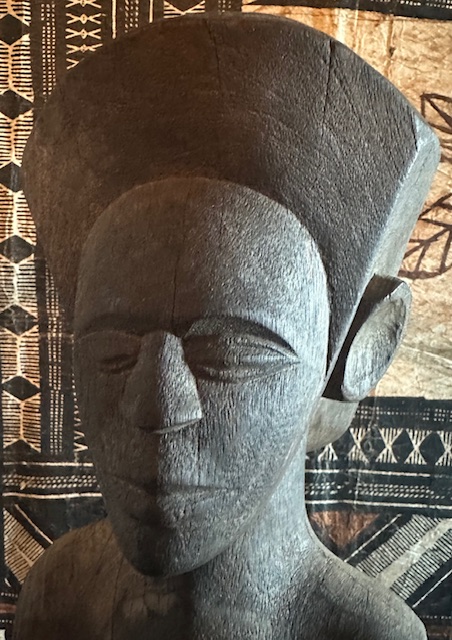
GD writes: In three short weeks, our new columnist from the vanua, CommonMan, has established himself as a Sunday “must read” – a font of commonsense to a great many, an irritation to some but always relevant and thought-provoking.
Some of the controversy comes from a sense of disbelief on the part of some readers that a man who can write better than many academics can genuinely be a farmer and villager who is self-taught and has gained his skills of English expression from reading books. But hand on heart, CommonMan is the real deal.
I’m also getting feedback that many people are wondering who his true identity is and one of the two daily newspapers in Fiji is actually interested in him writing exclusively for them.
What a wonderful endorsement of CommonMan’s skills. And if Grubsheet winds up being the path to a mainstream writing career, I couldn’t be more delighted. Because God knows Fiji needs more commentators who try to build bridges and foster understanding and I personally think that’s what CommonMan does.
Read on…
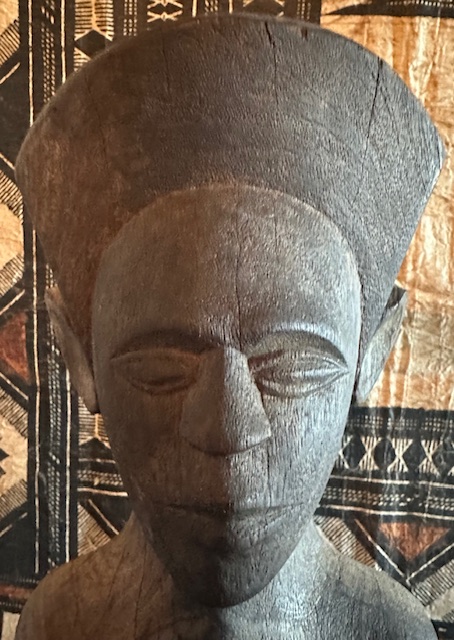
KAIVITI – WHAT’S IN A NAME
It becomes apparent that everyone is speaking at cross-purposes about the term ‘kai-Viti’ and its English equivalent, “Fijian”, so I thought it important to explicate a few things to contextualise what the iTaukei mean when they use the term ‘kai-Viti.’ And perhaps, in doing so, explain why a huge number are reluctant or oppose its redefinition.
In Western thinking, words generally have fixed, precise definitions and essential properties when it comes to identity. For instance, if someone said I am Australian, more often than not, one would imply that as referencing nationality or citizenship.
In the traditional iTaukei worldview, there is symbolism, history, cultural significance, mythological meaning, etc., attached to a word, especially in terms of identity. Which is why the acceptance by the majority of a willful re-designation is difficult.
Viti is the root word out of which Fiji is derived, meaning Fiji is the anglicisation of Viti. While Fiji and by extension Fijian, has only been in existence since the 1830s, Viti, on the other hand, is an old iTaukei term which means ‘to break off or to clear away’ (the branches of a tree).
For instance, in terms of “Viti Levu” (the island) – translated the “the Great Clearing Away” – refers symbolically to the first settlers clearing vegetation and forests to create pathways and sites as they ventured into, and began to inhabit, the land. In other words, a kai-Viti is a descendant of the first settlers of the Fiji Islands.
In my dialect, viti is ‘visi’, but it retains the same meaning. Words with the root visi are visikia, visivisi, visilakinia. Of note is ‘kainivisivisi’, which literally means the broken off branches of a tree. When it’s used in the context of relational identity, it means a person’s many relatives that have broken off from the main branches of the genealogical tree and have formed their own genealogical sub-branches.
In the iTaukei ideological framework, certain characteristics make up what is considered kai-Viti.
A kai-Viti belongs to a “vanua” whether in the form of one or more Yavusa (tribe). Each Yavusa comprises one or more Mataqali (clan), and each clan consists of one or more Tokatoka (extended family units). A vanua in terms of governance is an independent governance entity made up of one or more Yavusa. For instance the vanua o Bau comprises about 15 villages and all the Yavusa, Mataqali, i tokatoka under it.
Included in that vanua structure is his inherited status or ‘i tutu vakavanua,’ so he is either a turaga, sau-turaga, bete, matanivanua, mataisau, gonedau, daunivucu, tauvanua or bati. That is the full spectrum of inherited hierarchical roles in a vanua.
While the term vanua can also mean soil, it means so much more. It is the sum total of all the peoples, history, mythology, culture, traditions, customs, beliefs, kinship, rituals, protocols, ceremonies, traditional knowledge and wisdom, ancestry, heritage, ideological framework and worldview, all bound up and cocooned into a single binding concept. The vanua, in its true contextual form, is not a specific property but a living, breathing entity that encompasses and sustains all.
Because an iTaukei belongs to a vanua, he has a ‘chief,’ and a ‘cavuti vakavanua.’ These are honorific titles. For instance, the i cavuti vakavanua for the vanua o Bau, which consists of 15 villages (including all its Yavusa and Mataqali), is ‘Kubuna, vua na Vunivalu Tui Kaba.’ The i cavuti vakavanua comprises of the honorific title for that vanua – (Kubuna) and the honorific title for its presiding chief – Vunivalu Tui Kaba. It’s generally used in formal ceremonies and rites to trace and acknowledge ancient heritages, ranks, lineages, and origins.
All kai-Viti have a ‘vu’ and a ‘yavutu.’ A ‘vu’ is considered the founder of a Vanua, Mataqali or Yavusa. And, the ‘yavutu’ is the physical point of origin for a specific group. For example, the turaga na Tui Bua, traces his lineage back to Verata. Verata is the yavutu of the Tui Bua. He is the descendant of Buatavatava, the eldest son of Rokomoutu, the first Ratu mai Verata. Buatavatava left Verata after a disagreement with his father. He settled in an area that is now the province of Bua. To most Buan people, Buatavatava is their ‘vu.’
A kai-Viti has a totem. In iTaukei culture, all subsets within a vanua have a totem or several totems peculiar to them. For instance, last month, the re-emergence of the ‘nanai’ in the highlands of Navosa made the news.(FT:28/09) The Nanai, a type of cicada endemic to a specific area in Navosa, is the totem insect of the Yavusa Noemalu in Navosa. The Nanai represents an important and tumultuous event in their history. It was solved with the exchange of gifts between two warring chiefs. Their gift was the nanai, which also symbolises good fortune and prosperity. The nanai features on our $100 bill.
Totems are also important for tracing origins. For instance, there is a clan in the highlands of Ba whose totem is the qio-cavucavu or bull shark. It signifies the clan’s maritime origins, and using its totem, the tribe can recount its migration history. My totem is the turtle. I will not specify which species. It’s a reminder of my islander origins, too. The totems of my tokatoka are different from the totem of the other tokatoka, although we belong to the same Mataqali, yavusa and vanua.
Most iTaukei have either one or more of the following as a totem: a tree, a fruit tree, an animal, fish, bird, insect, or reptile. They all signify different things, acting as cultural or historical memory banks, emblems that trace links with other vanua, symbolism of a certain character trait unique to that clan, spiritual guardians, and their close kinship with nature. Generally, people with the same totems share some kind of link.
A kai-Viti has land or qele and/or i qoliqoli or fishing grounds, and is a part of a larger land-owning unit (L.O.U.) which can be in the form of the Yavusa, Mataqali or iTokatoka. Each LOU has clearly demarcated land boundaries, and those near the sea or water systems have i qoliqoli. There are kai-Viti too that do not own land. Despite this, they can still ‘claim’ yavutu land despite hundreds of years of disconnection.
There is a story of the people of a certain clan on Yadua Island, Macuata. When their ancestors arrived, the island had been settled. Though having lived side by side with the original inhabitants for hundreds of years, they are still considered ‘qalo mai’ and landless. The insults grew over the past number of decades. Faced with persistent disrespect, they turned to their ancestral kin in their yavutu, performed the traditional carasala, were warmly received, and have now begun building homes in Yadua, Nadroga. What is interesting is that these two groups had only known of their links through the myths and legends passed down orally by their elders.
The characteristics outlined above encapsulate what it means to be kai-Viti. For centuries, kai-Viti and the later anglicised Fijian meant the same thing: it referred to one specific ethnic group. The outrage comes from the iTaukei view that a name that belonged to them since time immemorial was taken, redefined, and used without consultation or consent. To them, it is the public stripping away of their identity. This stripping was then entrenched in the 2013 Constitution itself.
Because this is such a sensitive issue, I think it is best to speak from my personal experience, thoughts and feelings. I would be lying if I said that it was not heart-wrenching. It was. Especially regarding how it was done. There was no talanoa, not even a ‘veiba.’ Just an implementation – at gunpoint via an imposed Constitution – of a cold, calculated policy designed to force unity. But it polarised and caused resentment among those who saw themselves as victims of that act.
So, how did I reach the point where I have accepted this resignation? First and foremost, because it is not the iTaukei way to wallow in self-pity. Those who do become perpetual victims. I am also a firm believer in the American theologian Reinhold Niebuhr’s Serenity Prayer,
“God grant me the serenity to accept the things I cannot change, the courage to change the things I can, and the wisdom to know the difference.”
There was no way the iTaukei were going to get their name back, especially after the landslide of the 2014 General Elections that legitimised the 2013 Constitution. I remember penning my opposition in a ‘Letters to the Editor’ column as an eternal testament to the fact that I had initially resisted. But sometimes you have to know when to be pragmatic and when to be principled. Frank Bainimarama went on to win his second General Election, and just this year, the Supreme Court ruled that the constitution was valid, effective and legally binding.
Secondly, Kai-Viti, as a moniker defining a certain racial grouping, was useful for a time but had become outdated. A controversial thing to say, but I have my reasons. It was useful in the old days when Fijian society was largely homogenous. And there was very little inward migration. The few that did migrate were Pacific Islanders like Tongans and Samoans but mostly in the Lau Group, who were deeply rooted in their own cultural identities and saw no need to adopt iTaukei postures.
The situation changed around the late 18th and early 19th century. Foreign contact with Fiji began with beche-de-mer and sandalwood traders, whalers, and shipwrecked sailors—most of whom stayed briefly. In the 1850s, Chinese migrants arrived, notably Moy Bak Ling in 1855, working as farmers and traders and later contributing significantly to Fiji’s commerce and urban life. The Melanesians came around this time too to work as labourers on cotton and copra plantations.
The first long-term settlers were cotton planters seeking land, but many left by the 1870s–80s due to the cotton trade’s decline. Those who remained became ancestors of part-European communities on freehold lands acquired from iTaukei chiefs.
The biggest wave of migration came in the late 19th to early 20th century under Indenture. Out of the +60,000 that came between 1879 and 1920, around 40,000 chose to stay; they became the forefathers of the present-day Indo-Fijian population. The modern-day nation was built on their backs.
Which means we have had over two hundred years of inward migration. And for over two hundred years, we’ve had various ethnic and racial groupings that have been born into the bosom of this country. Fiji is the only country they have ever known.
The need for a common moniker becomes even more essential to building an inclusive nation where everyone belongs. There is no better term for that than Fijian. It can no longer be used to refer only to one subset because of the country’s multiracial, multicultural spectrum.
Last but not least, and I consider this the most powerful reason of all. I was taught this profound lesson very early on by an old guy from the Indo-Fijian settlement near my village. The old guy’s name was Simione (he was a descendant of one of the very few Christian girmityas), but we all called him Tai Hava, short for Tai Havahuku. Havahuku means to wash and wear because he had only one set of clothes. All our Tai in the village called him thus; we did too.
Tai Hava spoke my dialect fluently. It’s one peculiar thing that I remember from that period, the 80s. All our Tai from that settlement spoke our dialect. They did not speak, much less understand, the general Bauan dialect., And they spoke just as bluntly as our village Tai. And according to the village Tai, they came to the village just as much as ours did to theirs.
To get to the beach, you had to go past Tai Hava’s house. And he had dogs. On this occasion, we threw stones at his dogs, and an argument ensued. Someone must have said something insensitive to which he replied, “E kematou muni na koi-Visi. O kemutou muju no i rara, o kematou maji mo e naga na tovu.” “We are Fijians too, you live in the villages, we live in the cane fields.” A simple stating of a profound truth.
Being Fijian means just as much to the Indo-Fijian as it does to the iTaukei, but in a different way. While the iTaukei experience is rooted in hundreds of years of development of culture and the vanua, the Indo-Fijian experience is rooted in blood, toil, sweat and tears; in the economic development of the country and the birth of a modern-day nation.
In my opinion, they too have built their own peculiar traits that mirror the iTaukei in the same sort of way.
The ‘vu’ of the Indo-Fijian girmityas are their forefathers,
who braved the seas packed like sardines in leaking cold holds,
none had any idea of the fate that awaited them.
Their ‘yavutu’ is the cane fields,
But from their sweat they built a new Fiji.
Their chiefs were the Europeans ‘sardars,
who whipped them like dogs,
but never broke their spirits,
and out of that woe came wealfor all.
Their totem is the sugar cane plant;
its sweetness hides,
their adversity and strife.
So if you ask me,
if they’ve earned their keep,
for the right to be called,
kai-Viti?
I’d say, they have,
A million times over,
For without them, there would be no us.
And if you insist,
in belittling them,
and go on and ask,
me this question still.
But what is their vanua?
pray tell us,
to that, this I say,
their vanua is the whole of Fiji,
for without them,
there would be no country.
———————–
Below are a few comments regarding the issues raised in the comments section of my last post:
The GCC may indeed be a colonial construct, but the idea of a hierarchical society with the chief at its summit is not foreign. It was why the GCC was so easily accepted by iTaukei society. We see the GCC as an extension of our own individual vanua. A conglomeration of all chiefs with the whole country as the vanua.
I also agree with the sentiments posed that the GCC has no place in a democratic society. Inherited status is the antithesis of democracy and meritocracy. But it does have a place in culture.
As I had stated earlier, chiefs are the embodiment of socio-cultural values, so as the apex of that socio-cultural structure, it would be the appropriate body to request socio-cultural approval from, such as the use of the term kai-Viti or Fijian as a generic name for all. It is the only way the masses that oppose this re-designation can be passively coerced into acceptance.
One can use the power of the law to appropriate a name to force conformity, but conformity can never be translated to mean acceptance. There will always be resistance borne out of resentment. Until it is socially accepted, no change is lasting. At some point later in the future, it will burst out and manifest itself in ways that are destructive and detrimental to the whole. The GCC is the key to averting that.
There is also this notion that all future ‘vulagi’ will still have to seek permission. That is a Western perception and completely at odds with the way of the iTaukei. The indigenous framework is that once permission is given, it is given for all vulagi, for all time.
The best way I can explain this is the Luvedra na Ratu declaration by Ro Teimumu Kepa, where the descendants of the Syria were adopted into the vanua o Noco. That bestowal is for life and includes all their progeny after them until the end of time. The later successive descendants do not have to keep seeking approval to assume that i-cavuti. It is akin to ones inherited status or i tutu vakavanua, it is eternal and irrevocable. The same goes for everyone deemed a vulagi irrespective of where they come from for all time.
Many problems arise with the politicisation of certain words. One must note that anyone who politicises anything does so to achieve an end, a system of manipulation to get a desired result. To politicise something is to weaponise it against someone else. Therefore, the politicisation of words such as vulagi does end in the victimisation of certain segments of the population.
The vulagi debate from a few years ago is a symptom of the old rhetoric of racial politics that has crept up repeatedly in our history. The coups of 1987, 2000 & 2006 are proof that a certain ideological belief centred around this new and bastardised definition of vulagi has not concluded, and will not go away. It will continue to manifest itself over and over again.
What the Bainimarama government has done is force its adherents to reckon with that concept of Fijian to denote just citizenry, but, as an inclusive term that can potentially coalesce a fragmented society. In the grand scheme of things, it seems Frank Bainimarama‘s purpose was to force open this door, which otherwise would’ve remained shut. However, he imposed his will on an unready audience, which has subsequently led to resentment that will continue to grow over time.
The iTLFC Law Review consultations revealed how deep this sentiment still runs amongst the general iTaukei populace. The clear majority of the 182,000 people consulted over the 14 provinces is no small number, and is representative of a much larger body that has also held strongly to these views.
We can begin to break down this kind of racial stereotyping by using the GCC as a neutral mechanism for peace and consensus-building by the simple act of asking. In iTaukei culture, these types of requests are called ‘i kerei.’ It means a humble request.
You will also have noticed that I proposed that the Prime Minister does the asking. I did not clarify that it had to be Sitiveni Rabuka. The rationale is simple: the PM is the representative of the whole as per the results of the General Elections in which the general populace casts their vote. He is the legitimate voice of everyone by virtue of the majority having chosen him.
But, if it were left to me, I would choose Rabuka. His doing the i-kerei has a deeply symbolic meaning. From his coup of 1987 that removed a government based on his belief in a bastardised version of the term ‘vulagi,’ to getting on his knees, humbling himself and asking for their acceptance. He will have come full circle.
It will also be an act of penance and redemption for the GCC, because they had fully supported the coup of 87. But at the end of the day, the rule of law ought to be paramount. And he must remove the Immunity Clause in the Constitution and face justice for his act of treason.
This act does not in any way, shape or form absolve him from his crime. Instead, it cements the need for a day of reckoning for the injustice he perpetrated. The same too with Bainimarama.
After all, justice delayed is justice denied.
Vinaka valevu.
CommonMan
——————
And from all of that, keen-eyed readers will be able to deduce something that hasn’t been obvious before – that CommonMan comes from Nadroga.
I personally think this is another terrific article with some stirring, even beautiful, sentiments that provides us all with a great deal of food for thought.
More from our new columnist next week.
What a terrific piece of writing, full of clarify which amplifies the emotion and recognises the need for belonging, acceptance and reconciliation
Thank you GD for giving CommonMan this platform to express his views
We hope that this creates dialogue, debate and eventual resolution.
Vinaka.
What a load of rubbish. This guy’s looks like a PAP propagandist.
The national identity as Kai Viti was a colonial construction.
We as itaukei or natives or whatever you wanna call it were divided up into different chiefdoms who had their own identities and traditions.
Our ancestors hated or loathed each other as this is why tribal wars between the vanuas were very brutal. They certainly did not see each other as belonging to a single identity.
During the height of the political troubles in 2000, Fiji nearly became fragmented if not for Bainimarama, as certain groups agitating for their own self rule and self government.
They had political merits and economic powerhouse to do so.
A significant numbers of the so called itaukei voted and still aligned their political beliefs and faith with Bainimarama Fiji First values and principles.
They don’t see a future of the old hierarchy which has become a burden on their and family progress.
The FijiFirst Government returned the most state land into itaukei hands.
Most itaukei have come out of poverty under the TELs scheme by pursuing higher education honours.
Under the FijiFirst Government itaukei have opportunities to pursue business opportunities.
FijiFirst Government focused more on Fiji’s own development especially the itaukei rather than the so called regional partners. What have these neighbouring countries done to develop Fiji?
Funnily enough, you sound like a FijiFirst propagandist. It doesn’t invalidate your opinion or his.
Incidentally, I see you’ve posted two anonymous comments from the same email address. I’ve approved the first and trashed the second.
We don’t do multiple identities here. Not like the old FijiFirst Facebook page.
I am all good of being called kaindia, bhaiya,Hindustani, or any other name that identifies me as Indian.
Fijians and Indians in Fiji are totally 2 different races.
Totally 2 different types of people.
I am living in Fiji but good thing is that we live with another race with different culture and identity.
I am also happy to know where my forefathers came from.
Proud thing that we have own language, food ,religion and culture.
Same goes to Kaivitis .
Nothing wrong with that.
Passports are just a book identifies one when you cross boarders of another country.
Passport doesn’t make you itaukei or Indian,just the nation you come from.
My looks are very much Indian ,I can’t tell someone I am a Kaiviti.
Ofcourse my nationality is Fijian as I was born in Fiji but I am Indian .
Not a Indian from India but a Indian from in Fiji.
Not sure what’s wrong with that.
This argument is 100 years old and Fiji is still looking for answers.
Ethnicity is used from day of birth to day of death.
Government distribution and services are based on Ethnicity.
It’s important to know of one’s Ethnicity.
Be proud of who we are,preserve our heritage and cultures .
Fijians when they refer or tell stories about Indians they call kaindia and same as Indians refer as Kaiviti.
No one will say Ramesh or Saras or Jone and Sera,it’s Kaiviti and Kaindia.
Kaindia bus driver or Kaiviti security guard.
It’s how we identify and has become part of both races language in last 100 years.
@ Ram Naresh
Bula Bro. I note that you refer to yourself as an ‘Indian’ and worry that you may fall foul of GD’s ruling that all Fiji-born Indians should be referred to as ‘Indo-Fijian’.
Do you have any views on that?
If he wants to be called an Indian, that’s up to him. It doesn’t mean that others share his identification with the subcontinent.
For the purposes of this forum, I have said that Fijians of Indian heritage are Indo-Fijians and deserve to be designated and treated as such.
My blogsite. My rules. Don’t like it, stab it out, as we used to say in Viti Makawa. Or as I say these days wearing by Aussie hat. Bugger off Cobber.
We can’t have indo Fijian.
No such word either.
Indo can be Indonesia, India or European.
Are you genuinely stupid or just pretending to be stupid?
GD please don’t rule out born stupid.
If these dunderheads cared enough a simple internet search will show the term “Indo” highlights the historical cultural influences of Indian civilization.
You have suggested “Be proud of who we are,preserve our heritage and cultures”, can you please suggest how that can be done if oppression manifests in more than one shape and form not only what one is called or named such as fair representation in governance and other aspect of being citizen of a country.
ATTENTION “IDIOTS EVERYWHERE”
You have tried to adopt a fake identity of “Another Conman” from the same URL or Webpage address. It’s called fraud.
I wasn’t born yesterday and the only idiot around here is you. Permanently banned like “Slacker”.
A beautiful article. It reminds us all, especially our leaders, that we have to work harder and find ways to get along. We have to teach our people how to live together.
As an Indo-Fijian, I believe the starting point is due recognition of indigenous Fijians as the original people of Fiji and first to arrive here. A lot of goodwill will flow from bestowing that respect and recognition.
what are you smoking?
Never have we not been recognized as the original peoples.
A heartfelt insightful read – thank you CommonMan.
We do need to work hard at recognising cultural heritage, and educating all about the importance of first nations/iTaukei culture, as well as other cultures that belong to Fiji.
This would be a great role for the GCC. Perhaps there’s some value in reaching understanding at the educational level here about the use of terms like Kaiviti and Vulagi and what this means culturally.
At the level of Governance though, Fijian is about citizenship. Striving towards Democracy and Meritocracy is about equality and equity for all who call Fiji home.
Insightful and definitely one path forward should the powers that be are willing and able to concede the errors of their ways and wipe the slate clean. AIN’T happening!
Delighted that CommonMan offers such rational and pragmatic views
Alas people of his ilk will never get elected and hold the reins of power,even if the majority agree with him.
Apologies if I sound so pessimistic but, Fiji, the years of venom,hatred and distrust are coming home to roost.
Alas , the horse has bolted.
Besides Fiji has bigger issues to deal with like drugs, money laundering, HIV, break down of law and order,unemployment,corruption etc.
Wonder who will the nationalists blame?
The Bogeyman community will probably not bother to vote in elections unless it’s with their feet.
The aims of 1987 have been achieved.
Beware of the Snake Oil Salesman.
Indians don’t need endorsement from the GCC or any other institution to be called Fijian.
We know what we are …we’ve just got to learn there is a difference between living in Fiji or coming from Fiji and belonging to Fiji.
The GCC MUST first offer a national apology for the pain and suffering from the GCC led Speight coup. They have done so amongst the itaukei at the barracks..
There is no more compromise or legitimacy of the GCC till they get on their hands and knees and apologise.
It was Indians who made Fiji…(Lest you forget)
Took my breath away!
U r not a common being. Far from it.
Sharing a part of yourself so we can understand ‘The Other’ better is perhaps the most humane way to teach us that we aren’t the only ones on the receiving end .
We are blinded by our wounds and fail to see the inflictions on others.
I salute you for this piece. Takes courage to write like that.
Your memories are so poignant .They made me realise that we all may seem so different in every way possible in Fiji but our shared humanity brings us together .
Appreciate listening to you, always!
Vinaka .
Such insight can only be from a Vulagi.
One solution is to encourage more inter marriage. Have more half castes, there may be already too many half castes, hiding under cultural blind folds. We already share each other’s foods which is a good starting point.
Great article. I wish we had this type of balanced approach to debating. I was truly “educated” by this article. Keep up the great work CommonMan. Looking forward to your next article.
Can we provide a copy of it to all our MPs so that they can seek to foster good relations amongst the population. 55 years of independence and we still haven’t matured as a democracy or a country. 55 years later we are still boiling in the same soup of race ethnicity. When will we grow up as a nation and realize that our property and progress as a country depends on our ability to see beyond our differences and see what united us and what makes our country unique?
We need a leader who can do this. Move us away from things that don’t matter to things that matter most. If you are like me I really don’t have much choice on who to vote for in 2026. With the current lot, if I chose any them would be a waste of vote.
Any person who can rise up and talk about unity, inclusiveness, and take our country towards progress will have my vote. For such a leader is not to be found in our current system. We need a visionary leader. Onward march together God Bless Our beloved Fiji.
A big thank you to CommonMan for taking the time to write. Tt would take a fair bit of thinking over the subject and then putting pen to paper or fingers to keyboard.
Many of us like a free chow or free ticket to anything – here we are getting a free read from a greater mind (than the idiots everywhere). Vinaka.