
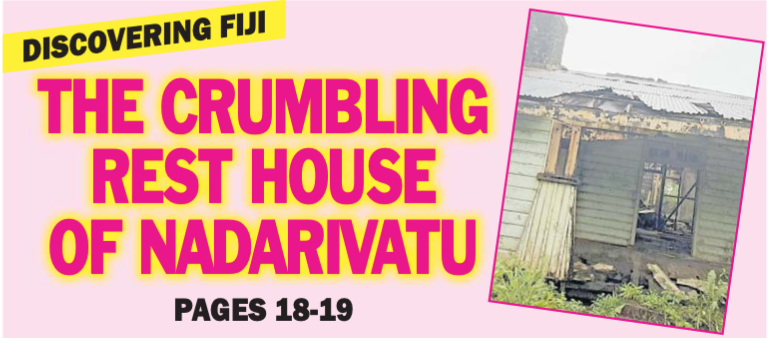
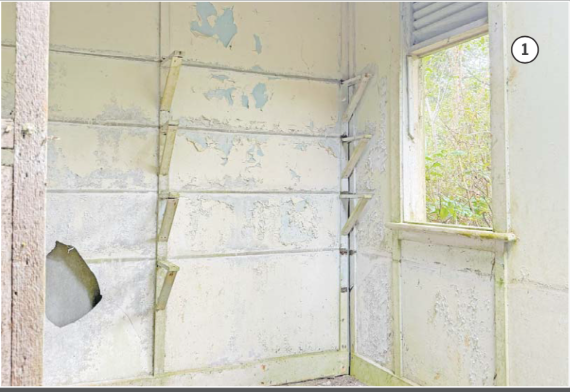
It isn’t often that Grubsheet is delighted by a Fiji Times front page but one item on the banner of this week’s Sunday edition triggered a flood of personal memories from more than half a century ago – a story by reporter Ana Madigibuli about the history of the derelict Methodist Church “rest house” at Nadarivatu – high in the mountains above the Tavua plain in north-west Viti Levu.
I spent several childhood holidays there as a luveni talatala – the son of missionaries Peter and Betty Davis, who first arrived in Fiji in 1952 and had postings to Lakeba and Savusavu before being sent to Lautoka in 1960, where I attended Drasa Avenue School before being sent to boarding school in Australia.
The cost of air travel in those days was so expensive that we returned to Australia at the church’s expense once every five years and the rest of the time holidayed in Fiji. Resorts were also beyond the means of missionaries except for the occasional iced lemonade at the Korolevu Beach Hotel to shake off the dust of the unsealed road journey to Suva. But there were two places we always went.
One was a beach house at Korotogo owned by a Mr Samaru – the headmaster of the Lautoka Methodist Primary School – and the other was the Methodist Church Rest House at Nadarivatu, which you could book through the church offices in Suva and where dozens and missionaries and lay people over the years were able to have the closest thing to an alpine experience in Fiji. Apart from the snow, of course.
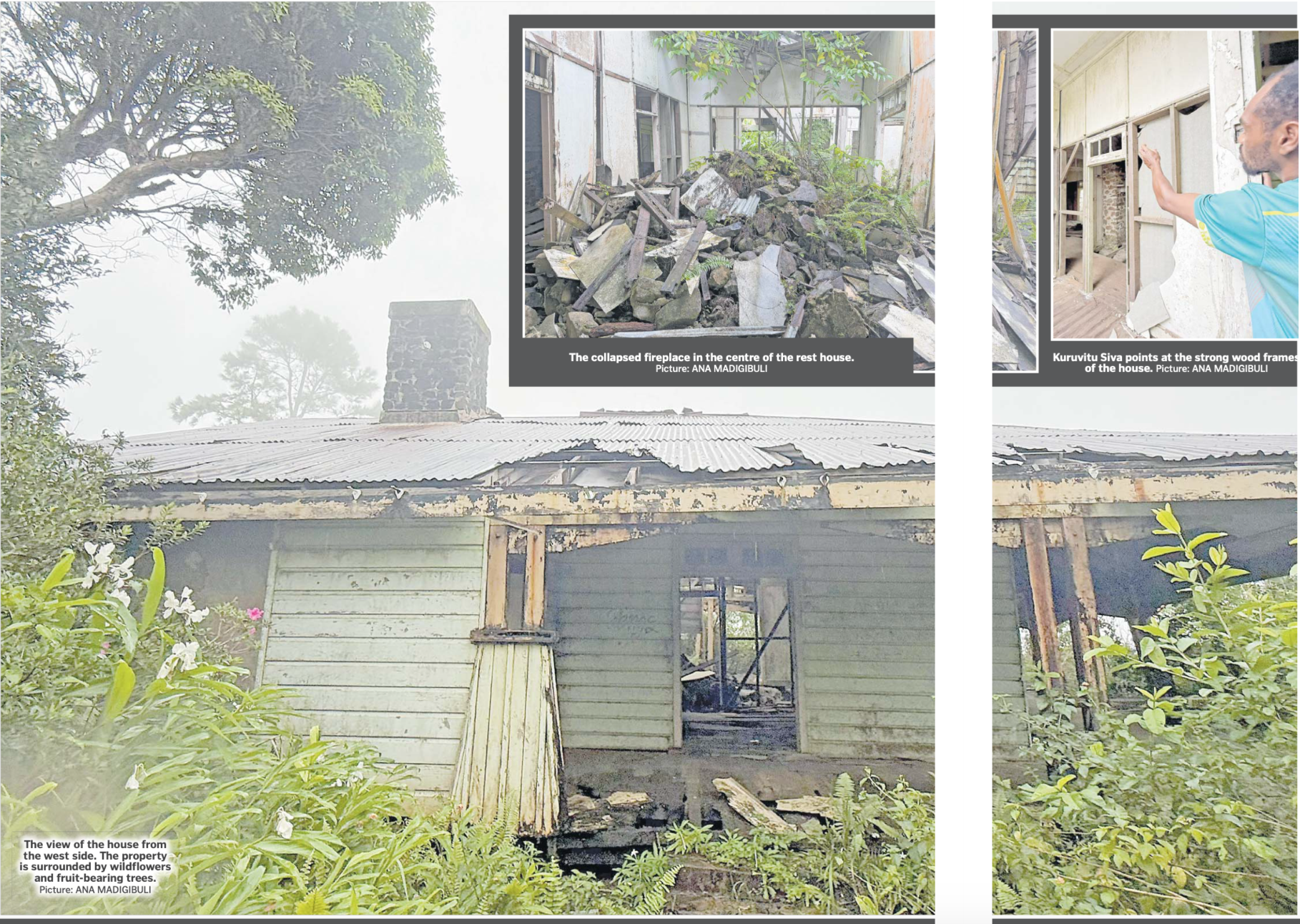
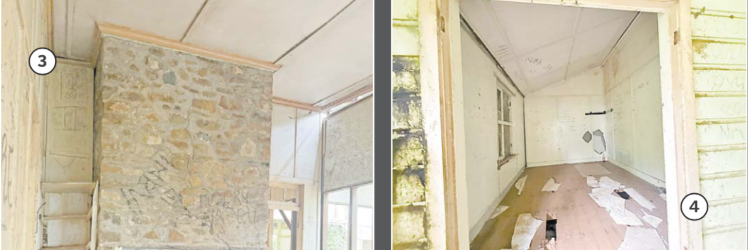
When you remember that hardly anyone had air conditioning in those days and some towns still didn’t have electricity, the mountain air was especially prized by kai valagi as a respite from the heat and humidity of the “tropics”. The crumbling fireplaces in the Fiji Times story were the biggest treat of all, crackling away as the mist moved in and the temperature dropped and we all huddled around to keep warm.
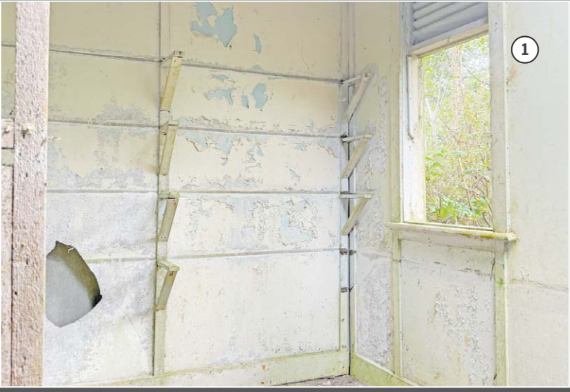
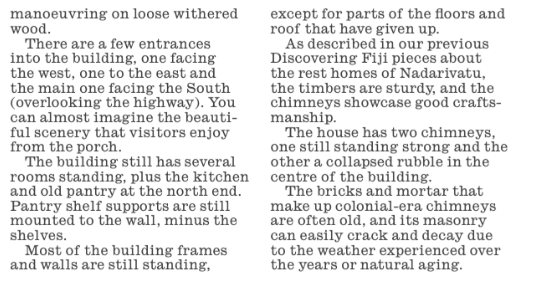
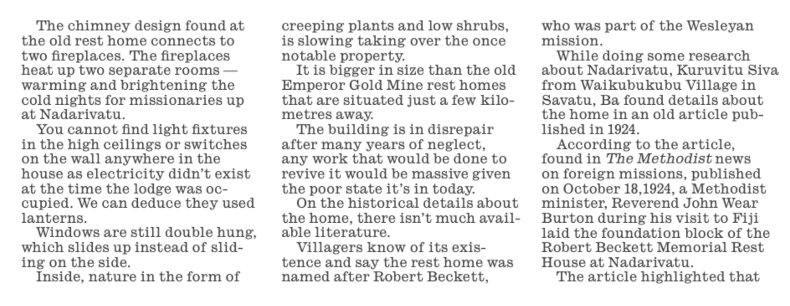
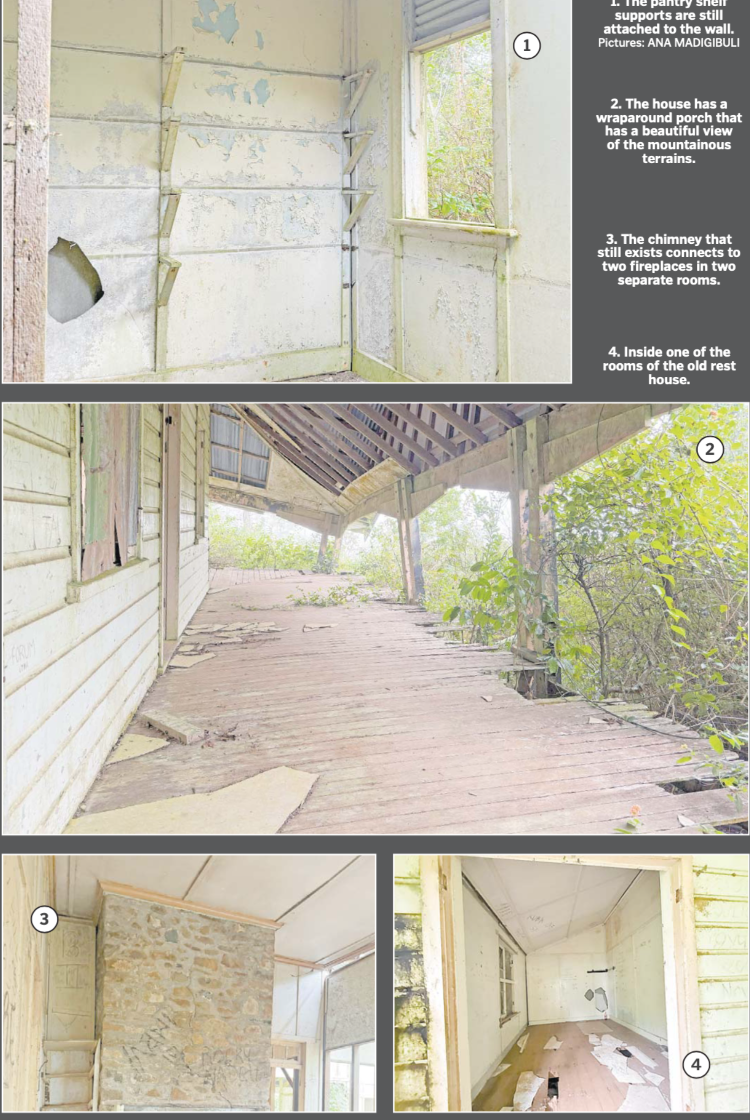
As the photos today indicate, it was all pretty basic. I remember a small kerosene fridge (there was no power) but even then our Christmas ham one year was spoiled by maggots as it sat in that pantry in the photo on the right . And with no hot water, us kids weren’t exactly falling over ourselves to hit the shower, especially in the cooler months mid-year. The warmer months were better when we would trek to a swimming hole across the valley yet even then I remember the water temperature being distinctly bracing. But Nadarivatu was a magical place and doubtless still is.
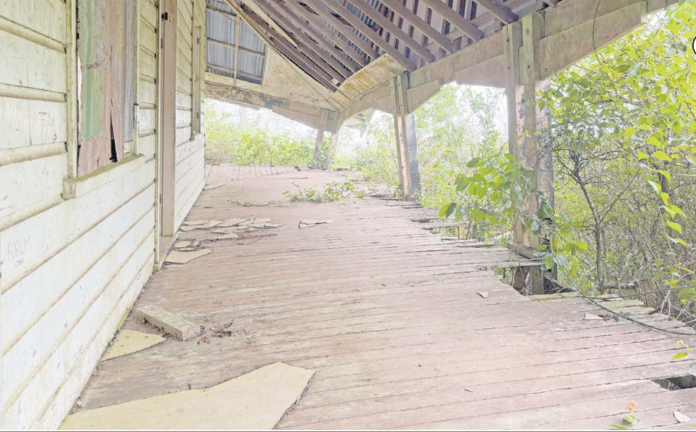
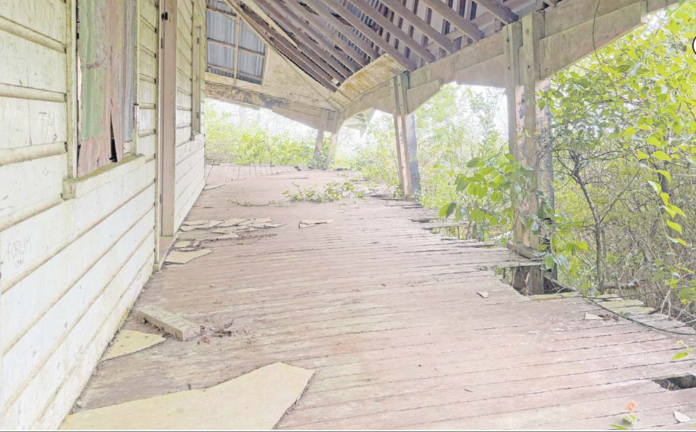
See that photo of the balcony on the left? What you can’t see is the magnificent view across the pine trees below (perhaps it is now overgrown) But I remember being in that precise spot 55 years ago as 1969 became 1970 and a new decade began, listening to Radio Fiji herald in the New Year before the closing “God Save the Queen” and “Isa Lei”. It was ten months before independence and I was 16. I am now 71. So a lot of New Year’s Eves in between.
It’s not just Nadarivatu the place that is seared in my memory but sometimes what happened along the way – the challenge of underpowered 1950s/60s cars struggling up the zig-zag gravel road to the top and the terrifying prospect of skidding and plunging into the abyss. And one experience I’ll never forget of being trapped along the way by a sudden flash flood on the Tavua plain that made the road impassable.
For some reason, my father wasn’t with us and it was my mother driving and just us kids in the car. We were totally alone. There was no other traffic in front or behind, just a raging torrent across the bridge of a swollen creek. It was also still pouring with rain. So we were stuck. Isolated and anxious. And wondering what on earth we were going to do.
After a time, a friendly Indo-Fijian man appeared out of nowhere and insisted that we follow him home. So we abandoned the car by the side of the road and trekked, totally drenched, into the distance. Eventually we came to the modest tin shack of a tenant farmer, just one room with a kitchen lean-to. No furniture. No power. No phone. There lived the farmer and his wife, both of advancing years whose children had left home long before.
And that’s where we stayed until the flood subsided – sitting on the floor, given food, water, shelter and the warmest of welcomes. And communicating as best we could with their rudimentary knowledge of English and our non-existent knowledge of Hindi. All this wonderful couple had was ours. They refused my mother’s offer of money to at least pay for what we had eaten. They had so little yet gave us so much. And it is something I have never forgotten.
So the road to Nadarivatu was also paved with important life lessons. The generosity of the poor. Their richness of spirit. The importance of putting their interests first. The kindness of strangers. Something we can all emulate as the best antidote in a world of greed.
I wonder what happened to that couple and their descendants. At that time, on the cusp of Independence, the national mood in Fiji was decidedly upbeat. Most of us subscribed to the multiracial ideal of Fijians of all backgrounds working together as one nation. But, of course, it wasn’t long – a mere 17 years later – that Sitiveni Rabuka upended that ideal and Fiji has arguably never been the same since.
Like the Methodist guesthouse in Nadarivatu, many aspects of Viti Makawa are now a shell. But they were good days, full of hope and promise. No smart phones (often no phone at all), no Internet, no television but also no pornography and no drugs. Better schools and health care under the British and more importantly, a better sense of caring for each other. A sense of community across the races and religions. A sense of national unity and purpose.
How can it be restored, just like the Methodist Church should be restoring the old rest house in Nadarivatu? It’s a question every Fijian should be asking themselves as we head towards our individual judgments on the second Rabuka era at the next election. Because in the past – and especially when it comes to common values – lie many solutions to the problems of the present.
Here endeth the lesson. I hope you’ve enjoyed the Easter break.




Like the old rest house in Nadarivatu, restoration isn’t about recreating the past—it’s about honouring what was good while building something that works for today. The values that once held our communities together—respect, humility, service, unity—are not lost. They’re still the blueprint we need to rebuild what’s been broken in our society.
The past gives us lessons. But looking back with longing alone doesn’t move us forward. True restoration takes reflection and responsibility. It means acting on the values we claim to believe in—not just talking about them when it’s convenient.
This is especially true for those of us who call ourselves Christians. We can’t afford to be Christians in name only, holding onto traditions and words while ignoring the heart of the faith we claim to follow. As James 1:22 reminds us:
“Do not merely listen to the word, and so deceive yourselves. Do what it says.”
Faith without action is empty. And politics without values is just noise.
That’s why, when we talk about restoring Fiji—its people, its unity, its future—we need to look carefully at the kind of leadership we support. Nationalism and division are not the way forward. Rabuka, his party, and any movement rooted in exclusion or old political games do not offer true restoration. They offer a step back, disguised as tradition.
If we truly want to move forward, we need leaders who don’t just talk about unity and faith—but live it. The kind of leadership that uses our shared values as a blueprint—not for power, but for people.
Great personal account, Graham.
It does make one wonder: in today’s supposedly modern Fiji, is there still a genuine appreciation for the stories behind our locations, our people, and in this case our buildings? The rush toward gloss and glamour is understandable, even welcomed by many but without depth, it can feel like an empty shell of what it once meant to be Fijian. And that identity, of course, was never just about winning 7s tournaments as we sought our own way.
Your anecdote captures the spirit of a Fiji that once was – a spirit that, in turn, inspired those who visited to embrace and practise the philosophy of “doing unto others,” guided practically by what you so aptly described as: “The generosity of the poor. Their richness of spirit. The importance of putting their [less fortunate] interests first. The kindness of strangers.”
This was the true essence of “Fiji, the way the world should be.” There were other things too and not all positive. And yet, within the nostalgia, one can’t help but notice a recurring shadow: the figure who ultimately dismantled the very possibility of continuing on that uniquely generous path – Rabuka.
Happy Easter, and thank you again for sharing this reflection.
I bet it’s riddled with asbestos- 10 years ago many of the hardwares in Labasa were stocking cheaper Chinese and Malaysian asbestos cement, rather than Hardies asbestos free,which only Vinods carried. Usually the sheets were breaking up and crumbling,in one case at Carpenters you could have used a shovel to move the asbestos dust. Nobody seems to have any idea of it’s dangerous, although the legislation banning it has been there for years.
Spent many a night at the Govt guest house as a lad climbed Mt Victoria (Tominivi) numerous times.
Real life forming experiences.As an ex student of Veiuto Primary and Suva Grammar school both swimming pools built and donated by the PTA (Parent And Teachers Association) are dilapidated and empty.
A couple of weeks back I rang the Fiji Sun and Fiji Times news rooms to say the recently retired head of the NZ navy, Rear Admiral Tony Parr, another ex Grammar student was in town with his mum and dad’s ashes to be sprinkled in the sea near Nukulau Is. Both newspapers not interested in the story.Tony’s dad Bert ran the PWD prior to independence.
Viti Makawa? I feel so sorry for today’s youth.
The scattering of ashes on the Laucala & Suva Bay is an everyday activity. The depositing of cremated remains in the foreshore is also an issue that the public has raised. So that probably explains why the local media are not interested in the story.
So tragic, so sad, that such work is left to the elements. This is clear disregard by the Methodist church in neglecting a heritage building. One should not be surprised in how the church has managed its role, registered the highest stat of lost membership and demonstrated misplaced priorities and, obesity and gluttony by its leadership.
Outstanding. Need more of this today.
The world around us is falling to pieces.
Vinaka Graham, and as one also fond of that part of the country, I am so thankful for your beautiful reflections. Proves wrong those who accuse you of just being negative with your articles on Fiji.
Hopefully, our Methodist Church leaders will consider and do allocate modest sums from their annual million-dollar plus collections to renovate and restore such Church properties, not only in Nadarivatu but other regions too. And run those properties like a business. After all, the Church has invested considerably in revenue generating real estate projects, but seems to be concentrated only in urban areas. To add to its already significant portfolio, a $40-50m multi-storey complex is emerging that when done, will be towering over the iconic Centenary Church.
By the way, local Church leaders back then, pre- and immediate post-independence, studied in Davuilevu then onto the mission field in Fiji and Rotuma. But today’s and recent batches of leaders have post-graduate degrees and even PhDs from the US, UK, ANZ etc. and neglect Church properties as in Nadarivatu. Mind boggling!
Meanwhile, we have the most useless person in the world as Acting PM while the real crackpot PM has gone to Singapore and Indonesia to collect more daily travel allowance, once again. Finances must be running low with the number of family, children and grandchildren and numerous hangers on staying at his place.
And the Acting PM is not even the leader of his party. But then, this is Fiji. It is a special place as we all know. A real Israelite from the lost tribe in the Pacific is in charge. Now that is what is idiotic, no?
A wonderful trek down memory lane. Very descriptive – takes the reader with you, the visual and the tangible as well as the emotions. Thank you.
GD, my family spent most of the 70’s long weekends and every Christmas initially in the Methodist house for $5 per night and then to the Fiji Pine owned bungalow for $10 per night down the road or the government house up there also $10 per night. Emperor gold mines owned another one of these further down the road towards Navai.
Alas the condition of the Methodist church owned one was deteriorating at a rapid rate and rather than maintaining the bungalow they neglected it, thus the condition was unrecoverable, a bit like the Methodist church since 1970, where Prado or Pajero are more important than Christ . You should see their fleet. They’ve turned the house of God into some kind of a provincial council or GCC.
Thanks GD for your down the memory lane.
It says a lot about your passion for our beloved nation.
Really appreciated your piece.
Vinaka
In response to that passion, some in authority are just rubbing their hands waiting for GD’s name to pop up on Nadi Immigration’s arrivals screen. Then come officers to handcuff and escort him. Sadly for those authorities who have no passion at all for Fiji but self, it has been and it will be a long wait.
I intend to disappoint them.
GD, thank you for triggering many happy memories about happier days of mult-racial Fiji where kindness, generosity and fun abounded. I loved the Fiji Arts Club and the Fiji Rucksack Club, still active today and on Facebook.
And below is our PM Rabuka on a trip down memory lane and honouring the past – by handing out a medal and adding another member to the order of Fiji. To someone who has tailored the suits of Fijian leaders since 1970 independence.
All I can say is the good old era of Fiji during the British administration is gone with the wind. We have a crumbling house in shambles to display the (cheap) shiny medals galore. Medals we want – medals we get…to anyone and everyone standing in the line.
Mind boggling.
21-4-2025
𝐇𝐎𝐍𝐆 𝐊𝐎𝐍𝐆 𝐁𝐔𝐒𝐈𝐍𝐄𝐒𝐒𝐌𝐀𝐍 𝐀𝐖𝐀𝐑𝐃𝐄𝐃 𝐓𝐇𝐄 𝐌𝐄𝐌𝐁𝐄𝐑 𝐎𝐅 𝐓𝐇𝐄 𝐎𝐑𝐃𝐄𝐑 𝐎𝐅 𝐅𝐈𝐉𝐈 𝐌𝐄𝐃𝐀𝐋
Prime Minister Hon. Sitiveni Rabuka this morning conferred the Member of the Order of Fiji Medal to a true friend of Fiji and Hong Kong businessman, Mr Manohar Narindas Melwani.
Prime Minister Rabuka bestowed the special medal on behalf of His Excellency the President of Fiji, Na Gone Turaga Bale Na Tui Cakau Ratu Naiqama Lalabalavu in recognition of Mr. Melwani’s meritorious service to humanity.
The Member of the Order of Fiji (Honorary), is a special accolade that the Government of Fiji bestows to accord respect and admiration for service.
Mr Melwani is an established men’s tailor, having tailored suits for some of Fiji’s national leaders since independence.
During the ceremony, Prime Minister Rabuka acknowledged Mr Melwani’s expertise in tailoring quality formal wear for some of Fiji’s great leaders, including the late former Governor Generals, Gone Turaga Bale na Vunivalu, Na Tui Kaba, Ratu Sir George Cakobau and the late former President Na Turaga Bale Na Tui Cakau, Ratu Sir Penaia Ganilau.
In his response, Mr Melwani expressed his sincere gratitude to the Government and the people of Fiji for the kind gesture, stating that this was a historic and cherished moment for him and his family.
Also in attendance at the ceremony were Fiji’s Ambassador to China, His Excellency Mr Robert Lee and members of Mr Melwani’s family.
#FijiGovernment #FijiNews #CoalitionGovernment #TeamFiji